Key Highlights
- Discovery:Scientists found mineralized red blood cell structures in a 115-million-year-old dinosaur fossil.
- Species:The fossil belongs to Aratasaurus museunacionali, a small feathered theropod.
- Research Methods:The study utilized electron microscopy and mass spectrometry to analyze the fossil.
A remarkable discovery has emerged from a recent study published in the Proceedings of the National Academy of Sciences, challenging long-held beliefs about the preservation of soft tissues in fossils. Researchers have identified mineralized red blood cell structures and traces of heme, the oxygen-carrying component of hemoglobin, within the bones of a dinosaur that lived approximately 115 million years ago. This finding raises intriguing questions about the potential for soft tissues to survive over geological time scales.
The fossil in question belongs to Aratasaurus museunacionali, a small feathered theropod discovered in a Brazilian mine in 2008. Estimated to be around four years old and weighing about 34 kilograms, this juvenile dinosaur measures approximately 3.1 meters from head to tail. Remarkably, the bones survived a devastating fire that engulfed Brazil's National Museum in 2018, as they were housed in a section of the building that remained intact. The name Aratasaurus reflects its history, combining Tupi words for "born" and "fire" with the Greek term for "lizard."
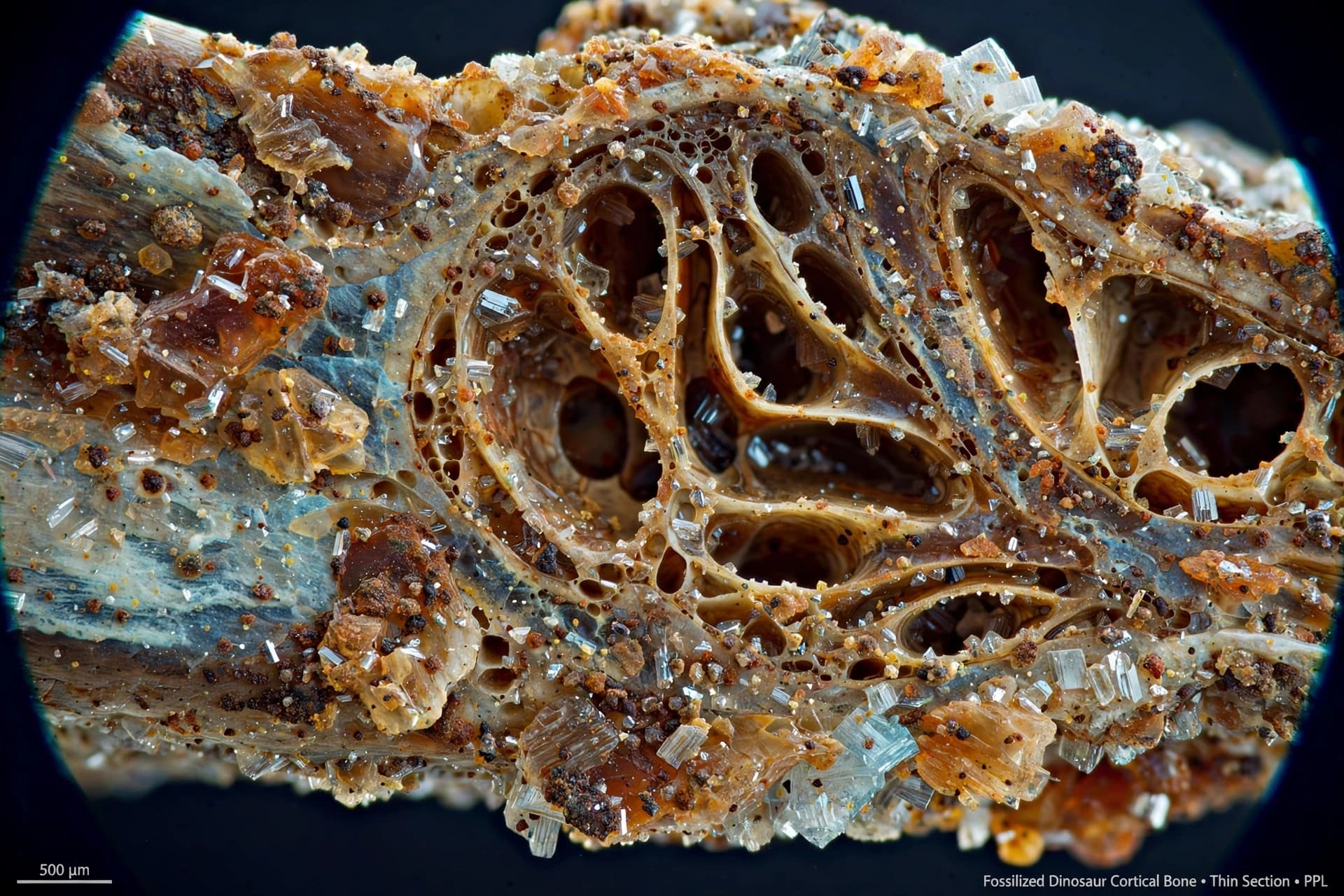
Led by Kliti Grice from Curtin University in Western Australia, the research team employed advanced techniques such as electron microscopy, pyrolysis, and mass spectrometry to analyze small samples from the dinosaur's hind limb bones. Their investigation revealed ellipsoid structures consistent with red blood cells within the vascular canals of the bones. Chemical analysis indicated that the bone contained nearly 80 percent heme, a concentration that surprised the researchers.
The preservation of these structures is attributed to a unique set of conditions surrounding the dinosaur's death. The creature perished on microbial mats—communities of bacteria and archaea typically found in coastal environments—and was rapidly buried in a low-oxygen environment. As microorganisms decomposed the carcass, a combination of oxidation and mineralization processes helped preserve the soft tissues. Notably, a mineral called hausmannite, a manganese oxide, may have acted as an antioxidant, stabilizing sensitive organic molecules and preventing their degradation. Grice emphasized that the findings represent a "mineral and molecular echo" of ancient biology rather than intact blood.
Despite the groundbreaking nature of this discovery, it has not been without controversy. Mary Schweitzer, a prominent paleontologist at North Carolina State University, expressed skepticism regarding the identification of the structures as red blood cells. She pointed out that the images presented in the study depict structures smaller than typical non-mammalian red blood cells, which usually retain a nucleus and are larger. Mauricio Barbi from the University of Regina, who was not involved in the research, acknowledged the evidence as compelling but cautioned that the findings require careful interpretation, as they consist of chemical remnants rather than preserved cells.
Regardless of the ongoing debate, the study significantly expands the understanding of what fossils can preserve. The presence of heme and collagen signatures is difficult to overlook, and the rigorous methodologies employed lend credibility to the findings. This discovery suggests that molecular information may be hidden in museum collections worldwide, waiting for researchers to explore fossils not just for anatomical insights but also for their chemical signatures.
While the prospect of cloning the dinosaur remains far-fetched—DNA tests returned negative—Grice clarified that the research aimed to uncover the extent of molecular information preserved over millions of years. The results indicate that the remnants of a creature that lived 115 million years ago have left a trace, albeit faint and mineralized, reminding us that the past may be closer than we think.
AI Image Disclaimer: The visuals in this article are generated by artificial intelligence and are illustrative only; they do not depict the actual fossil specimen, the researchers, or the Aratasaurus dinosaur.
Published by Banx Network. This article is part of the Banx decentralized media programme, powered by the BXE token on the XRP Ledger.