Key Highlights
- Discovery:Webb Telescope confirms variable water clouds on WISE 0855.
- Distance:WISE 0855 is located 7.5 light-years from Earth.
- Research Team:Led by Brittany Miles from the University of Arizona.
The James Webb Space Telescope has made a groundbreaking observation of a brown dwarf named WISE 0855, located just 7.5 light-years from Earth. This celestial body, which drifts through the galaxy without a sun, has been found to exhibit variable water clouds that change in thickness over time. This discovery marks the first direct confirmation of such a phenomenon beyond our solar system, providing valuable insights into exoplanetary weather systems.
The research, published in The Astrophysical Journal, was spearheaded by Brittany Miles and her team at the Steward Observatory, University of Arizona. They conducted an eleven-hour observation of WISE 0855, capturing a spectrum every fifteen minutes as the brown dwarf rotated. This sustained observation allowed the researchers to monitor changes in the water clouds, confirming that they can vary in thickness—a phenomenon that had previously been inferred but never directly observed.
WISE 0855 is classified as a brown dwarf, a type of celestial body that is too massive to be considered a planet but not massive enough to sustain hydrogen fusion like a star. With a size comparable to Jupiter and approximately twice its mass, WISE 0855 has a temperature around minus 8 degrees Celsius. This temperature, while cold by Earth standards, is sufficient to support an active atmosphere driven by the internal heat of the brown dwarf, as it lacks a host star to provide warmth.
The advanced capabilities of the Webb Telescope allowed the research team to separate signals that had previously been blurred together in earlier observations. Miles explained that past instruments had mixed the effects of clouds, chemical composition, and temperature into a single, indecipherable signal. Webb's spectroscopic capabilities enabled the team to distinguish between these factors, tracking how each one changed as WISE 0855 rotated. Mark Marley, a co-author of the study, likened this challenge to observing a world through a screen, emphasizing the need to understand both the object and the filtering mesh that affects the light.
While the findings represent a significant milestone in the study of exoplanetary weather, researchers caution against drawing too many parallels with Earth's weather systems. Although the clouds on WISE 0855 are indeed water clouds that change over time, the mechanisms driving these changes differ from those on Earth. The atmosphere of WISE 0855 contains gases rising from deeper layers, and its rotation creates variations in temperature and cloud cover that lead to fluctuations in brightness. Thus, while the resemblance is notable, it serves as a reminder that the universe has diverse ways of creating atmospheric phenomena.
As researchers continue to study WISE 0855, it remains a captivating subject for exploration. Although it is not a habitable world, its weather patterns provide a unique opportunity to understand atmospheric dynamics beyond our solar system. The next time clouds gather on Earth, it may be worth considering that similar processes involving water vapor are occurring on this cold, starless world just a few light-years away, and that our exploration of such phenomena has only just begun.
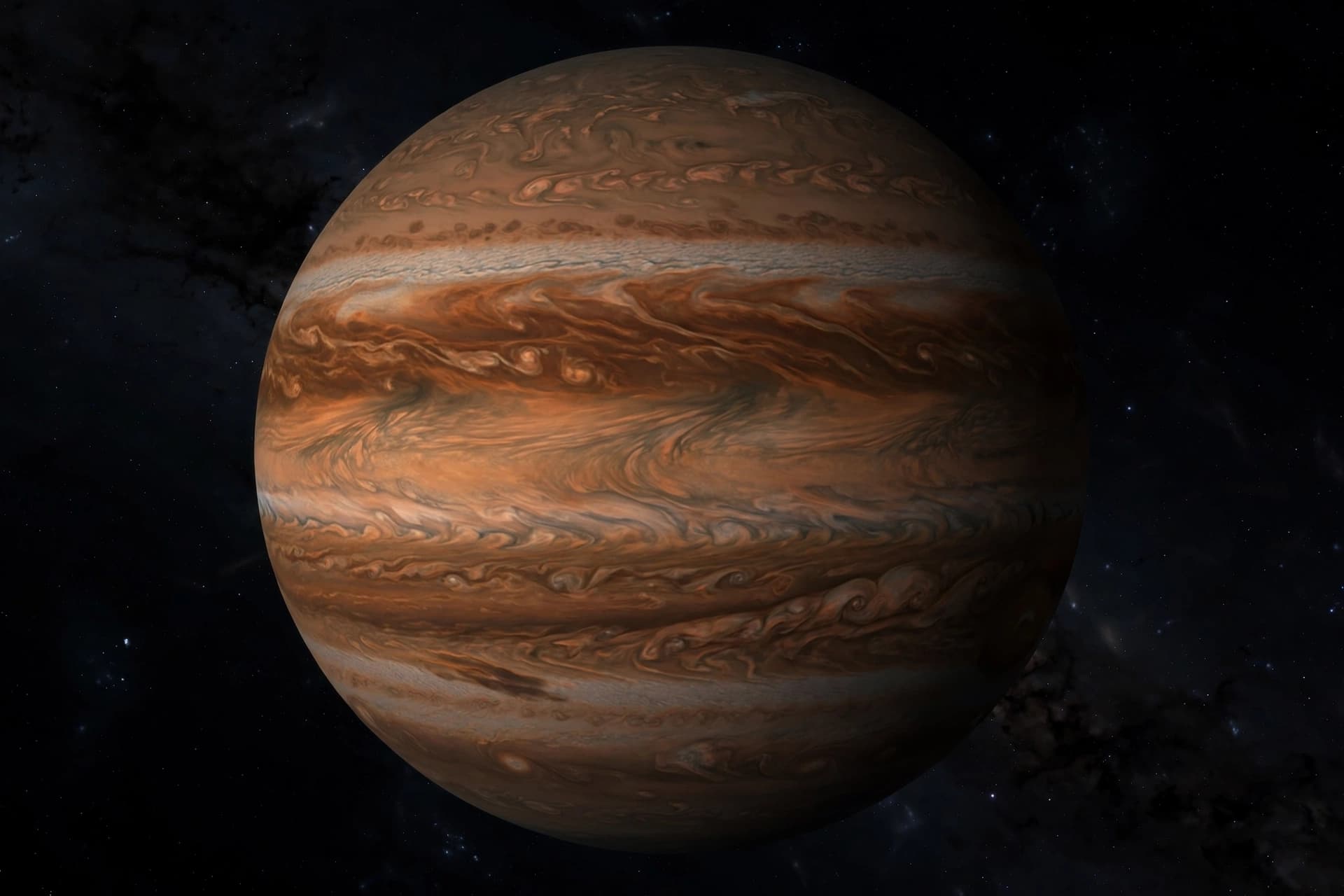
AI Image Disclaimer: The images in this article are AI-generated and are illustrative only; they do not represent the actual appearance of WISE 0855 or the James Webb Space Telescope.
Published by Banx Network. This article is part of the Banx decentralized media programme, powered by the BXE token on the XRP Ledger.