Key Highlights
- Incident:A catastrophic mudslide occurred in western Colombia, burying homes and resulting in fatalities.
- Casualties:At least five people have been confirmed dead, with several others missing.
- Rescue Efforts:Search operations are ongoing, hampered by heavy rainfall and unstable ground conditions.
Quibdó, Colombia—A catastrophic mudslide swept down a steep slope in western Colombia early Tuesday morning, burying multiple residential homes under tons of liquefied earth and rock. Emergency officials confirmed at least five people died during the initial collapse, with several residents remaining unaccounted for under deep debris fields.
Continuous torrential rain over the preceding forty-eight hours thoroughly saturated the mountain ridge above the rural settlement. The sudden earth movement struck around 4:30 AM, crushing wood and masonry structures while occupants were asleep inside. The scale of the disaster has left the community in shock, as many families are now facing the loss of their homes and loved ones.
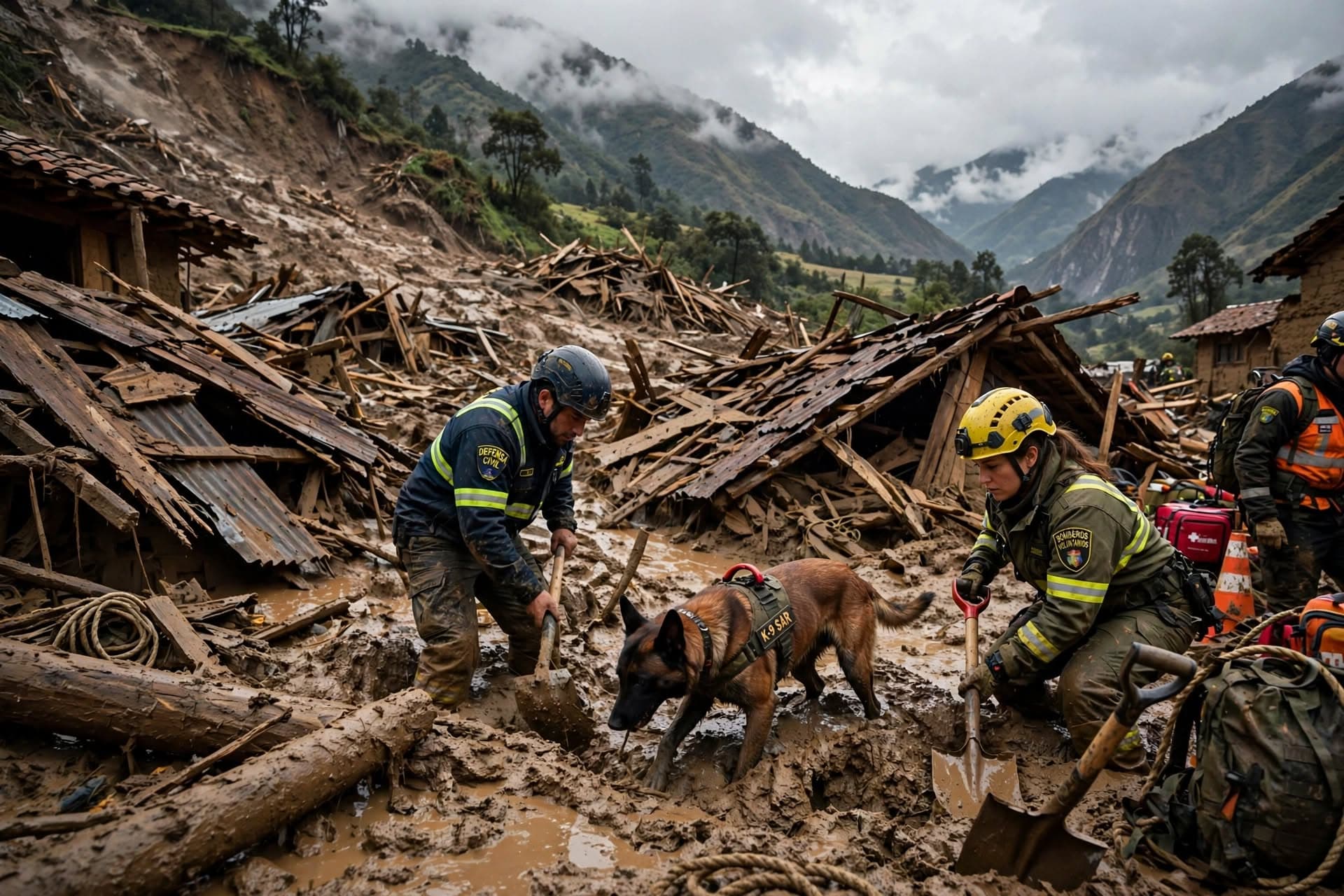
Surviving neighbors scrambled out into the dark with shovels and flashlights to begin clearing mud before municipal first responders reached the isolated sector. Heavy mountain runoff hindered early rescue efforts, constantly turning cleared soil back into liquid sludge. The chaotic scene was marked by frantic attempts to locate missing individuals, as the community rallied together in the face of tragedy.
Civil defense personnel and fire crews established a temporary staging ground near the edge of the slide zone. Rescue dogs were brought in to assist search teams in pinpointing air pockets beneath collapsed roofs and buried structural frames. Emergency medical teams treated survivors at the perimeter for hypothermia, blunt force trauma, and severe lacerations. Ambulances transported three critically injured victims to a regional hospital for emergency surgery, highlighting the urgent need for medical assistance in the aftermath of the disaster.
“We heard a loud cracking noise from the mountain, and within seconds the back of the house was gone,” said a surviving resident whose home was partially destroyed. “Everyone ran into the street crying out for their neighbors.” This harrowing account underscores the suddenness of the event and the community's desperate response.
Heavy earthmoving equipment faced significant delays reaching the disaster site after secondary earth movements blocked primary access roads along the mountain corridor. Road crews cleared fallen timber and mud deposits to open a single transit lane for emergency vehicles. The logistical challenges faced by rescue teams are compounded by the ongoing threat of further landslides, as the region remains under a high-alert hazard level.
Municipal authorities declared a high-alert hazard level across surrounding hillsides as weather forecasts predict continued heavy rainfall through the remainder of the week. Geologists deployed to the scene noted active ground fissures suggesting a high risk for further slope failures. This ongoing threat complicates rescue efforts and raises concerns about the safety of both responders and residents in the area.
Relief agencies set up temporary shelters at a nearby community center to house displaced families whose homes were completely destroyed or deemed structurally unsafe. Disaster teams continue to dig through mud deposits as search operations persist into the night, with hopes of finding survivors dwindling as time passes. The community is now faced with the daunting task of recovery and rebuilding in the wake of this devastating event.
Published by Banx Network. This article is part of the Banx decentralized media programme, powered by the BXE token on the XRP Ledger.