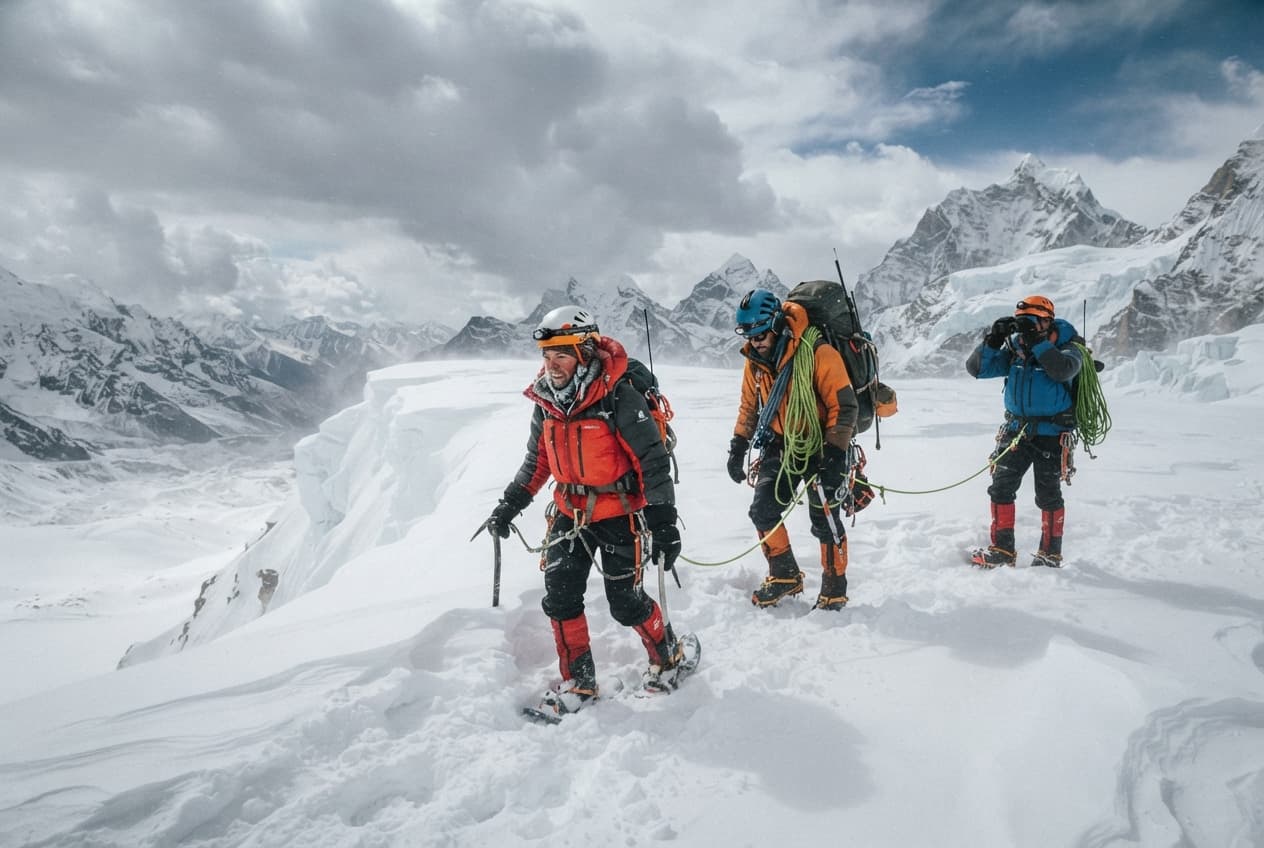
Islamabad, Pakistan—An unseasonal cold wave accompanied by blinding blizzard conditions swept across northern mountain ranges early Friday morning, trapping multiple climbing expeditions. Meteorological stations recorded sudden sub-zero temperature drops and gale-force winds above the timberline within a matter of hours. Mountain rescue coordinators confirmed that four climbers succumbed to severe hypothermia near the high-altitude base camp.
Expedition support staff trapped lower down the mountain managed to alert regional authorities via satellite communication devices before battery power failed. Pakistani military aviation units scrambled rescue helicopters, but dense fog and howling winds prevented aircraft from approaching the ridge line. Ground search parties comprising seasoned local mountain guides deployed on foot through waist-deep snowdrifts to reach the stranded camp.
Survivors huddled inside shredded tent nylon described a terrifying drop in temperatures that froze equipment and overwhelmed sleeping bag ratings. Rescue teams recovered the bodies of the four climbers and administered emergency warming treatments to two surviving expedition members suffering from frostbite. Medical personnel at regional valley clinics prepared makeshift hyperbaric chambers and oxygen supplies to treat severe altitude-induced ailments.
Tourism ministry officials announced a temporary suspension of all high-altitude climbing permits across northern peaks following the unexpected storm system. Mountain guides noted that unseasonal weather anomalies in early September catch international expedition teams unprepared for winter-grade conditions. Insurance representatives and embassy officials coordinated repatriation logistics for the affected foreign climbing teams.
Local porters and villagers assisted rescue columns by hauling heavy medical packs and fuel canisters through treacherous ice channels and boulder fields. Meteorological experts explained that a sudden polar jet stream dip interacted with lingering monsoon moisture to produce the severe localized blizzard. Search teams worked meticulously to secure base camp infrastructure against subsequent freezing squalls expected overnight.
The tragedy underscores the extreme hazards mountaineers face as climate volatility increases unpredictability across high-altitude Himalayan and Karakoram routes. Expedition organizers faced mounting scrutiny regarding risk assessment protocols and weather monitoring equipment at remote camps. Meanwhile, weary rescue workers descended back toward the valley floor carrying the casualties through deepening twilight shadows.
Published by Banx Network. This article is part of the Banx decentralized media programme, powered by the BXE token on the XRP Ledger.