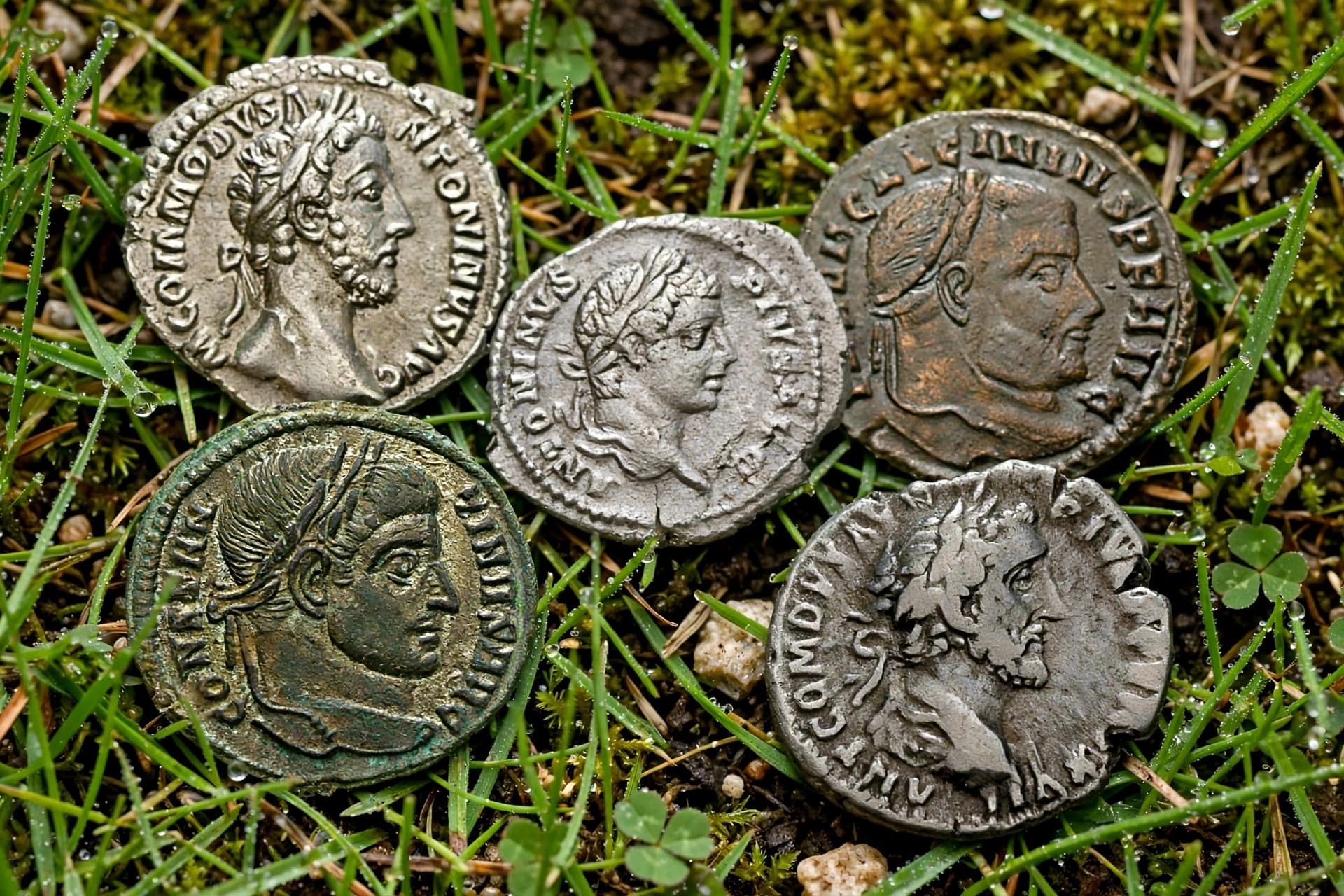
In the rolling hills of North Wales, where history lies just beneath the surface of the soil, a hobbyist’s afternoon took an extraordinary turn. A man, armed with nothing more than a metal detector and a sense of curiosity, found his device emitting a relentless series of beeps. What began as a routine search for small artifacts quickly evolved into the discovery of a lifetime: a hoard of approximately 15,000 ancient Roman coins. This find, potentially the largest of its kind in the United Kingdom, serves as a tangible link to a distant past, reminding us that history is not always confined to museums but often waits quietly in our own backyards.
The sheer volume of the discovery is staggering. Weighing over 60 kilograms, the coins were buried in two clay pots, preserved by the earth for nearly two millennia. Experts from the National Museum Cardiff have begun the delicate process of cleaning and analyzing the treasure, which includes both silver and bronze denominations. Each coin tells a story of trade, empire, and daily life in Roman Britain, offering historians a rare glimpse into the economic networks that once connected this remote corner of the world to the heart of the empire.
For the finder, the moment was one of disbelief and awe. Metal detecting is often a game of patience, yielding small fragments or modern debris after hours of searching. To uncover such a significant cache is the dream of every enthusiast, a validation of their passion and persistence. The discovery highlights the importance of citizen scientists and amateur archaeologists in preserving cultural heritage, acting as stewards of the land’s hidden secrets.
The historical significance of the hoard cannot be overstated. While larger hoards have been found in the past, such as the Frome Hoard in 2010, this recent find adds to our understanding of Roman presence in Wales. The coins likely date from the third or fourth century AD, a period of political instability and economic change within the empire. Their burial may have been an act of preservation during times of unrest, a hope that they would be retrieved when peace returned.
Local communities have reacted with pride and excitement. The find puts the region on the map for archaeological tourism, drawing attention to its rich historical landscape. Schools and local groups are eager to learn more about the Romans who once walked these same paths. It fosters a sense of connection to the past, making history feel immediate and relevant. Heritage is a shared resource that binds generations.
The legal framework surrounding such finds in the UK ensures that treasures of national importance are preserved for the public. Under the Treasure Act, the finder and the landowner are entitled to a reward, while the objects themselves are acquired by museums. This system balances private interest with public benefit, ensuring that artifacts remain accessible for study and enjoyment. It is a model that respects both discovery and stewardship.
As the analysis continues, researchers hope to identify specific emperors and mints represented in the collection. These details can help pinpoint the exact date of burial and provide insights into the circulation of currency in the region. Every piece of data contributes to a broader picture of Roman Britain, filling in gaps in our knowledge. Science reveals what silence hides.
In the end, the beeping metal detector led to more than just wealth; it led to wisdom. The hoard is a testament to the enduring legacy of Rome and the thrill of discovery. As the coins are cleaned and cataloged, they will continue to speak to us, bridging the gap between antiquity and the present. History is alive, waiting to be heard.
AI Image Disclaimer: The visual representations included here are AI-generated illustrations designed to depict archaeological discoveries and Roman artifacts, not actual photographs of the specific coin hoard or the finder in Wales.
Sources: Ancient Origins ITV News National Museum Cardiff
Published by Banx Network. This article is part of the Banx decentralized media programme, powered by the BXE token on the XRP Ledger.