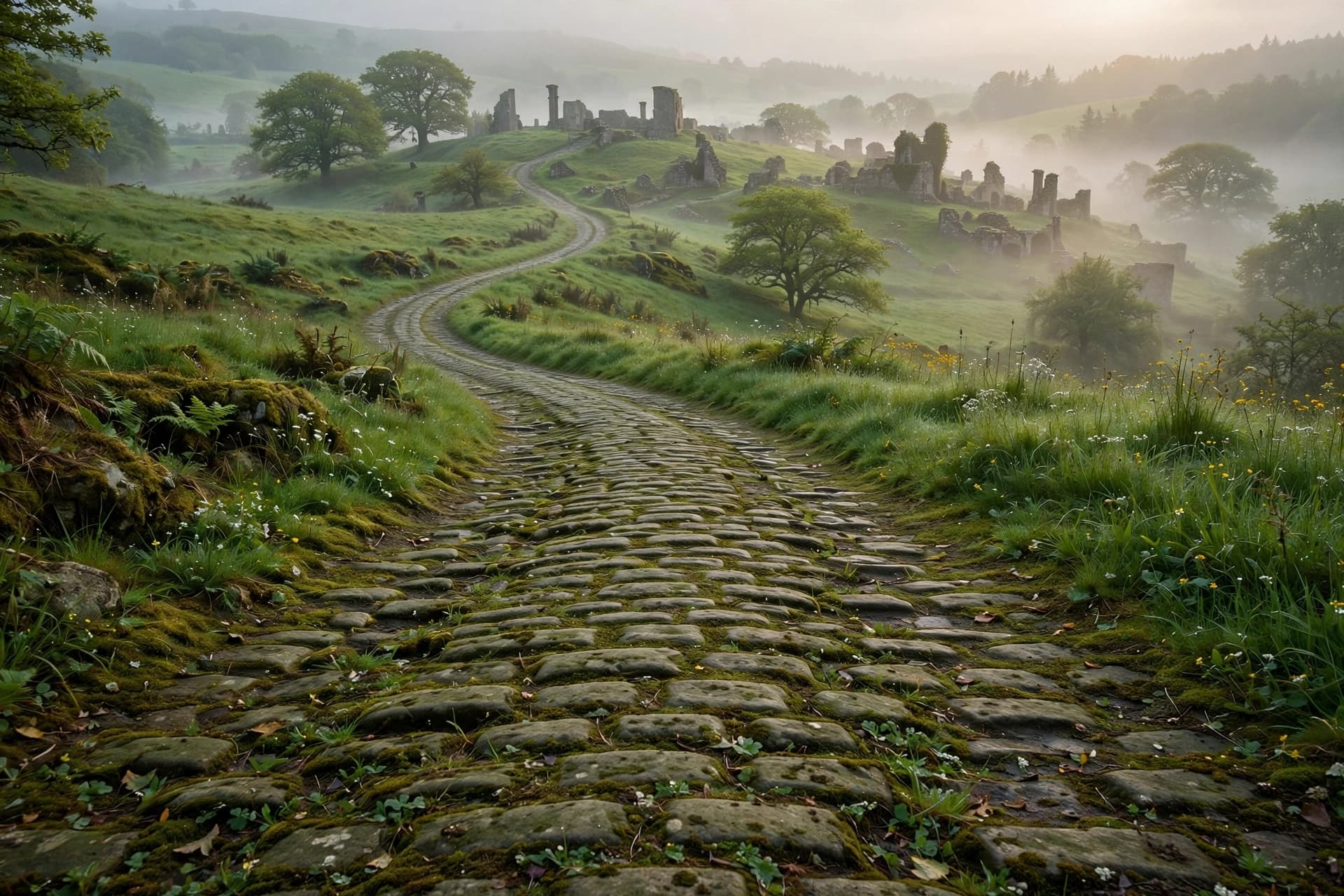
For centuries, the phrase "All roads lead to Rome" has served as a metaphor for inevitability and centralization. It evokes an image of a vast, radial network stretching out from the Eternal City, connecting the farthest reaches of the empire to its heart. However, a new study by historian Taco Terpstra challenges this enduring myth, suggesting that the reality of Roman infrastructure was far more complex and less Rome-centric than popular culture implies. It is a reminder that even our most cherished historical truths are subject to revision when viewed through the lens of modern data analysis.
Terpstra’s research, which maps nearly 190,000 miles of Roman roads, reveals that the network was not designed solely to funnel traffic toward Rome. Instead, it functioned as a web of connectivity that facilitated trade, military movement, and communication between various regional hubs. Constantinople, in particular, emerges as a significant node in this network, often serving as a more practical destination for travelers in the eastern provinces. The study highlights how geography and local economies shaped the flow of people and goods, rather than a single imperial directive.
The methodology behind the study combines archaeological evidence with computational modeling, allowing researchers to simulate travel patterns across the ancient world. By analyzing the efficiency of different routes, Terpstra demonstrates that many journeys would have been more logical if they bypassed Rome entirely. This finding does not diminish the city’s importance but rather contextualizes it within a broader system of interconnected cities. Rome was a center, but not the only center.
For historians, this shift in perspective offers a richer understanding of daily life in the Roman Empire. It suggests that individuals had more agency in their movements than previously thought, choosing paths based on practical needs rather than symbolic allegiance. The road network was a tool for integration, linking diverse cultures and economies into a cohesive whole. It was a system built for function, not just for glory.
The implications extend beyond academia, influencing how we view urban planning and infrastructure today. Just as the Romans built networks to support a multi-polar empire, modern societies rely on decentralized systems for resilience and efficiency. The study serves as a bridge between past and present, offering lessons in connectivity and adaptability. History, it seems, has much to teach us about network design.
Public reaction to the findings has been one of curiosity and amusement. The idea that a common saying might be historically inaccurate sparks debate and engagement. It encourages people to question other assumptions about the past, fostering a deeper appreciation for historical nuance. Myths are powerful, but truth is often more interesting.
Educators and museums are already incorporating these insights into their programs, updating exhibits to reflect the complexity of Roman mobility. The goal is to present a more accurate picture of the empire, one that acknowledges its diversity and dynamism. Learning is a continuous process, and new discoveries keep the past alive.
In the end, the study by Taco Terpstra does not erase Rome’s legacy but refines it. It shows that the empire was a complex organism, with many hearts beating in sync. As we continue to uncover the secrets of the ancient world, we find that history is not a static story but a living conversation. All roads may not lead to Rome, but they all lead to understanding.
AI Image Disclaimer: The visual representations included here are AI-generated illustrations designed to depict ancient maps and Roman infrastructure, not actual photographs of specific archaeological sites or the study’s data visualizations.
Sources: Fox News New York Post Archaeopress
Published by Banx Network. This article is part of the Banx decentralized media programme, powered by the BXE token on the XRP Ledger.