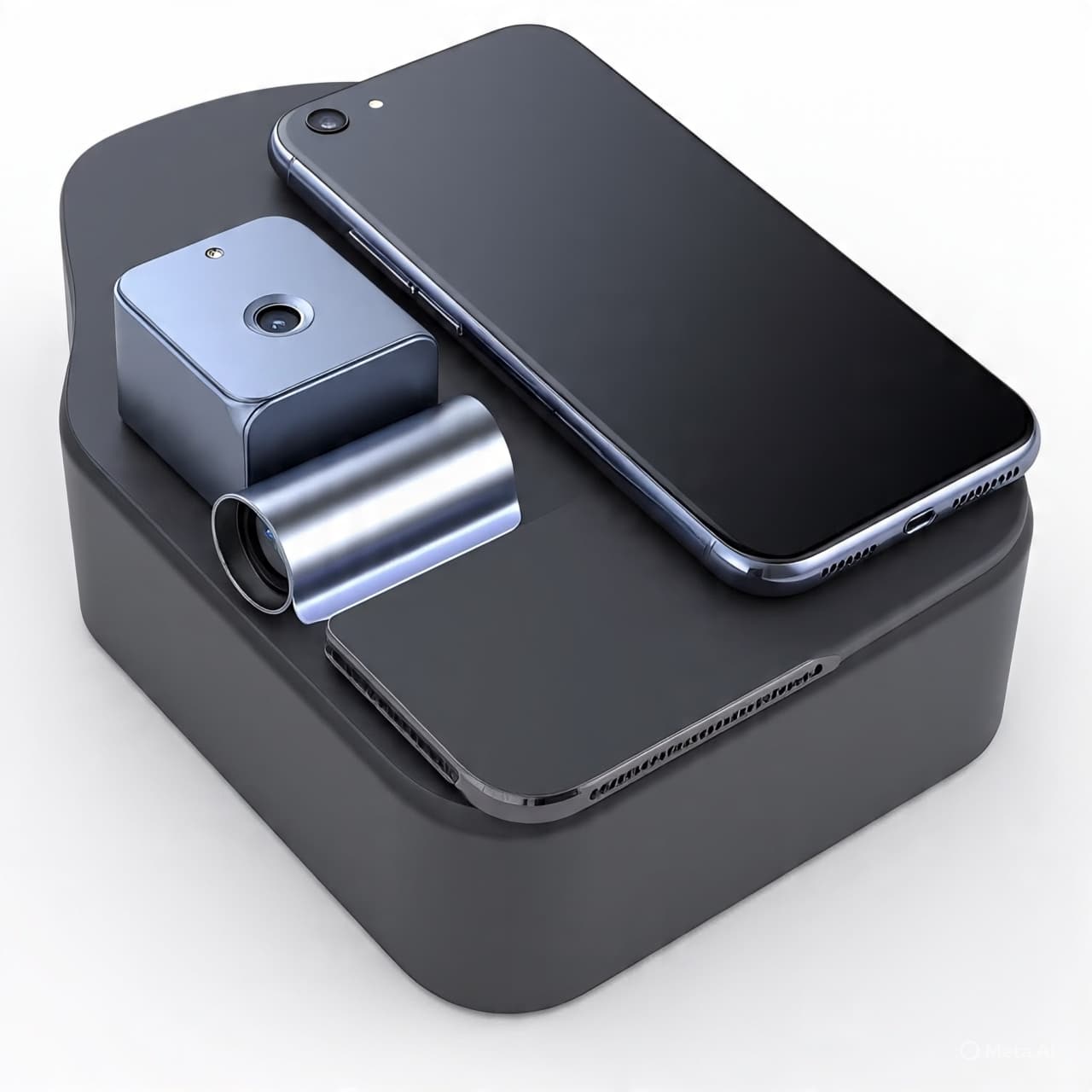
In the ever-turning circle of smartphone dreams, echoes of familiar ideas sometimes return with a new whisper. Much like a river that branches into hidden streams only to rejoin the main flow, the concept of a modular phone — once buried in prototypes and industry hopes — is being borne again toward the light. In the gentle tide of innovation, Tecno has quietly unveiled a concept that recalls past ambitions while suggesting a possible path forward.
At the edge of this year’s Mobile World Congress, Tecno introduced a modular Android concept phone built around what it calls Modular Magnetic Interconnection Technology. At first glance, it’s a spine of brushed metal and glass, slim as a memory yet poised to grow: a 4.9 mm thick base unit designed to accept an array of attachable components held on by clever magnetism. With up to ten planned modules — from a power bank that whispers extra battery life to an action camera or telephoto lens — the device conjures a future where a smartphone may shift shape according to need instead of remaining fixed.
This vision recalls the fragmented attempts of earlier days — from Google’s ambitious but unrealized Project Ara to the fleeting existence of swappable camera or battery packs — and yet seeks to weave them into something more refined and agile. Where once modularity tended toward bulk, Tecno’s approach aims to keep elegance, ensuring the phone stays graceful even when adorned with its companions.
The concept comes in two distinct design interpretations, called the ATOM and MODA editions, each with its own aesthetic personality. Though still a conceptual play rather than a commercial product with price or release date, this modular ecosystem invites a quiet reflection on why such ideas endure, and why they might yet find a place in the routines of tomorrow’s users.
As we wait for Mobile World Congress to open its doors and let the world see these devices firsthand, this slender, magnetic puzzle of possibilities lingers in tech conversation, neither fully realized nor dismissed — like a promise spoken too softly to be ignored.
In the span of smartphone evolution, it is thoughtful experiments such as these — weightless in body, weighty in aspiration — that keep the compass of innovation turning. From ideas resurrected to dreams waiting in the wings, Tecno’s modular concept reminds us that invention — like memory itself — may circle through time, returning renewed.
In a gentle blend of old and new, the modular device concept becomes more than just hardware: it invites a story about adaptability, choice, and what the future might still have to teach us about tools we use every day.
AI Image Disclaimer (Rotated Wording)
Visuals are created with AI tools and are not real photographs.
Sources Identified (Media Names Only)
9to5Google
Android Authority
Android Headlines
Gizmochina
Phandroid
Published by Banx Network. This article is part of the Banx decentralized media programme, powered by the BXE token on the XRP Ledger.