The night sky does not announce itself loudly. It waits, repeating its cycles with quiet precision, asking only that someone looks up. In 2026, those cycles offer a familiar yet stirring sequence: eclipses that briefly rearrange daylight, meteor showers that arrive like scattered sparks, and supermoons that stretch the Moon’s presence across the dark.
Eclipses remain the year’s most arresting interruptions. When the Sun or Moon slips into shadow, ordinary time seems to pause. In 2026, both solar and lunar eclipses will trace their paths across different regions of the globe, some partial, others more complete. A lunar eclipse, visible to wide stretches of Earth, will slowly dim the Moon into copper tones, while a solar eclipse will remind daytime skies how fragile their brightness truly is. These events unfold gradually, rewarding patience rather than spectacle alone.
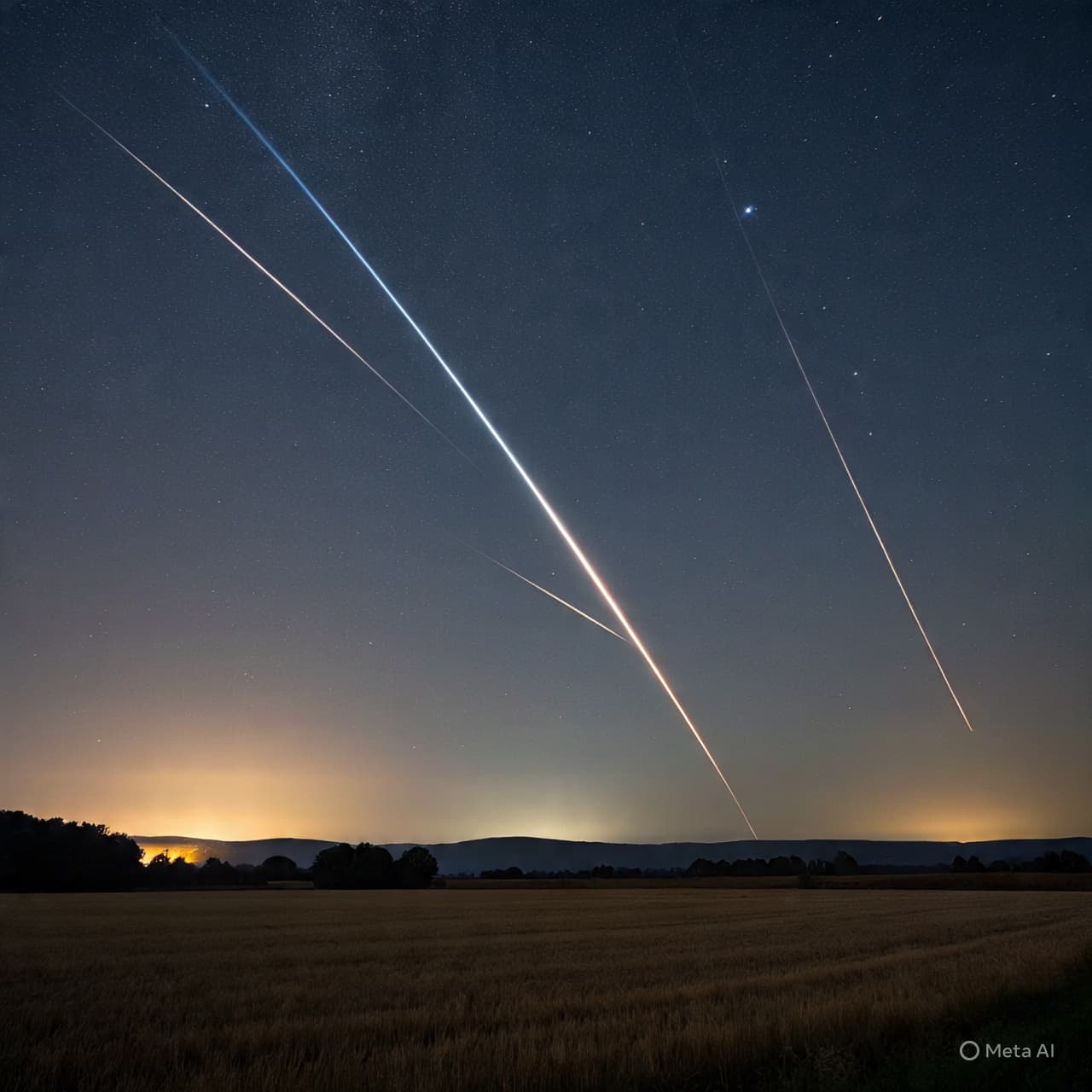
Meteor showers provide a different rhythm. They do not command attention all at once, but accumulate meaning through repetition. Each streak of light marks debris left behind by ancient comets, burning briefly as it meets the atmosphere. In 2026, familiar showers will return on schedule, their peaks offering moments when the sky seems briefly alive with motion. Away from city lights, even a modest display can feel generous, each meteor a reminder of the planet’s constant movement through space.
Supermoons will appear several times throughout the year, when the Moon’s orbit carries it closer to Earth than usual. The difference is subtle but perceptible. The Moon rises larger, brighter, and more insistent, dominating skylines and drawing attention from people who might otherwise ignore it. Photographs struggle to capture the effect, which is less about size than presence.
What ties these events together is not rarity but reliability. None of them are new. They return because gravity and motion demand it. Yet each year they feel renewed, shaped by where we stand, what we remember, and how often we pause to look.
In 2026, the sky will not offer revelations so much as reminders. That shadows can cross the Sun. That fragments of ice and dust still trace ancient paths above us. That the Moon’s pull subtly reshapes tides and attention alike. Stargazing, at its best, is not about mastering the heavens, but about meeting them halfway—eyes lifted, expectations modest, wonder intact.
AI Image Disclaimer Visuals are AI-generated and serve as conceptual representations.
Sources NASA American Astronomical Society Royal Astronomical Society International Astronomical Union Sky and Telescope
Published by Banx Network. This article is part of the Banx decentralized media programme, powered by the BXE token on the XRP Ledger.