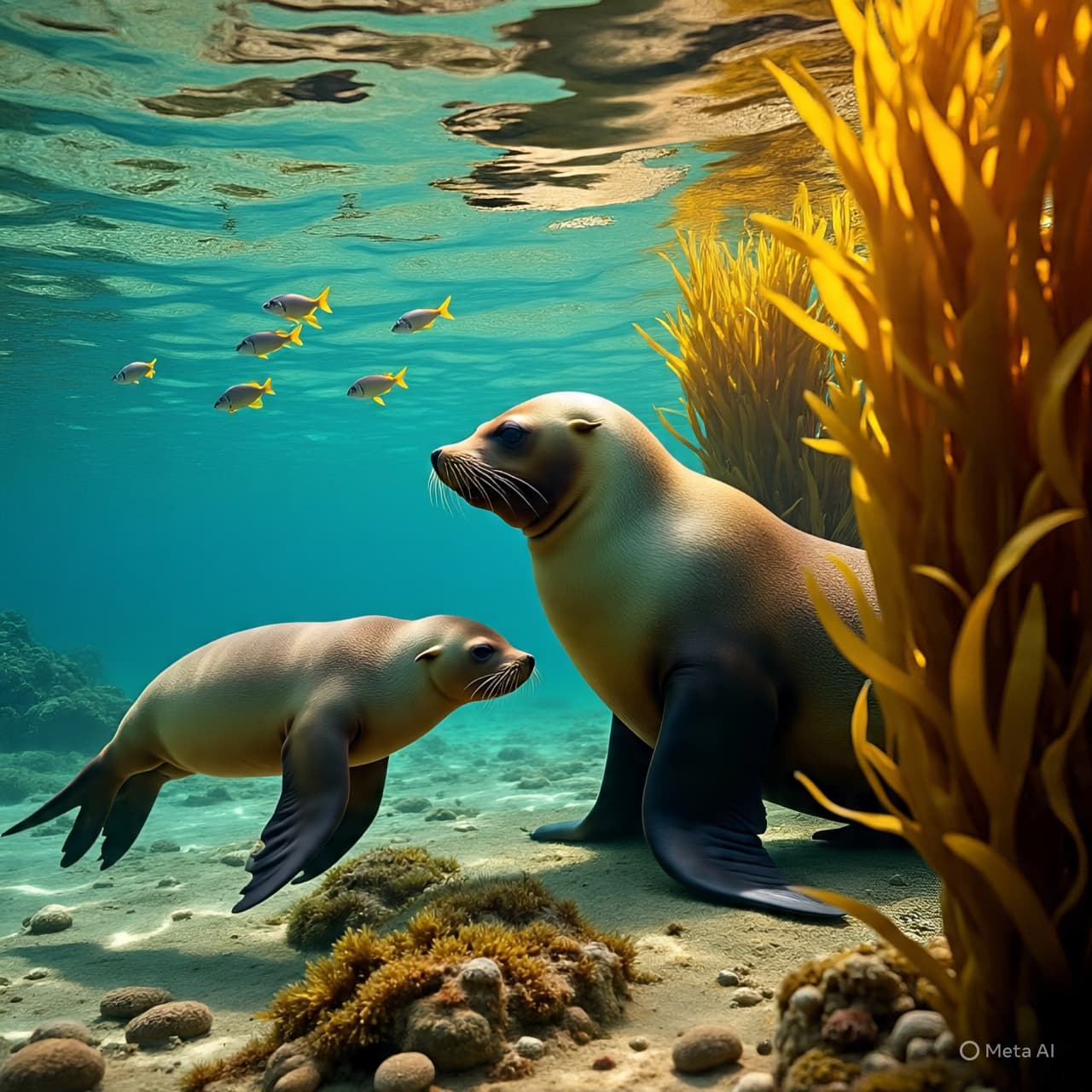
Along Australia’s southern coastline, where waves press steadily against limestone cliffs and kelp forests sway beneath the surface, a quiet apprenticeship unfolds. In the shallows, small sea lion pups linger close to their mothers, watching, following, learning. Survival here is not inherited fully formed; it is practiced, repeated, and refined in the shifting light beneath the sea.
New research suggests that Australian sea lion pups acquire essential diving and foraging skills directly from their mothers, rather than relying solely on instinct. The findings deepen scientific understanding of maternal influence in marine mammals and highlight the delicate bond that shapes a pup’s earliest encounters with the ocean.
The Australian sea lion, known scientifically as , is one of the rarest sea lion species in the world and is found only in southern and western Australian waters. Unlike some other pinniped species, Australian sea lions have an extended and asynchronous breeding cycle. Pups may nurse for up to 18 months, creating an unusually long window for maternal guidance.
Using tracking devices and underwater observation, researchers monitored how mothers and pups moved through nearshore habitats. The data revealed that pups do not simply wander independently in search of prey. Instead, they frequently mirror their mothers’ diving patterns—gradually increasing depth, duration, and complexity over time. Early dives are short and cautious. As weeks pass, pups begin to follow their mothers into deeper waters and more varied terrain.
This pattern suggests that foraging proficiency develops through experiential learning. Mothers appear to introduce pups to productive feeding grounds, possibly guiding them toward prey-rich kelp beds and rocky reef systems. In these environments, young sea lions must master agility, breath control, and spatial awareness to pursue fish and cephalopods.
Scientists note that such learning is especially important in species where environmental conditions fluctuate. Ocean temperature shifts, prey distribution changes, and human activities can alter food availability. A pup that learns adaptive strategies from an experienced mother may be better equipped to cope with these uncertainties.
The research also underscores the energetic cost borne by mothers. Extended nursing periods mean females must balance their own foraging needs with the demands of raising dependent young. By modeling efficient diving behavior, they effectively pass on knowledge that increases the pup’s long-term survival prospects.
Marine ecologists emphasize that maternal learning may contribute to population resilience. In endangered species like the Australian sea lion, where numbers remain relatively low compared to historical levels, each successful pup represents a meaningful contribution to recovery. Cultural transmission—skills passed from mother to offspring—can influence how populations adapt over generations.
Importantly, researchers caution that human disturbances in coastal habitats could disrupt these learning processes. Boat traffic, fishing activity, and habitat degradation may interfere with the calm, repetitive practice that young sea lions require. Protecting nursery areas, therefore, becomes not only a conservation priority but also an investment in knowledge transfer between generations.
In measured terms, the study concludes that Australian sea lion pups gradually acquire diving and foraging competence by closely shadowing maternal behavior during extended nursing periods. Continued monitoring is planned to assess how environmental changes may influence this learning dynamic.
Beneath the surface, where light fragments and sound travels differently, the lesson is simple yet profound: survival is taught. In the patient arc of a mother’s dive, the future of a species learns to breathe, descend, and rise again.
AI Image Disclaimer: Images in this article are AI-generated illustrations, meant for concept only.
Sources: BBC The Guardian ABC News Australia National Geographic Science
Published by Banx Network. This article is part of the Banx decentralized media programme, powered by the BXE token on the XRP Ledger.