In the quiet corners of academic inquiry, where curiosity meets rigor, a group of undergraduate students has made a discovery that bridges the deep past with personal devotion. By describing a new species of proto-amphibian, they have not only added a piece to the puzzle of vertebrate evolution but also honored the women who supported their journey. This act of naming serves as a gentle reminder that science is not merely a collection of facts, but a human endeavor rooted in gratitude and connection.
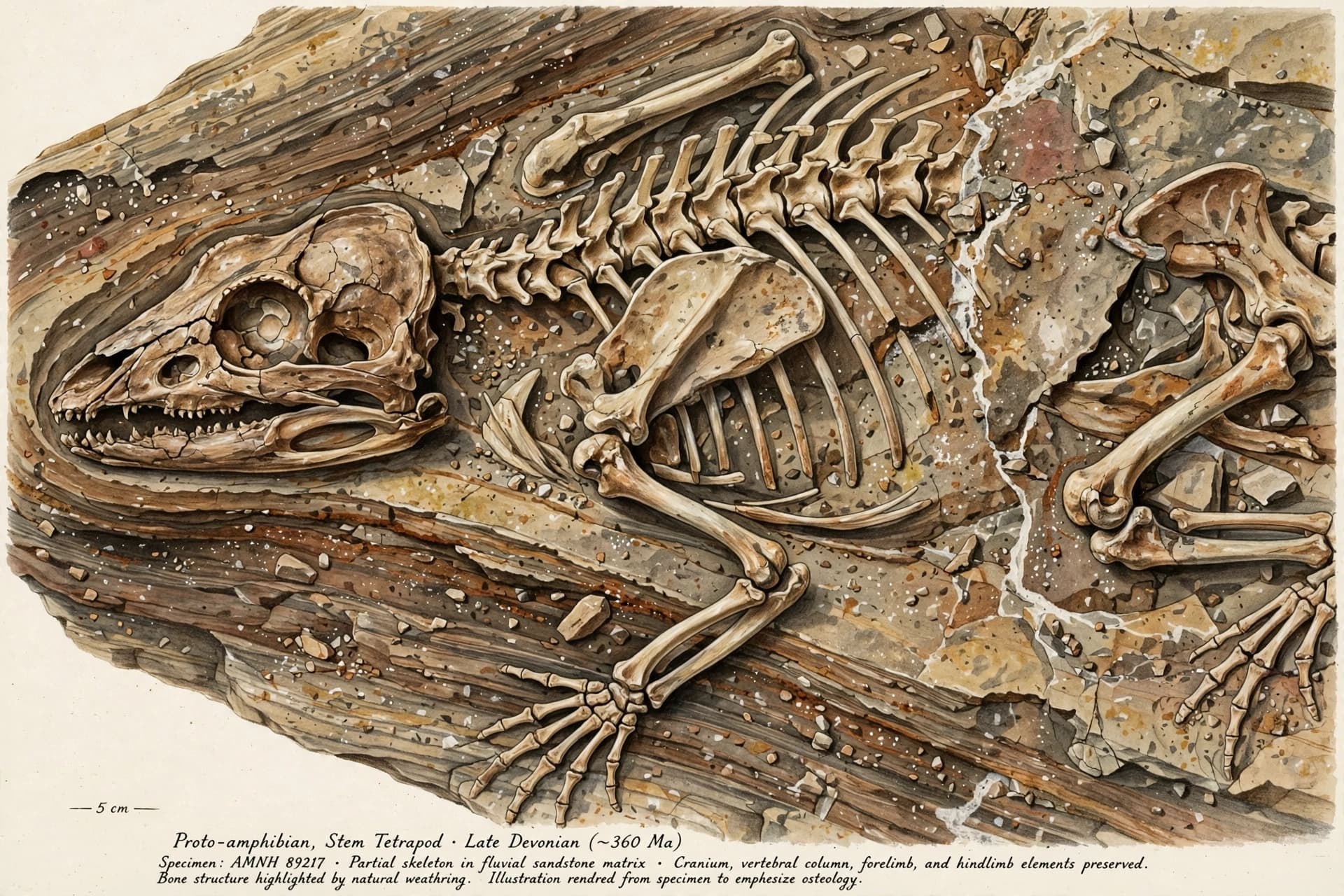
The fossil, identified as Dendrerpeton matris, was unearthed from deposits dating back to the Carboniferous period, a time when life was making its tentative steps from water to land. Proto-amphibians like this one represent a critical transitional phase, possessing characteristics of both fish and modern amphibians. For the students, analyzing the skeletal structure required patience and precision, turning dusty fragments into a coherent narrative of biological history.
The decision to name the species in honor of their mothers was driven by a desire to acknowledge the unseen labor that often underpins academic success. Behind every late night in the library and every moment of doubt, there were voices of encouragement and support. By embedding these names into the scientific record, the students ensured that their personal histories would be preserved alongside the natural history they studied. It is a poetic gesture in a field often perceived as coldly objective.
This discovery highlights the importance of involving undergraduates in genuine research. Too often, students are relegated to passive roles, but here they were active contributors to knowledge creation. Their fresh perspectives and dedication led to insights that might have been overlooked by more seasoned eyes. It demonstrates that innovation thrives when mentorship empowers the next generation to take ownership of their work.
The scientific community has welcomed the find with interest, noting the detailed analysis provided by the team. The description of Dendrerpeton matris adds nuance to our understanding of how early tetrapods adapted to terrestrial environments. Each new species described helps refine the evolutionary tree, showing the diverse experiments nature conducted millions of years ago. It is a testament to the enduring mystery of life’s origins.
For the students, the experience was transformative. They learned not just about anatomy and taxonomy, but about the responsibility that comes with discovery. Naming a species is a permanent act, one that carries weight and legacy. By choosing to honor their mothers, they infused their professional achievement with personal meaning, creating a bond between family and science that will last as long as the name remains in use.
The story of Dendrerpeton matris also speaks to the broader culture of science. It challenges the stereotype of the solitary genius, replacing it with a model of collaborative and supportive learning. It suggests that acknowledging our sources of strength—whether they are mentors, peers, or family—enhances rather than diminishes our professional credibility. It is a holistic approach to scholarship.
The description of this new proto-amphibian by students is a significant contribution to paleontology, enriched by its heartfelt dedication. It reminds us that science is deeply human, shaped by the relationships that sustain us. As the name Dendrerpeton matris enters the scientific lexicon, it carries with it a story of love, learning, and legacy.
AI Image Disclaimer: The visual representations in this article are AI-generated illustrations depicting fossil reconstruction and student research, not actual photographs of the specific fossil or the students.
Sources: Nature Ecology & Evolution University News Release Live Science
Published by Banx Network. This article is part of the Banx decentralized media programme, powered by the BXE token on the XRP Ledger.