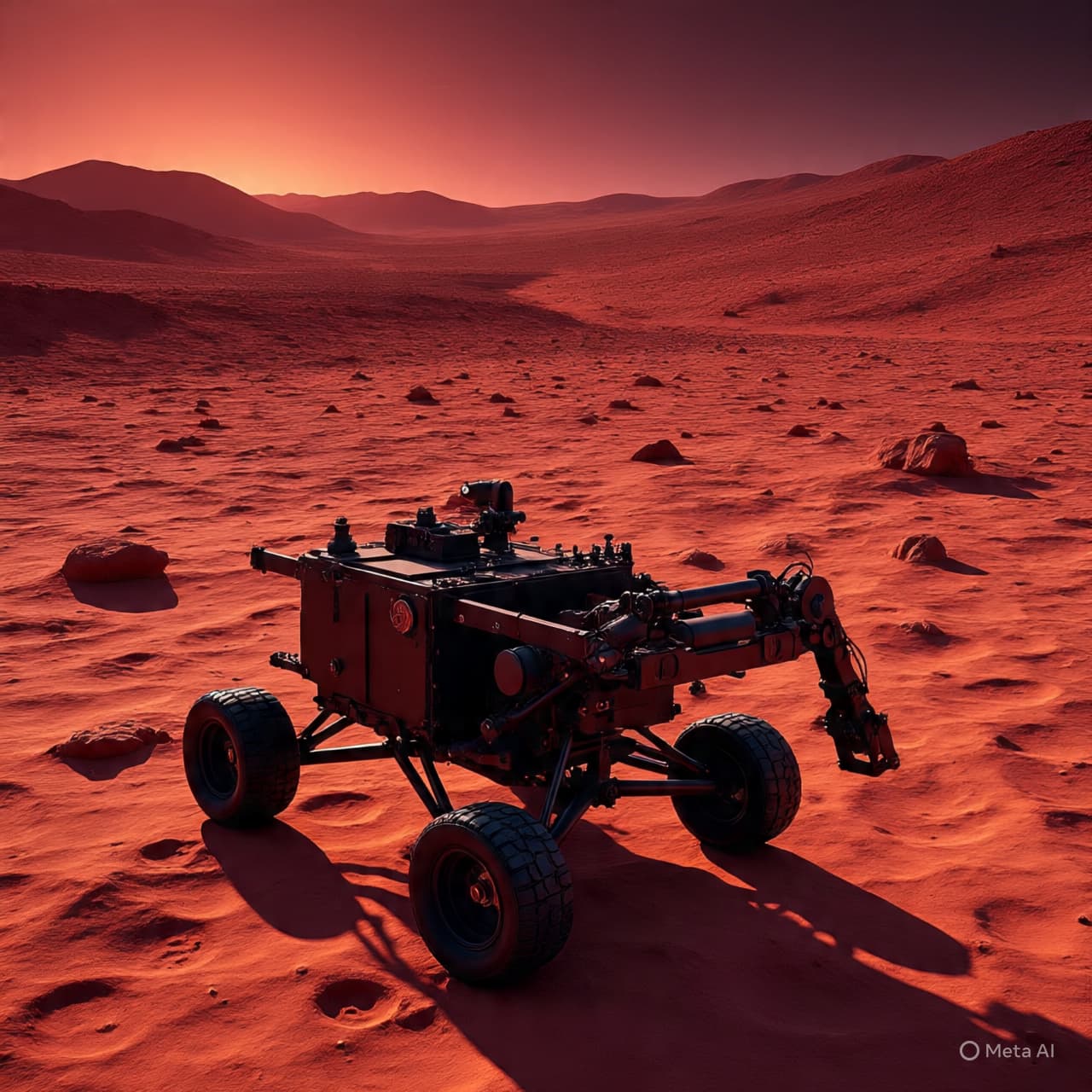
In the distance where rust‑colored plains meet horizons folded by time, one might imagine the Perseverance rover as a lone pilgrim upon an ancient world. Each pause it takes on Mars’s surface is like a moment of reflection — a stillness that invites a search for meaning amid soils older than human civilizations. It is fitting, then, that after years of measured steps guided by voices from Earth, Perseverance has begun to develop a sense of its own place in this alien landscape, like a traveler learning to read the terrain beneath its feet.
For much of its mission, the rover’s journeys across the Martian surface have relied on careful coordination with mission teams on Earth. Engineers and scientists have worked in harmony with delays of up to tens of minutes, guiding each turn by interpreting terrain data and defining waypoints that map a safe route. But recently, the rover has taken a subtle but significant leap toward self‑reliance. Thanks to a new capability known as Mars Global Localization, Perseverance now uses images from its own navigation cameras and compares them with orbital maps stored onboard to figure out where it is on Mars with remarkable precision — within about 10 inches (25 centimeters).
This achievement can be thought of as giving the rover its own internal compass, adapted for a world where familiar Earthly tools like GPS simply do not exist. By running an advanced algorithm on a fast processor originally used for communicating with the now‑retired Ingenuity helicopter, Perseverance matches panoramic views of the Martian surface with the broader terrain recorded by orbiters. In about two minutes, it can tell its exact location — something that once required the patience of Earth‑based calculations.
The impact of this new ability ripples across the rover’s ongoing exploration. Previously, Perseverance could loosely track its position using visual odometry — estimating motion from successive images taken as it moves — but this method could accumulate uncertainties over long distances. When the rover became unsure of its whereabouts, it would pause and wait for a command from Earth, as if asking its human guides to reassure it it was still on the right road. With autonomous localization, many of those pauses may become less frequent, enabling longer and more fluid journeys across Jezero Crater and beyond.
At the heart of this progress is a pair of technological threads woven together over years of Mars exploration. One is the power of artificial intelligence in route planning, demonstrated recently when Perseverance completed its first drives using AI‑generated waypoints, reducing the workload on human planners and letting the rover make more decisions on its own. The other is the careful reuse and repurposing of hardware like the Helicopter Base Station processor — a gift from the Ingenuity mission — now serving new autonomy functions in the rover itself.
Thinking of Perseverance as a student of its environment seems apt. Each image it captures becomes a lesson in shape and slope, each comparison with an orbital map a chance to better understand where it stands. Like a wanderer gaining confidence in a foreign land, the rover’s growing sense of place enables richer exploration, less bounded by the slow cadence of commands relayed from Earth.
For scientists, this autonomy promises not only efficiency but also deeper scientific returns. By knowing its position more precisely, Perseverance can plan drives that cover farther distances without stopping, reaching new geological features sooner and capturing more diverse samples. Over time, this extended reach enriches our portrait of Mars’s ancient history and its many unanswered questions.
As Perseverance continues its work under a thin, amber sky, the blend of human ingenuity and machine autonomy unfolds gently but inexorably. In this moment, the rover’s newfound ability to understand its place on another world is not just a technological milestone; it is a poetic reminder of exploration’s deeper essence — learning where we are, so we can better ask where we might go next.
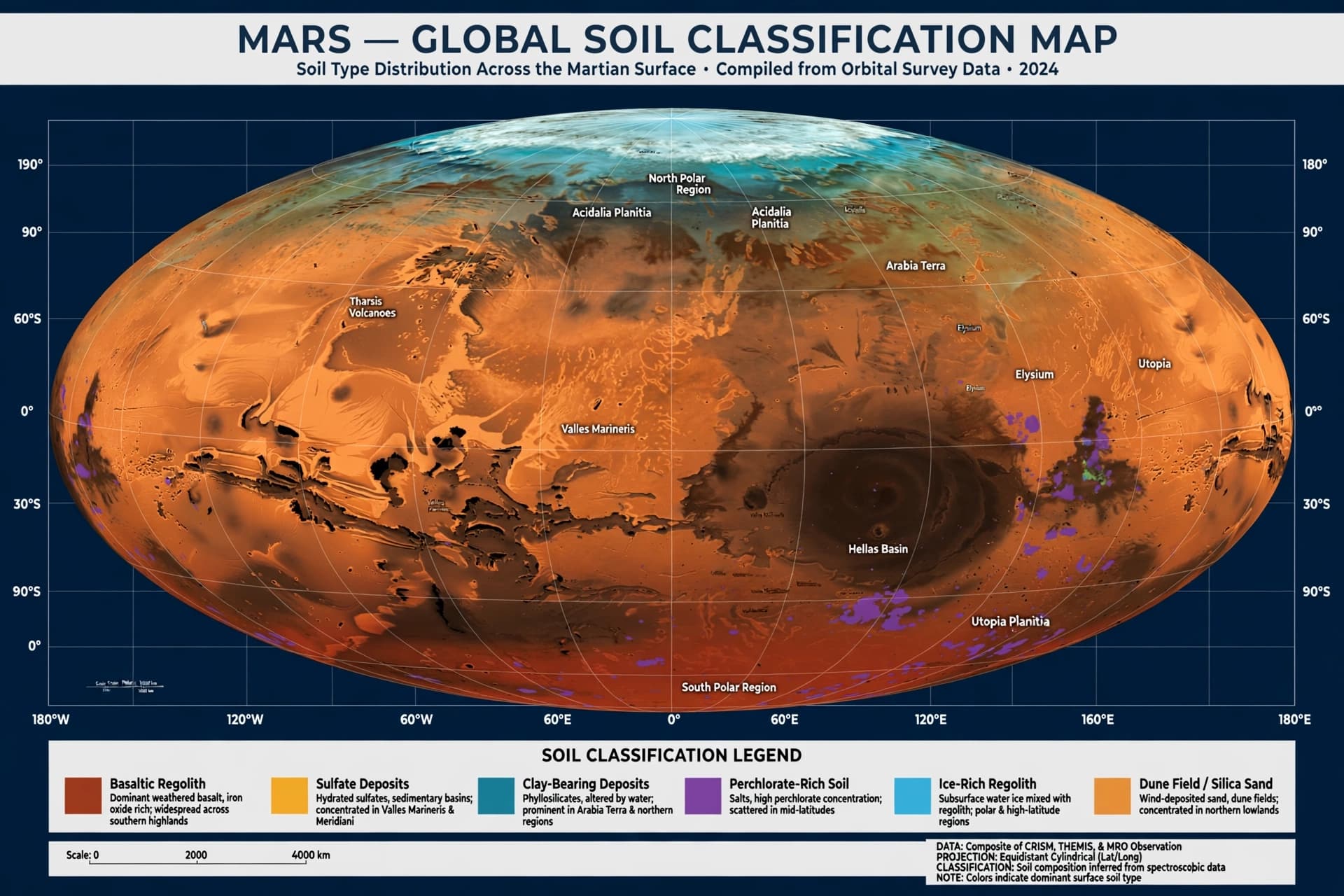
In the latest operational milestone, NASA engineers have begun using the Mars Global Localization system during routine mission planning. The technology compares 360‑degree panoramas taken by the rover with detailed maps from Mars orbiters, enabling rapid and accurate location determination on the planet’s surface. This capability was successfully used in February 2026, marking an important step toward more autonomous drives.
AI Image Disclaimer Visuals are created with AI tools and are not real photographs.
Credible sources exist on this topic:
NASA (via mission news) Phys.org ScienceDaily Mirage News JPL image/mission pages
Published by Banx Network. This article is part of the Banx decentralized media programme, powered by the BXE token on the XRP Ledger.