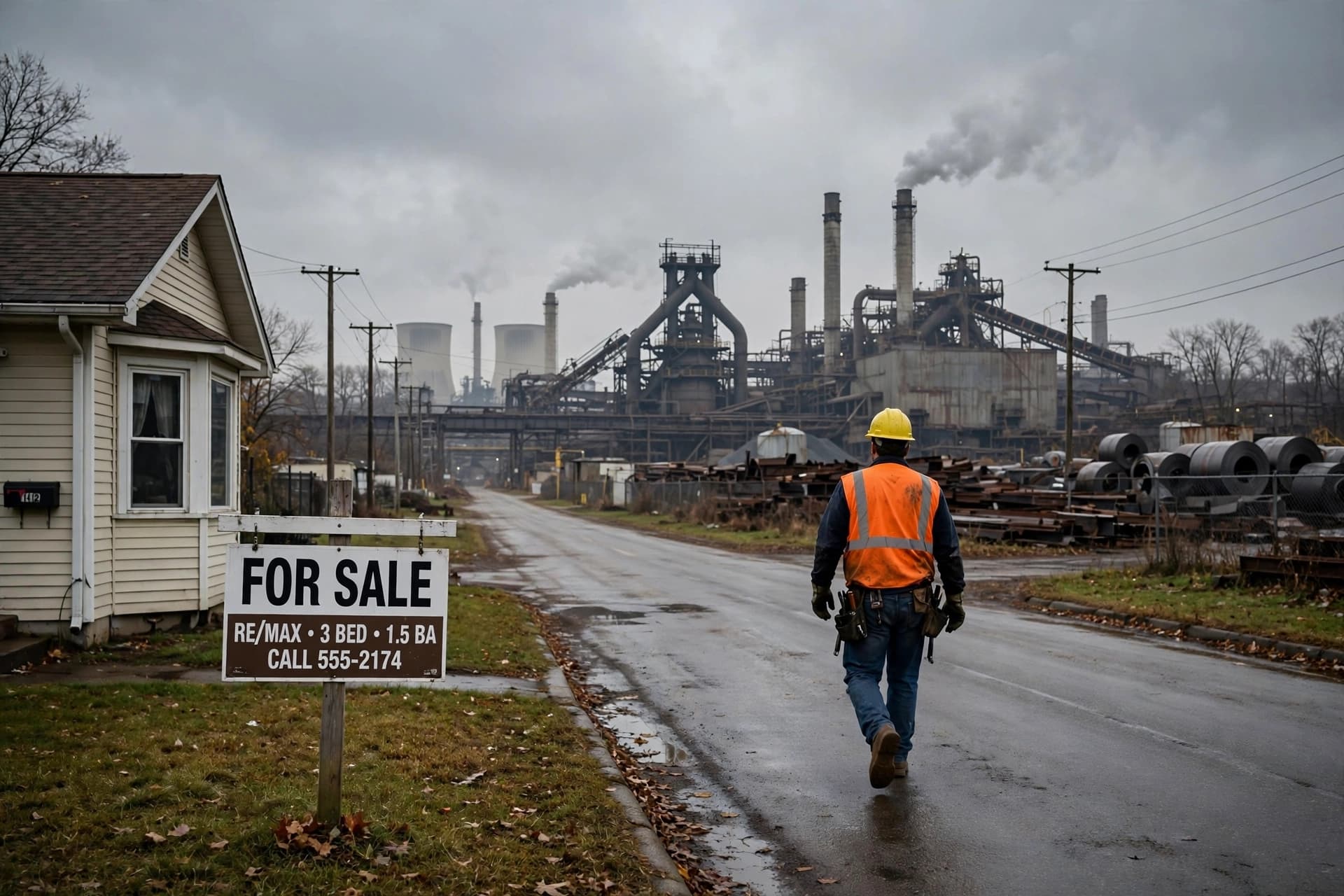
There is a particular cruelty in a layoff that arrives after you have already rebuilt your life—a cruelty made sharper by the knowledge that the new path you chose, the training you undertook, the hope you invested, is now threatened by the same forces that took your old job. In Sault Ste. Marie, Ontario, that cruelty has arrived for workers at Algoma Steel, where layoffs have rippled through the community and beyond, affecting not only those who lost their jobs but also those who left to build new careers and now find those careers at risk.
One worker, who asked not to be identified, described the experience as "gut wrenching." He had worked at Algoma Steel for years before being laid off. He used the opportunity to retrain, enrolling in a program that would allow him to work in a different field—one he hoped would be more stable. He graduated, found a job, and began to build a new life. Then the layoffs at Algoma Steel continued, and the economic ripple effects reached his new employer. Now, he says, his new career is at risk. "I did everything right," he said. "I went back to school. I got a new job. And now this."
The layoffs at Algoma Steel are part of a broader crisis in Canada's steel industry. The company has faced declining demand, rising costs, and the impact of U.S. tariffs on Canadian steel. The tariffs, imposed by the Trump administration as part of its broader trade war, have made Canadian steel more expensive in the U.S. market—the industry's largest customer. The result has been a contraction that has cost hundreds of jobs in Sault Ste. Marie and threatens thousands more across the region.
For the community, the layoffs are a familiar story. The Sault has depended on steel for generations, and the cycles of boom and bust have shaped the lives of families for decades. But each cycle is harder than the last, because the jobs that are lost are not always replaced, and the workers who are laid off are not always able to find equivalent employment. The retraining programs that are supposed to help often lead to jobs that pay less, offer fewer benefits, and are themselves vulnerable to economic shifts.
The worker who spoke to CBC News said he is trying to stay positive, but the uncertainty is exhausting. He has a family, a mortgage, and a future he is trying to build. He did what he was told to do—retrain, adapt, be flexible—and it still may not be enough. "I don't know what else I can do," he said. The layoffs continue. The tariffs remain. And the workers of Sault Ste. Marie, who have weathered so many storms, are bracing for another one.
AI Image Disclaimer: All images in this article are AI-generated and are for illustrative purposes only.
Sources: CBC News, The Canadian Press, Sault Star
Published by Banx Network. This article is part of the Banx decentralized media programme, powered by the BXE token on the XRP Ledger.