Across Italy, the future of work is being shaped by two forces moving at different speeds. One is demographic change, with an aging population and a shrinking pool of younger workers. The other is technological transformation, as factories, offices, and service industries adopt new tools that require different forms of knowledge. Between them lies a question that is both economic and deeply human: who will carry the work forward?
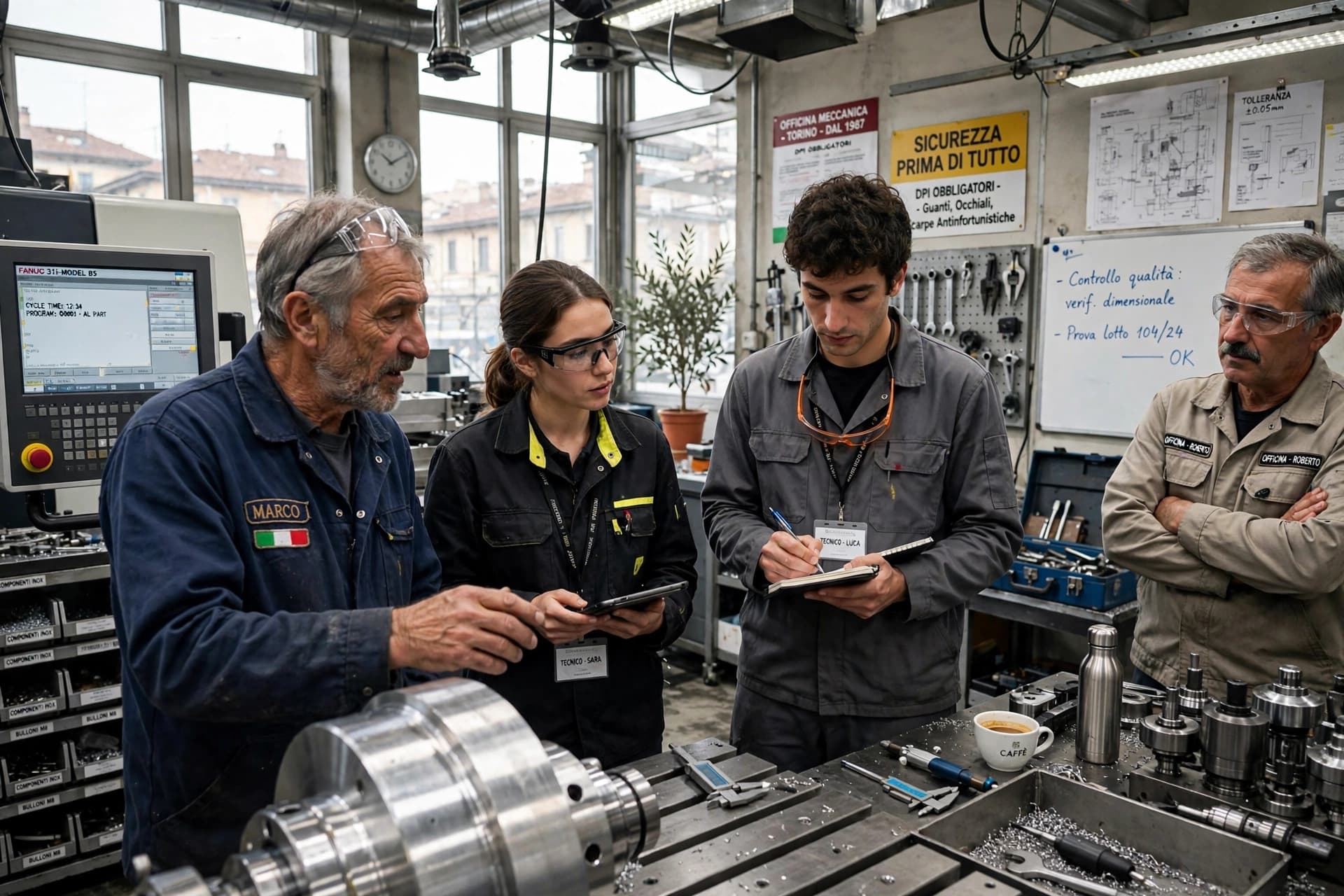
Many Italian industries rely on experienced employees whose knowledge has been built over decades. Their skills are often practical, detailed, and difficult to reproduce through manuals alone. As older workers approach retirement, companies face the task of transferring that knowledge while also preparing for a labor market that may look very different in the coming years.
Manufacturing, logistics, healthcare, construction, hospitality, and technical services are among the areas where employers may encounter difficulty finding workers with the right qualifications. The issue is not always a lack of people willing to work. In many cases, it is a mismatch between available skills and the requirements of changing businesses.
Digitalization has added another layer to this transition. Automation, artificial intelligence, data systems, and advanced machinery are changing the daily responsibilities of employees. Technology may reduce some repetitive tasks, but it also creates demand for workers who can monitor systems, interpret information, maintain equipment, and respond to unexpected problems.
Training is consequently becoming more important than ever. Traditional education can provide a foundation, but many workers also need opportunities to update their abilities throughout their careers. Partnerships between schools, universities, technical institutes, and businesses may help bridge the distance between classroom learning and the practical needs of employers.
Small and medium-sized companies face particular challenges. They often possess deep knowledge of their markets but may have limited resources for recruitment, training, or technological investment. For these businesses, the loss of even a few experienced employees can create a significant gap in operations.
Migration is also part of the wider labor discussion. Some sectors depend on international workers to fill essential roles, especially in caregiving, agriculture, hospitality, and other labor-intensive activities. The challenge is to create conditions that support legal employment, fair treatment, integration, and long-term social stability.
Italy’s workforce transition will not be solved by technology alone. Machines can increase efficiency, but they cannot automatically replace trust, judgment, creativity, or the relationships that hold many workplaces together. The country’s next economic chapter may depend on how successfully it connects generations, welcomes talent, and gives people the chance to learn again.
In the end, the future of employment is not simply about producing more workers or introducing more advanced systems. It is about building an economy where experience is respected, young people see meaningful opportunities, and change does not leave entire communities behind. Italy’s challenge is unfolding gradually, but its consequences will shape the country for decades.
AI IMAGE DISCLAIMER:
This article’s illustrations are AI-generated visual concepts created for editorial presentation. They do not represent exact photographs of specific events or workplaces.
SOURCES:
Reuters Italian National Institute of Statistics European Commission OECD Italian Ministry of Labour
Published by Banx Network. This article is part of the Banx decentralized media programme, powered by the BXE token on the XRP Ledger.