Key Highlights
- Iran's IRGC launched missile and drone attacks on U.S. military facilities in Bahrain.
- Bahrain's air defense successfully intercepted multiple threats.
- International calls for restraint follow the escalation of tensions.
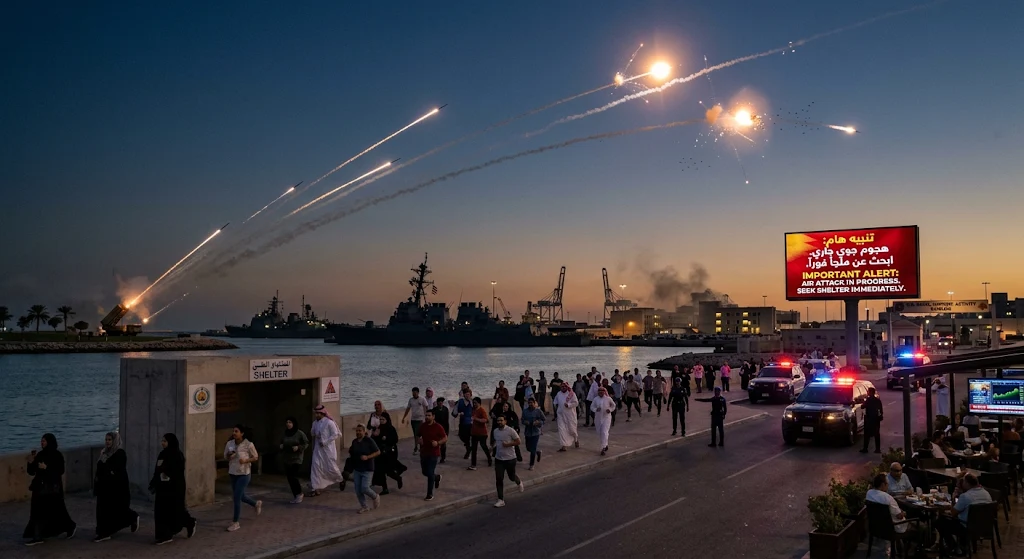
MANAMA — Regional tensions escalated sharply on Sunday as air raid sirens echoed across Bahrain and the kingdom's air defense systems engaged multiple incoming aerial threats. The attack prompted the Bahraini Interior Ministry to issue rare nationwide threat alerts, urging residents to seek immediate shelter.
According to official statements from Tehran, Iran’s Islamic Revolutionary Guard Corps (IRGC) launched a barrage of drones and projectiles targeting U.S. military facilities and air defense radar installations in the country. The IRGC claimed the operation was carried out in retaliation for recent hostile U.S. military actions in the region, marking a significant escalation in the ongoing conflict between Iran and the United States.
The General Command of the Bahrain Defense Force (BDF) confirmed that its high-readiness air defense units successfully intercepted and destroyed a number of hostile Iranian projectiles before they could reach their designated targets. The military emphasized that its units remain on full defensive alert to safeguard the kingdom's sovereignty and protect critical infrastructure, underscoring the seriousness of the threat posed by the Iranian attacks.
Neither U.S. Central Command (CENTCOM) nor Bahraini authorities have immediately confirmed any direct hits or structural damage to primary facilities at the base, which plays a central role in regional maritime and defense operations as the home of the U.S. Navy’s 5th Fleet. The lack of immediate confirmation raises concerns about the potential for further escalation and the safety of personnel stationed at the base.
In response to the escalating crisis, international allies and regional neighbors have rushed to urge restraint, with several European and Middle Eastern foreign ministries calling for urgent backchannel negotiations to prevent a broader military conflagration. Energy markets also reacted swiftly to the news, as benchmark crude futures surged amid growing anxieties over potential disruptions to commercial shipping lanes and maritime transit through the critical Strait of Hormuz, a vital artery for global oil supplies.
The sudden flare-up threatens to upend a fragile regional lull, testing ongoing diplomatic efforts and security arrangements across the Gulf. Bahraini officials have strongly condemned the attacks, characterizing them as part of a systematic hostile campaign by Tehran, and have called for immediate international oversight and accountability through the United Nations Security Council. This incident not only heightens military tensions but also poses significant risks to regional stability and international relations in the Middle East.
Published by Banx Network. This article is part of the Banx decentralized media programme, powered by the BXE token on the XRP Ledger.