Quito, Ecuador—A massive wall of red clay and uprooted eucalyptus trees roared down a steep mountain slope early Tuesday morning, engulfing several homes in a rural community. National risk management secretaries reported that continuous rainfall over the past forty-eight hours completely saturated volcanic soil layers surrounding the valley. Local farmers used machetes and wooden shovels to hack through tangled debris blocking access to buried family compounds.
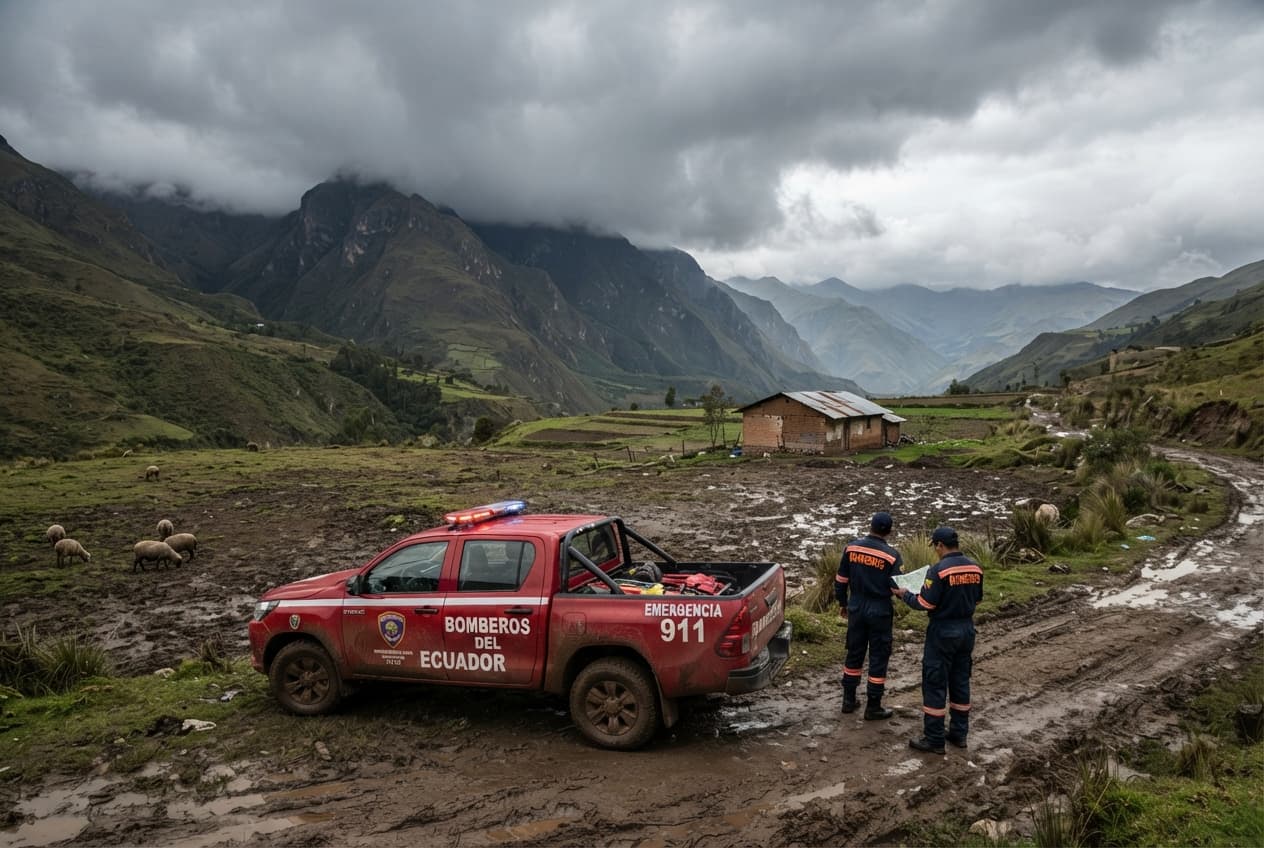
Firefighters and municipal paramedics navigated slick, mud-slicked pathways on foot after a primary access bridge collapsed under the weight of the debris flow. Rescue units established a field command post near a local schoolhouse that escaped the slide path by a matter of meters. Telephone and power lines remained severed across three surrounding farming parishes, plunging the rural district into total darkness.
Eyewitnesses described a sudden rushing sound resembling a low-flying aircraft just before the mountainside gave way above the agricultural terracing. Agricultural extension agents confirmed that dozens of small dairy farms lost livestock and vital irrigation canals essential for local food production. Municipal earth-moving equipment arrived at midday to begin clearing tons of mud from the main rural transit artery.
Regional health centers issued urgent alerts for residents to boil drinking water following reports of ruptured municipal supply pipes near the slide zone. Mobile medical vans deployed to the disaster periphery to administer tetanus boosters and treat lacerations sustained by volunteer diggers. Federal disaster coordinators authorized emergency food rations for displaced agricultural workers housed in a community gymnasium.
Geologists flying overhead via civil defense aircraft warned that ongoing saturation levels created high risks of secondary slippage along the upper ridge. Local mayors faced sharp questions from community leaders regarding delayed funding for municipal retaining walls and drainage channels. Independent environmental analysts noted that unregulated timber clearing along upper slopes significantly worsened soil stability.
Police established security checkpoints along the rural approach road to keep curious onlookers away from active excavation zones and unstable cliffs. Exhausted rescue personnel rotated shifts as afternoon rain showers turned the entire valley floor into a sticky quagmire. Heavy excavators labored under portable floodlights as night fell over the isolated rural community.
Emergency coordinators confirmed that heavy machinery had finally cleared a single lane through the primary mud barrier, allowing supply trucks to reach the disaster zone.
Published by Banx Network. This article is part of the Banx decentralized media programme, powered by the BXE token on the XRP Ledger.