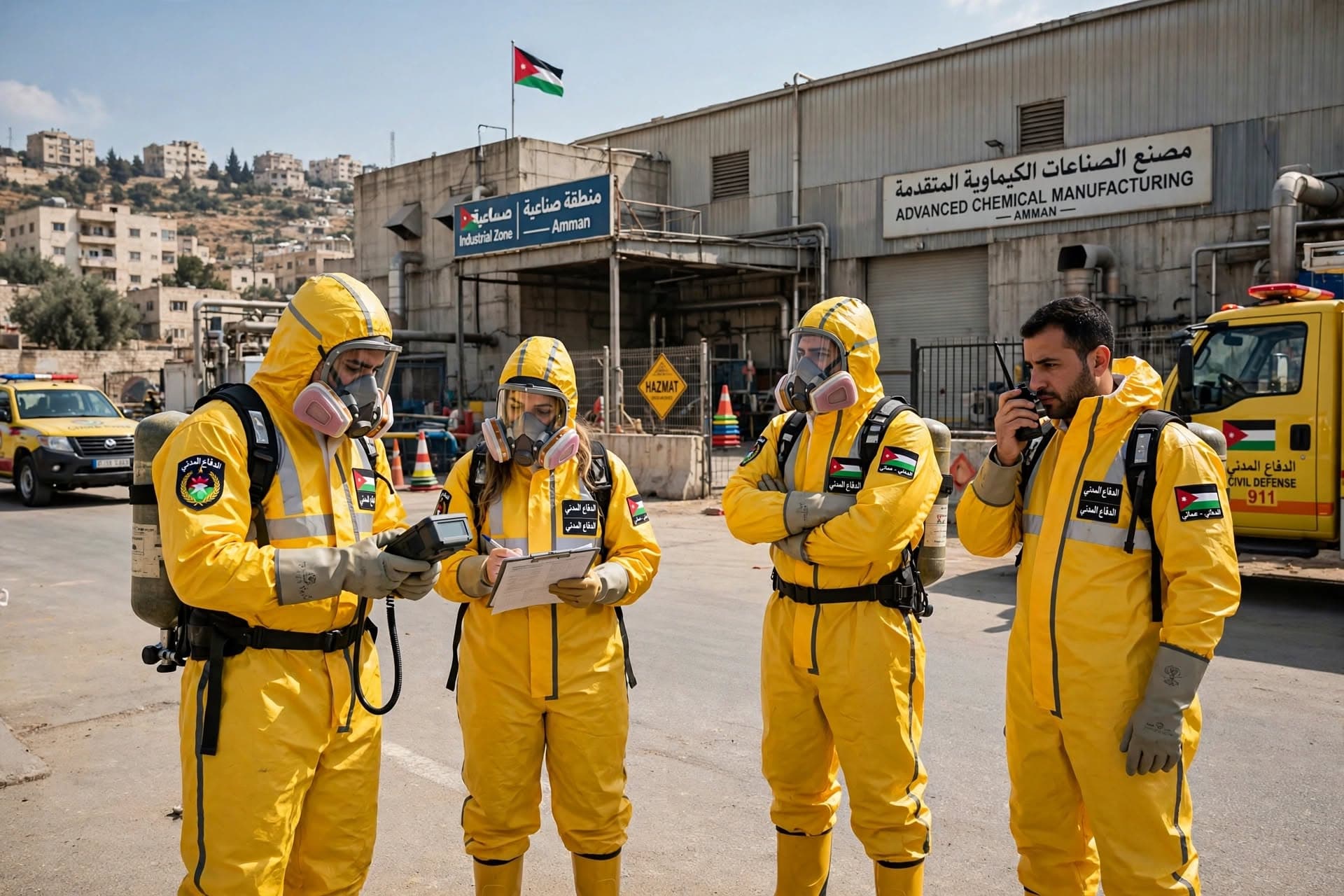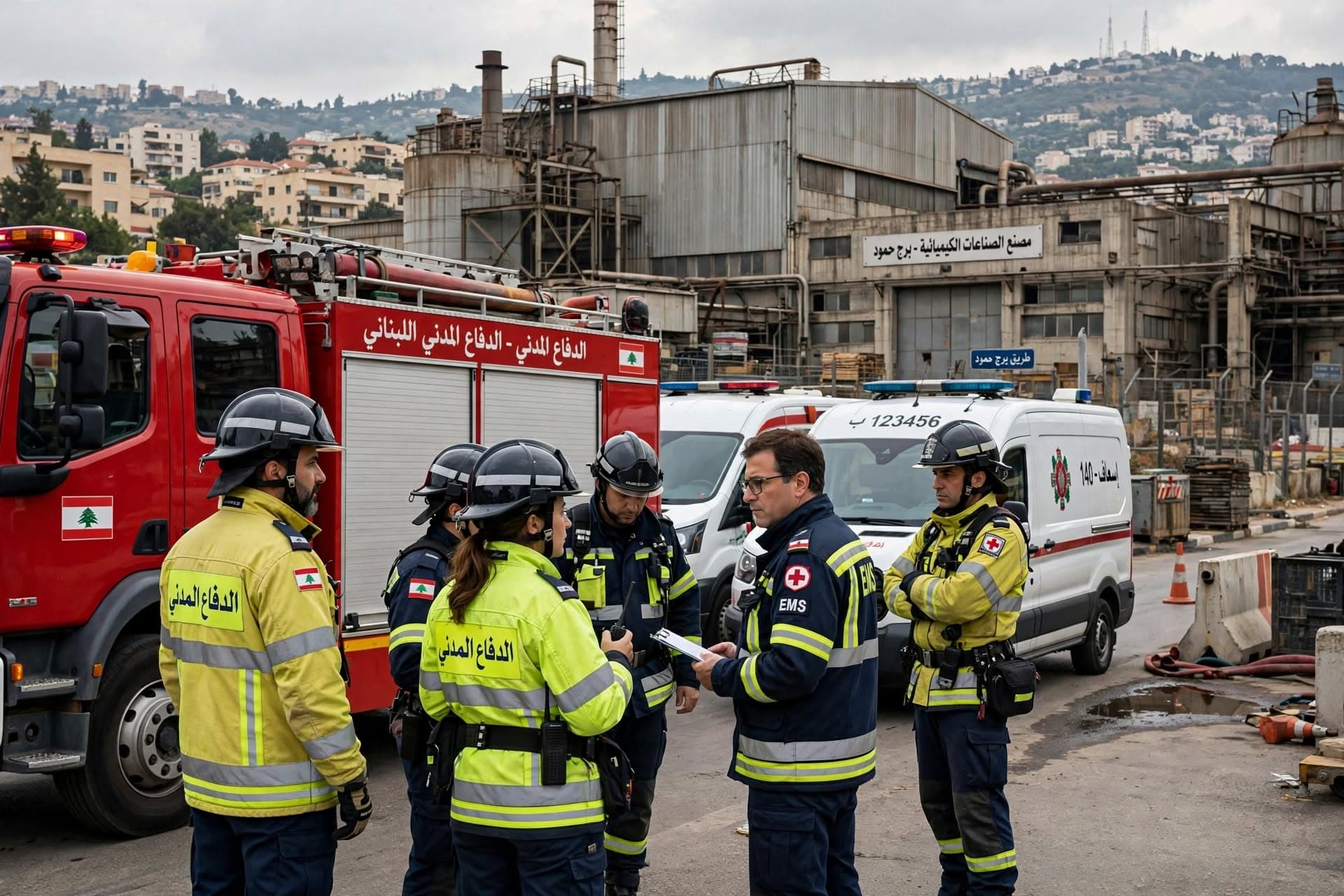
Beirut, Lebanon—Emergency medical teams and Civil Defense crews rushed to an industrial suburb on the outer edges of the capital today after a high-pressure gas cylinder detonated inside a local manufacturing facility. The blast shattered heavy glass windows, tore through reinforced concrete partitions, and scattered steel fragments across the shop floor. Four workers standing near the assembly line sustained immediate blast injuries and chemical burns.
First responders arrived within minutes of the alarm, securing the immediate perimeter and cutting power lines to prevent secondary fires. Rescuers navigated dense smoke and hazardous fumes to stabilize the injured staff before transport. Ambulances transferred all four victims to regional medical facilities, where doctors listed two in critical condition with severe trauma.
Preliminary assessments by Civil Defense engineers indicate the explosion stemmed from a catastrophic structural breach in a compressed industrial gas storage tank. Technicians were performing routine pressure checks when the container wall failed without warning. The force of the sudden decompression blew out adjacent wall sections and damaged neighboring machinery.
"We heard a sharp metallic crack followed instantly by a massive shockwave that shook the entire building," said a senior shop-floor supervisor who requested anonymity to speak openly about workplace conditions. "There was no fire warning or pressure alert triggered prior to the breach."
Municipal inspectors halted all operational activity at the site while forensic specialists collect metal fragments and verify maintenance logs. Authorities are investigating whether the cylinder suffered from undetected metallurgical fatigue, improper storage temperatures, or a faulty pressure regulator valve. Factory management has turned over equipment testing records to safety investigators.
The incident highlights chronic oversight challenges within regional light-manufacturing zones, where aging infrastructure operates alongside modern commercial equipment. Industrial worker unions have raised concerns over delayed safety inspections and lack of standardized testing protocols for pressurized containment units across the province.
Nearby commercial establishments reported brief power outages and localized traffic gridlock as emergency vehicles blocked primary access routes. Local municipality officials deployed hazardous materials units to monitor air quality levels surrounding the plant, later confirming no toxic chemical leaks spread beyond the primary blast zone.
Workplace safety regulators remain on scene conducting stress tests on adjacent gas storage systems to ensure no secondary risks remain. Investigators plan to issue an initial findings report once metallurgical analysis of the ruptured vessel concludes.
Published by Banx Network. This article is part of the Banx decentralized media programme, powered by the BXE token on the XRP Ledger.