There are beginnings so vast that language bends under their weight. The birth of the universe is one of them—a moment not witnessed, only inferred, traced backward through equations and particles. For decades, scientists have tried to reconstruct what followed that first expansion, searching for patterns in the earliest light. Now, through advanced simulations, researchers suggest that the young universe behaved less like a scattering of isolated particles and more like something unexpectedly familiar: a kind of cosmic soup.
In the first microseconds after the Big Bang, temperatures were unimaginably high. Matter as we know it—atoms, molecules, even protons and neutrons—had not yet formed. Instead, the universe existed as a dense plasma of quarks and gluons, fundamental building blocks moving in extreme conditions. Physicists refer to this state as quark-gluon plasma, a phase that has also been recreated momentarily in particle accelerators.
Using high-powered computational models, scientists have simulated how this primordial plasma expanded and cooled. Their findings indicate that rather than behaving like a thin gas of independent particles, the early universe displayed properties of a strongly interacting fluid. The interactions were so intense that particles moved collectively, producing flow patterns consistent with hydrodynamic behavior.
This is where the metaphor of soup enters—not as a casual comparison, but as a reflection of fluid dynamics. In ordinary fluids, such as water or broth, molecules interact continuously, influencing each other’s motion. Similarly, simulations show that quarks and gluons in the early universe were tightly coupled, generating a nearly perfect fluid with remarkably low viscosity. In fact, experimental evidence from high-energy collisions at facilities like the and the has already hinted that quark-gluon plasma flows with minimal internal friction.
The new simulations extend these laboratory insights to cosmological scales. By modeling the aftermath of the Big Bang under extreme temperature and density conditions, researchers observed that matter did not disperse chaotically. Instead, pressure gradients and quantum interactions shaped collective waves—ripples that would eventually influence how matter clumped together as the universe expanded.
Such fluid-like behavior may help explain subtle irregularities observed in the cosmic microwave background, the faint afterglow of the Big Bang. Small fluctuations in density, amplified over billions of years, became the scaffolding for galaxies and galaxy clusters. If the early universe truly behaved like a nearly perfect fluid, its internal currents may have played a quiet role in structuring everything that followed.
Importantly, the “soup” analogy does not diminish the complexity of the physics involved. Quark-gluon plasma is governed by quantum chromodynamics, one of the most mathematically demanding frameworks in science. The simulations rely on lattice calculations, relativistic hydrodynamics, and vast computational resources. Yet the underlying concept—that the infant universe flowed rather than fragmented—offers a coherent narrative connecting particle physics with cosmology.
Researchers are careful to frame these findings as refinements rather than revolutions. The Big Bang theory remains intact, supported by decades of observation. What evolves is our understanding of texture—how the universe felt, in a physical sense, during its earliest moments.
As computational power grows and experimental data accumulates, scientists continue to bridge the smallest scales of particle interactions with the largest scales of cosmic structure. The image that emerges is less explosive chaos and more dynamic continuity: a universe that began not as scattered sparks, but as a dense, interacting medium gradually cooling into complexity.
The study’s conclusions suggest that modeling the early universe as a strongly coupled fluid provides greater alignment with both particle collision data and cosmological observations. Further work will refine parameters and test predictions against new measurements. For now, the metaphor lingers gently: in the first heartbeat of time, the cosmos may have flowed like soup—dense, hot, and unified—before crystallizing into stars.
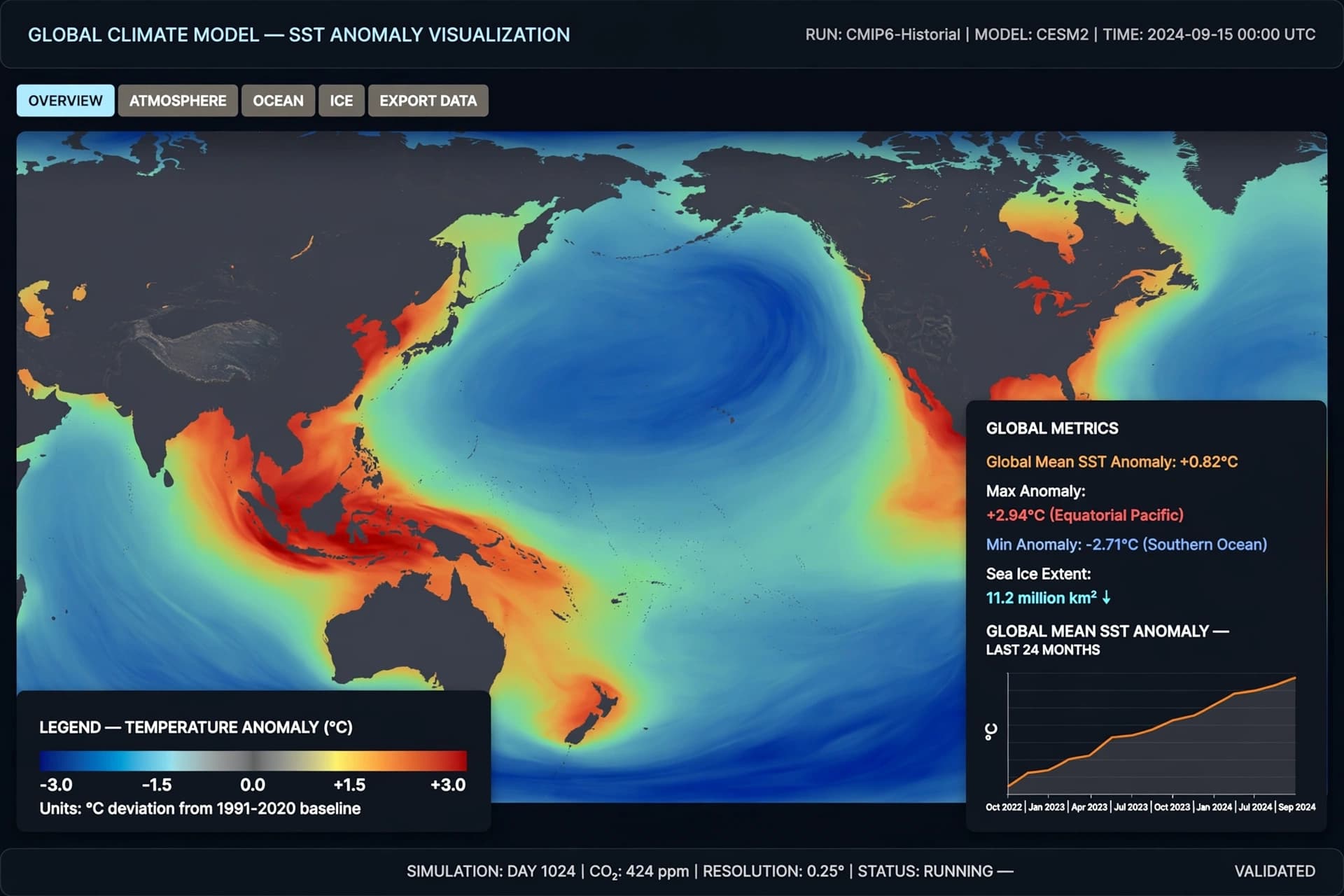
AI Image Disclaimer: Illustrations were produced with AI and serve as conceptual depictions.
Sources: BBC Nature Science Scientific American The Guardian
Published by Banx Network. This article is part of the Banx decentralized media programme, powered by the BXE token on the XRP Ledger.