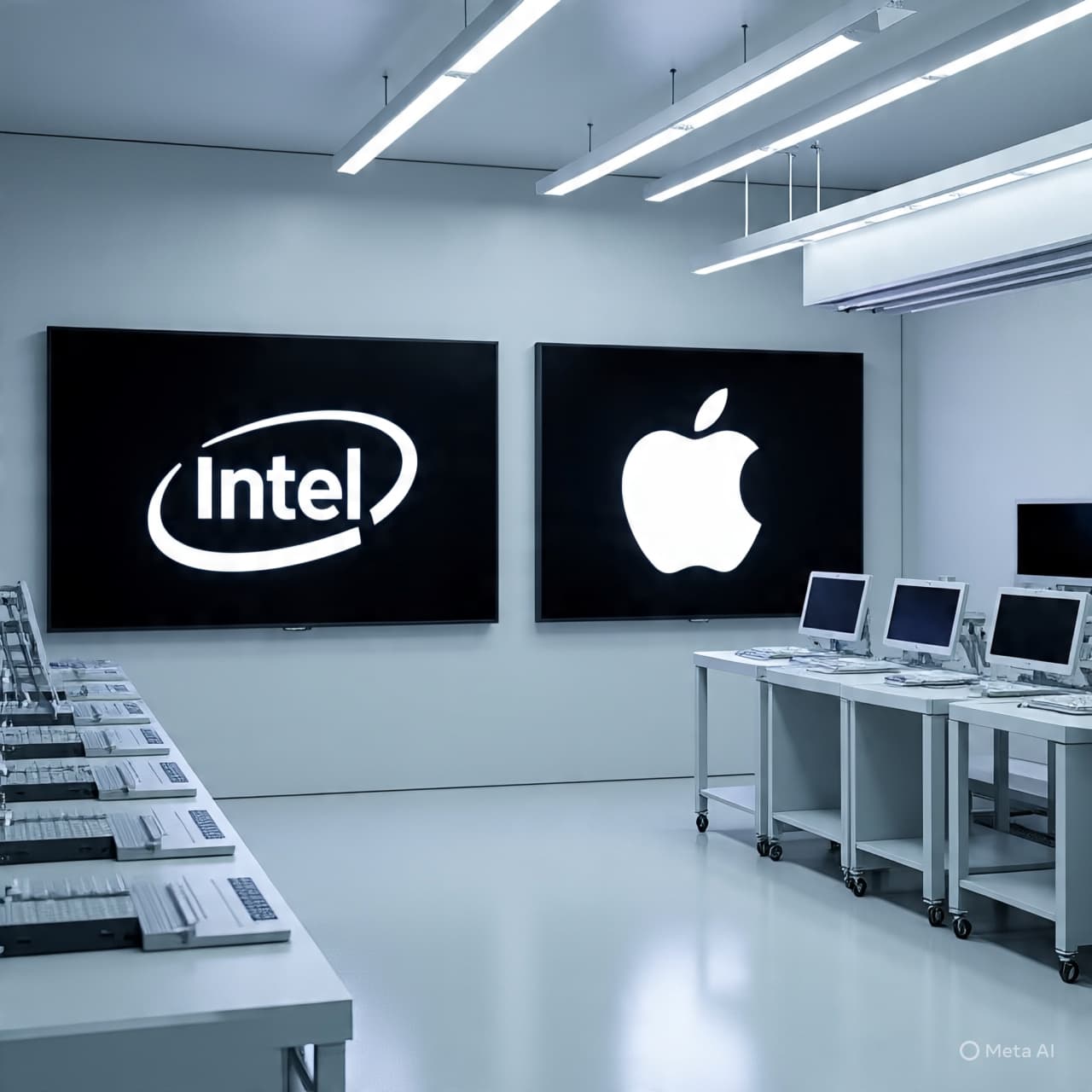
In the long harvest of tech industry evolution, partnerships that were once unthinkable sometimes sprout anew — not as echoes of the past, but as responses to fresh challenges. Apple and Intel, two giants whose paths once diverged when Apple shifted its Mac lineup away from Intel-designed processors, may be on the cusp of a renewed chapter in their relationship. According to analysts tracking supply-chain shifts and semiconductor capacity constraints, Apple could once again turn to Intel to manufacture future iPhone chips, a move that would mark a strategic diversification of its chipmaking ecosystem.
In a research note shared with industry watchers this week, Jeff Pu, a supply-chain analyst at GF Securities, reaffirmed expectations that Intel will begin producing chips for Apple’s iPhones using its upcoming 14A process node, potentially starting in 2028. This production would be focused on non-Pro iPhone models — such as base-level releases where cost and volume make supply flexibility particularly valuable. Apple would continue to design its own chip architectures, including future A-series processors, a practice that has underpinned its performance leadership and tight hardware-software integration for years. What would change is the fabrication partner — adding Intel alongside Apple’s long-time chip manufacturer TSMC (Taiwan Semiconductor Manufacturing Company) to reduce dependence on a single supplier and to manage capacity constraints driven in part by booming global demand for AI accelerators and advanced silicon.
This is part of a broader trend among major tech firms seeking supply-chain resilience. Analysts also note that Intel’s foundry business — long seeking marquee external customers — has built a “solid external customer pipeline” that includes Apple, along with chip giants like AMD and Nvidia, around advanced process technologies.
Industry observers point to wider geopolitical and industrial factors at play. Apple’s ability to diversify manufacturing partners aligns with global efforts to expand semiconductor production in the United States and mitigate risks associated with concentrated manufacturing hubs. Intel’s U.S.-based fabs — some supported by federal incentives under semiconductor initiatives — provide a complementary option to Apple’s existing relationships in Asia.
All of this, however, remains an analyst forecast rather than an announced corporate strategy. Neither Apple nor Intel has officially confirmed a finalized long-term fabrication agreement for iPhone chips. TSMC is still expected to remain Apple’s primary chip supplier, especially for the most advanced processors in high-performance iPhone and Mac models.
If this partnership takes shape as analysts predict, it could signal the first time in years that Apple turns beyond its established foundry relationships for iPhone chip production, leveraging Intel’s manufacturing capabilities alongside TSMC’s. For Apple, this diversification would not only help secure production capacity but also strengthen its strategic positioning in an era where chip supply chains have become as critical to corporate agility as innovation itself. Intel, for its part, would gain a major new customer in a segment where it has not played a leading role for over a decade. But for now, these developments remain industry expectations rather than confirmed plans, with the potential shift anticipated to unfold over the next few product cycles. AI Image Disclaimer “Visuals are created with AI tools and are not real photographs.”
Sources (News) 9to5Mac MacDailyNews MacRumors Gigazine (English) MacObserver
Published by Banx Network. This article is part of the Banx decentralized media programme, powered by the BXE token on the XRP Ledger.