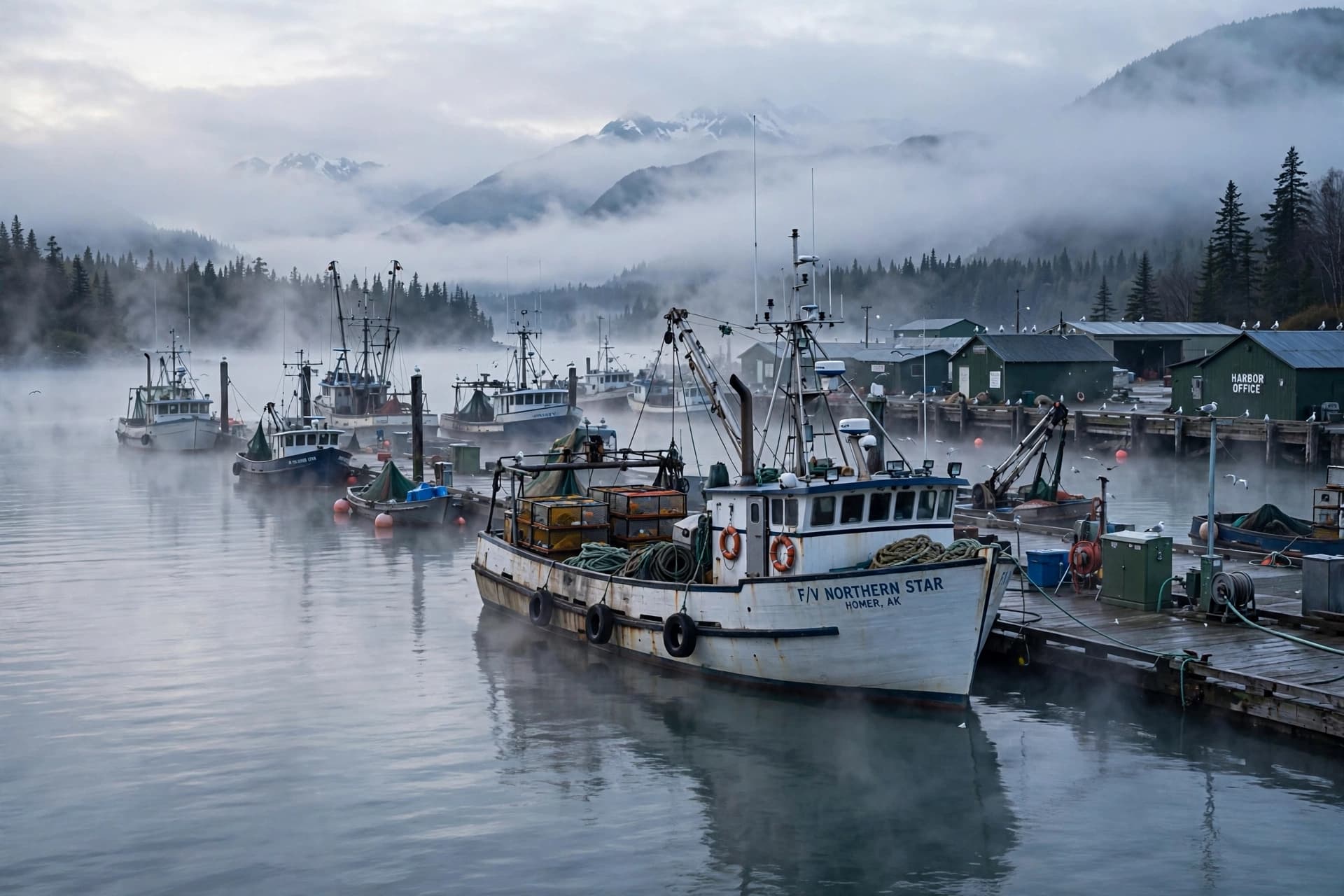
In the vast, cold waters off Alaska’s coast, a quiet struggle has been unfolding for years—one that rarely makes national headlines but carries the weight of generations. This autumn, that struggle has found its way into the heart of American politics, as fish, of all things, have become a defining issue in a Senate race that could tip the balance of power in Washington.
Alaska accounts for roughly 60 percent of the wild seafood harvested in the United States, from the prized Chinook salmon to the humble pollock that becomes fast-food fish sandwiches and imitation crab . For a state where fishing is not merely an industry but a way of life, the collapse of salmon runs along the Yukon and Kuskokwim rivers has been nothing short of devastating. Communities that once harvested tens of thousands of Chinook annually for subsistence now find themselves with a fraction of that number, their traditions and food security hanging by a thread .
At the center of the debate is trawling—the practice of dragging massive nets through the sea to catch groundfish like pollock. The largest of these vessels, many based in Washington and Oregon, sweep the Bering Sea with nets large enough to engulf a football field, processing their catch onboard and rarely docking in Alaskan ports . In the process, they incidentally catch salmon bound for western Alaska rivers, along with halibut, crab, and other species—a bycatch that critics say amounts to an astonishing 141 million pounds of marine life discarded annually .
Former Rep. Mary Peltola, a Yup’ik woman who grew up fishing on the Kuskokwim River, has made this issue the centerpiece of her campaign against Republican Sen. Dan Sullivan. Her platform of “fish, family and freedom” is no longer treated as a quaint slogan; it has become a rallying cry for Alaskans who feel their resources are being harvested by outside interests while their own communities go hungry . A recent poll found that nearly three-quarters of Alaskans support a ban on trawling, a sentiment that cuts across party lines .
Sullivan has countered with his own legislative efforts, including a bill to reduce bycatch and crack down on illegal foreign fishing. He argues that his record of action speaks louder than campaign rhetoric, pointing to measures he has helped pass to protect Alaska’s fisheries . Yet even some political observers acknowledge that Sullivan now finds himself playing catch-up on an issue where his opponent has deep personal and cultural roots .
Beyond the trawling debate, Alaska’s fishermen face a broader set of pressures. Fuel costs have climbed sharply, with diesel reaching six dollars per gallon in some areas, squeezing the margins of independent operators . Cuts to the National Oceanic and Atmospheric Administration have left the agency’s remaining staff strained, making it harder for fishermen to access the data and forecasts they rely on to plan their seasons . And the trade war with Canada has disrupted markets that have long been interconnected, adding another layer of uncertainty to an already fragile industry .
For Alaskans, the fish fight is not merely about economics. It is about identity, about who gets to benefit from the state’s natural abundance, and about whether the traditions that have sustained communities for generations will survive into the next. As one retired fisherman put it, it feels as though outside interests are once again trying to take what belongs to Alaskans .
The Senate race in Alaska will be decided in November, but the questions it has surfaced will linger long after the votes are counted. How a state manages its fisheries is ultimately a question of values—about who is heard, who is protected, and what kind of future is being built. For now, the fish have forced a conversation that Washington can no longer ignore.
AI Image Disclaimer: The visual elements accompanying this article are generated by AI and intended for illustrative purposes only.
Sources: The Seattle Times, AP News, USA Today, The Hill, News From The States
Published by Banx Network. This article is part of the Banx decentralized media programme, powered by the BXE token on the XRP Ledger.