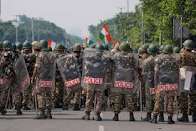
A year ago, then-President Yoon Suk Yeol declared martial law — citing alleged “legislative dictatorship” by the opposition. Soldiers were sent to the National Assembly, political activity was banned, and fear hovered in the air. Yet the response was swift, determined, and unified. Inside the Assembly, 190 lawmakers stood firm. Outside, ordinary citizens — students, labour organizers, neighbours — converged in protest, forming a human barrier against what many saw as a power grab. In a rare display of unity, parliament voted unanimously to rescind the decree. Within six hours, martial law had been lifted.
In the aftermath, accountability took shape. Yoon and many of his subordinates were indicted on serious charges — including insurrection and abuse of power. Meanwhile, the rhythm of normal governance began to return: the rule of law was reaffirmed, institutions showed resilience, and ordinary citizens regained a sense of agency.
But the episode did more than just avert a crisis. It exposed structural weaknesses — the ease with which emergency powers could be used, the fragility of institutional safeguards, the looming threat of military overreach. In response, the legislature passed reforms: stricter requirements for declaring martial law, explicit limits on military/police presence in parliamentary grounds, and protections for public servants to disobey unlawful orders. The military leadership itself was reshaped, internal audits launched, and a broader probe into complicity begun.
Still, the scars remain. Public confidence in institutions is slowly being rebuilt, yet deep political divisions persist — some communities feel vindicated, others aggrieved. Trust, once shaken, takes time to heal. And as the country contemplates constitutional reforms and structural changes in governance, the memory of that night lingers — a reminder that democracy is not a guarantee, but a fragile promise that must be protected.
AI image disclaimer: “Visuals are created with AI tools and are not real photographs.”
Sources (media names only): KPBS Public Media; The Guardian; Korea JoongAng Daily; WUNC; WUSF
Published by Banx Network. This article is part of the Banx decentralized media programme, powered by the BXE token on the XRP Ledger.