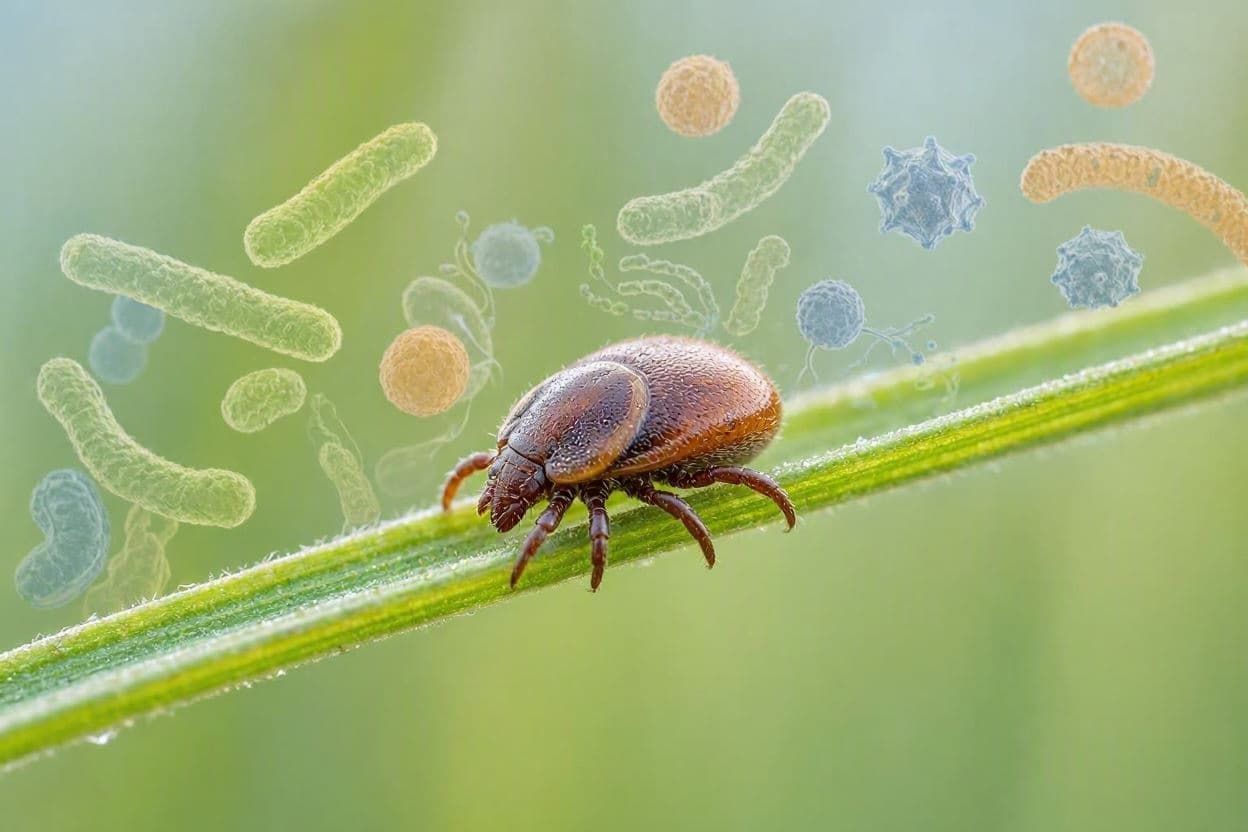
In the grassy fields and rural landscapes of Gansu Province, China, a small tick known as Haemaphysalis longicornis poses a significant but often overlooked threat to public health. Commonly called the Asian longhorned tick, this parasite is a vector for various pathogens that can cause serious diseases in humans and livestock. Recent metagenomic studies have provided a deeper understanding of the diversity of microbes carried by these ticks, highlighting the complex risks they present to local communities.
Metagenomics, the study of genetic material recovered directly from environmental samples, allows researchers to identify a wide range of pathogens without the need for culturing them in a lab. This approach has revealed that H. longicornis in Gansu carries a diverse array of bacteria, viruses, and parasites. Some of these are well-known threats, such as the agents of Lyme disease and spotted fever, while others are novel or less understood, posing new challenges for diagnosis and treatment.
The study, conducted by researchers from local universities and health institutes, analyzed ticks collected from various habitats, including pastures and forests. The results showed a high prevalence of multiple pathogens in individual ticks, indicating that co-infections are common. This complexity complicates clinical presentations, as patients may exhibit symptoms from more than one disease simultaneously, making accurate diagnosis difficult.
Public health officials are increasingly concerned about the spread of these tick-borne diseases, particularly as climate change expands the range of tick habitats. Warmer temperatures and changing precipitation patterns can lead to higher tick populations and longer active seasons. In Gansu, where agriculture and livestock farming are prevalent, the risk of transmission to humans through animal contact is significant.
Understanding the specific pathogen profile in this region is crucial for developing effective surveillance and control strategies. The metagenomic data provides a baseline for monitoring changes in pathogen diversity over time. It also helps identify emerging threats, allowing health authorities to prepare for potential outbreaks and educate the public on preventive measures.
Prevention efforts focus on reducing tick exposure through personal protective equipment, such as long sleeves and repellents, and managing livestock environments. Regular checks for ticks on both humans and animals are essential, as early removal can prevent infection. Public awareness campaigns are being strengthened to ensure that residents in high-risk areas know how to protect themselves.
The research also highlights the importance of One Health approaches, which recognize the interconnection between human, animal, and environmental health. By studying ticks in their ecological context, scientists can better understand the dynamics of disease transmission. This holistic view is essential for addressing the root causes of tick-borne illnesses and developing sustainable solutions.
As we continue to uncover the hidden dangers posed by H. longicornis, the need for vigilance and collaboration grows. The insights gained from metagenomic studies in Gansu serve as a warning and a guide, helping to safeguard public health in an increasingly interconnected world. It is a reminder that even the smallest creatures can have a profound impact on our well-being.
AI Image Disclaimer: The visual aids included here are AI-generated illustrations of tick biology and environmental contexts, not actual microscopic images or field photographs.
Sources: Parasites & Vectors Frontiers in Microbiology
Published by Banx Network. This article is part of the Banx decentralized media programme, powered by the BXE token on the XRP Ledger.