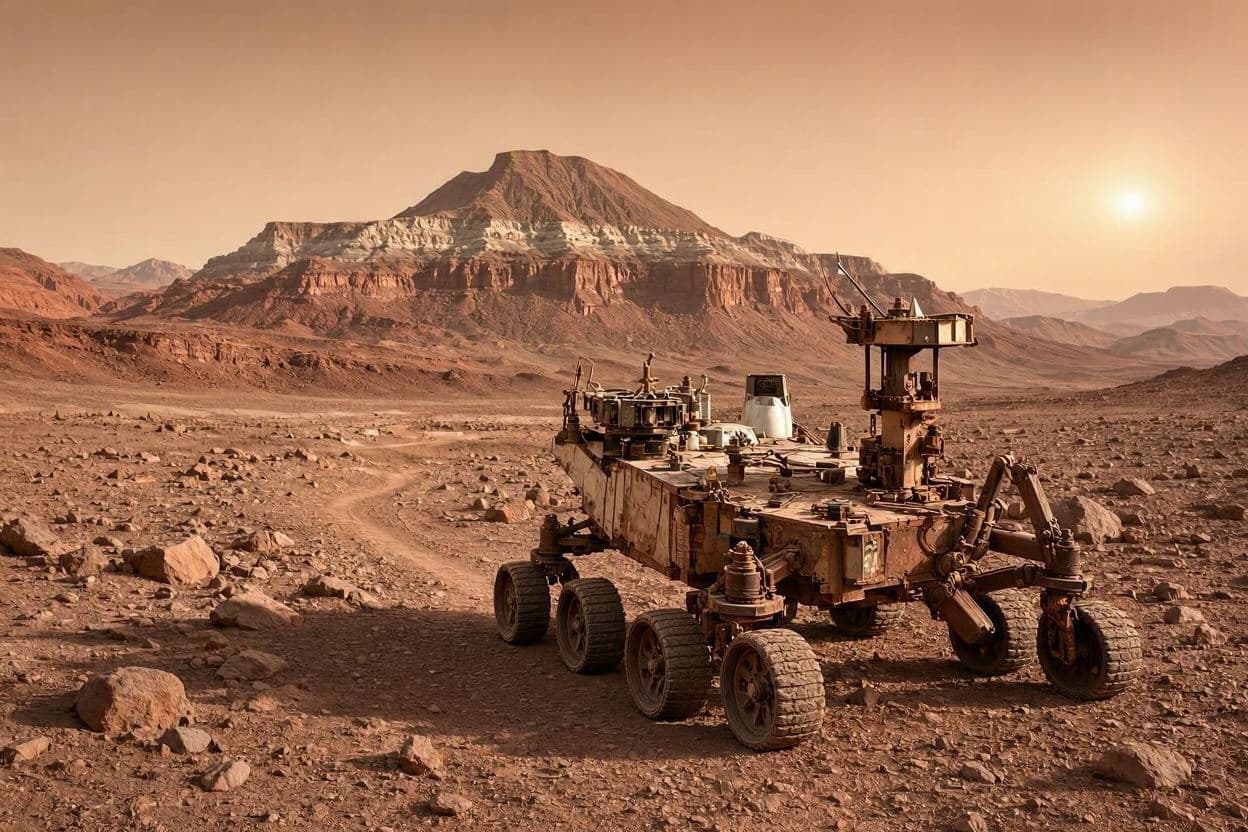
On the rust-colored plains of Gale Crater, a small robotic explorer continues its journey, defying the odds and the harsh Martian environment. NASA’s Curiosity rover has officially marked 5,000 sols, or Martian days, since its landing in August 2012. To commemorate this milestone, the mission team has released a new "postcard" from the Red Planet, a stunning image that captures the rugged beauty of the landscape Curiosity has called home for over a decade. This achievement is a testament to human engineering and scientific perseverance.
When Curiosity first touched down, it was expected to last for only two years. Yet, thanks to robust design and careful operation, it has continued to function long past its prime mission. Over 5,000 days, the rover has traveled more than 20 miles, climbing the slopes of Mount Sharp and analyzing rock samples that hold clues to Mars’ ancient past. Each sol brings new data, expanding our understanding of whether the planet could once have supported microbial life.
The new postcard features a self-portrait of Curiosity, stitched together from dozens of images taken by its hand lens imager. In the background, the layered rocks of Gale Crater rise dramatically, telling the geological story of a wetter, warmer Mars. The image is not just a celebration of longevity but a visual record of discovery, showcasing the terrain that has yielded evidence of ancient lakes and streams.
For the scientists and engineers at the Jet Propulsion Laboratory, this milestone is deeply personal. Many have spent their entire careers working on the mission, watching Curiosity grow from a concept to a legendary explorer. The rover’s endurance has allowed for unexpected discoveries, such as the detection of organic molecules and seasonal methane variations. These findings continue to shape the direction of future Mars exploration.
Curiosity’s journey has also paved the way for its successor, Perseverance, which landed in 2021. The lessons learned from Curiosity’s operations have improved the reliability and capabilities of newer rovers. The continuity between the two missions highlights the incremental progress of space exploration, where each success builds upon the last. Curiosity is not just a lone wanderer but part of a growing family of Martian explorers.
As the rover continues to climb Mount Sharp, it faces new challenges, including steep terrain and aging components. However, the team remains optimistic, adjusting driving strategies to preserve the rover’s health. The goal is to reach higher elevations where older rock layers may reveal even more about Mars’ climatic history. Every day is a bonus, and every sample is a treasure.
The public has followed Curiosity’s journey with enthusiasm, sharing in the excitement of each discovery. The "postcards" sent back from Mars serve as a bridge between Earth and the Red Planet, inspiring curiosity and wonder in people around the world. They remind us that exploration is not just about data but about connection and shared human experience.
In celebrating 5,000 sols, we honor not just a machine but the spirit of exploration it represents. Curiosity’s legacy is one of resilience and discovery, proving that with ingenuity and determination, we can explore worlds beyond our own. As it continues its trek, the rover remains a beacon of hope and knowledge in the vastness of space.
AI Image Disclaimer: The visual aids included here are AI-generated illustrations depicting Mars landscapes and rover concepts, not actual raw images from the Curiosity rover.
Sources: NASA JPL Space.com The Verge
Published by Banx Network. This article is part of the Banx decentralized media programme, powered by the BXE token on the XRP Ledger.