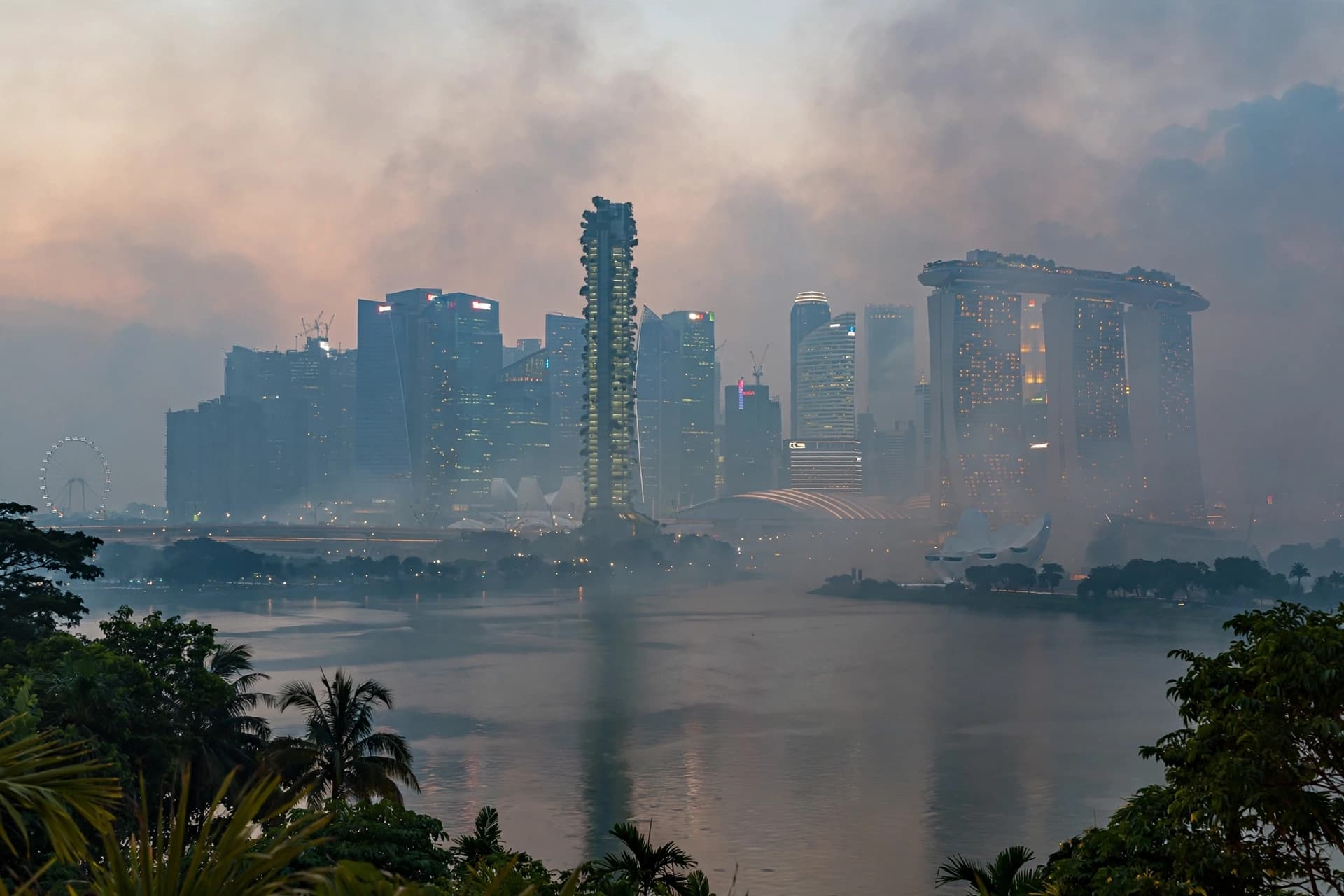
The Singapore skyline can change almost imperceptibly when haze arrives. Buildings remain where they were, traffic continues through the streets, yet the distant edges of the city begin to soften beneath a layer of smoke.
On September 17, air quality in Singapore’s central region returned to the unhealthy range. The 24-hour Pollutant Standards Index reached 102 at 9pm and stood at 103 by 11pm, according to the National Environment Agency.
The other regions of Singapore remained within the moderate range at the time. The uneven readings showed how haze conditions can vary across relatively small areas depending on wind patterns and the movement of smoke.
The NEA said smoke haze had drifted toward Singapore from southern and central Sumatra. Smoke plumes were also observed over southwestern Kalimantan, while dry conditions were expected to continue in parts of Sumatra and Kalimantan.
Prevailing winds were blowing from the southeast to southwest, creating a pathway through which smoke from regional fires could reach Singapore. The agency warned that haze could continue to affect the city-state if fires persisted.
The return to unhealthy levels followed a period of fluctuating air quality. The central region had moved in and out of the unhealthy category during the preceding weeks, prompting the NEA to issue daily haze advisories.
On September 15, all five regions of Singapore recorded unhealthy air quality, the first time that had happened since September 2019, according to CNA. The episode placed the current haze conditions within a longer pattern of regional smoke affecting the city-state.
The PSI measures several pollutants, including particulate matter, ozone, sulphur dioxide, nitrogen dioxide and carbon monoxide. Under Singapore’s classification, a 24-hour PSI reading from 101 to 200 falls within the unhealthy range.
Weather conditions remain important because rainfall and changing winds can influence the concentration and movement of smoke. Conversely, prolonged dry conditions in fire-affected areas can allow haze to persist or return after temporary improvements.
For Singapore, the haze is therefore not simply a local weather event. Its movement depends partly on conditions hundreds of kilometers away, carried across the region by wind before settling over the city. As September continues, the changing air reminds residents that the boundaries of environmental conditions rarely follow national borders.
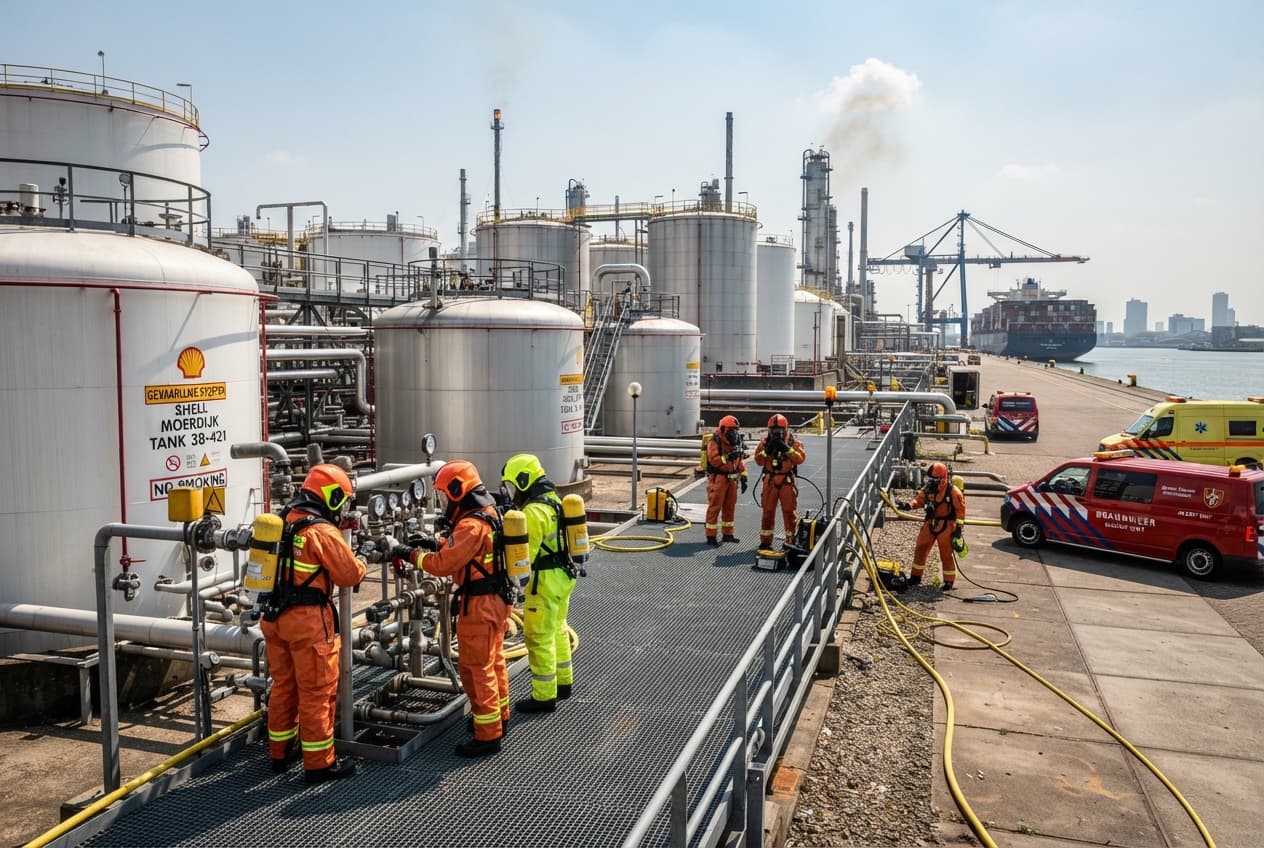
IMAGE DISCLAIMER
Visuals are AI-generated conceptual representations and are not actual photographs of the reported haze conditions.
SOURCES
Channel NewsAsia National Environment Agency Meteorological Service Singapore The Straits Times
Published by Banx Network. This article is part of the Banx decentralized media programme, powered by the BXE token on the XRP Ledger.