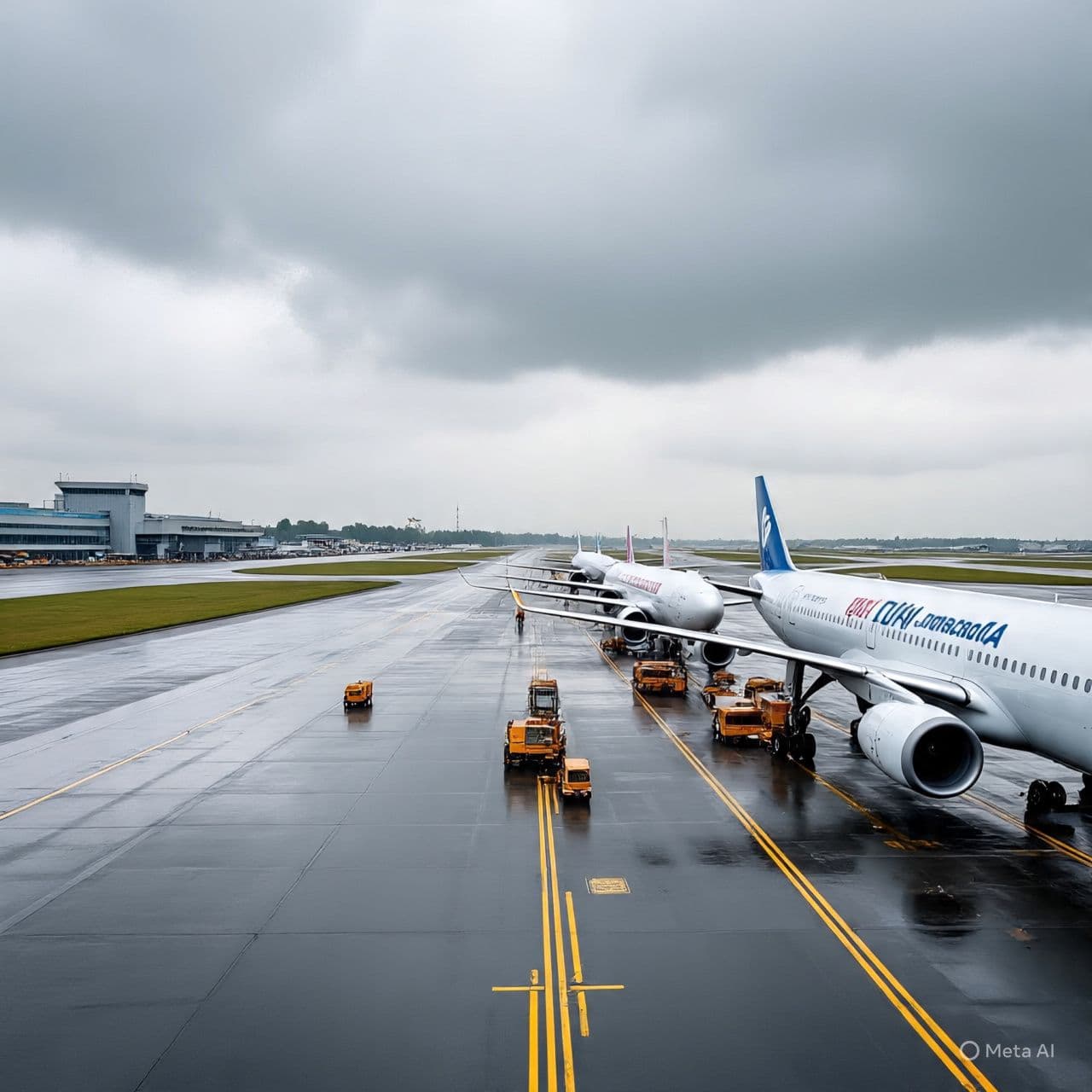
This weekend, air travel across the United States faced a stark reminder of the fragility behind the familiar routine of boarding and takeoff. American Airlines reported that delays and cancellations, driven by air traffic control staffing shortages, affected approximately 250,000 passengers.
The disruptions underscored a system operating near its limits. Even as planes wait for clearance or rerouted flights extend schedules, the strain falls on passengers, crews, and airports alike. Lines lengthen, missed connections multiply, and the ripple effect of a single staffing shortfall can stretch across the country.
Air traffic control, often invisible to travelers until delays occur, is a critical backbone of aviation safety. The staffing gaps this weekend were not caused by weather or mechanical failure, but by human resource constraints — a reminder that behind every radar blip is a professional coordinating thousands of moving pieces. Airlines, airports, and federal agencies now face scrutiny over contingency planning and workforce resilience.
For travelers, the disruptions mean frustration and uncertainty. For the industry, they highlight the tension between demand recovery and infrastructure capacity. While American Airlines apologized for the inconvenience, analysts note that the broader challenge extends beyond a single carrier: the U.S. airspace system itself is stretched, with staffing and modernization lagging behind rising passenger numbers.
As flights resume normal rhythm, the weekend’s turbulence may leave a lasting impression: that in aviation, as in life, even small gaps in support can create outsized disruptions. And in a world dependent on speed and connectivity, the human element — the people behind the screens and radios — remains indispensable.
Published by Banx Network. This article is part of the Banx decentralized media programme, powered by the BXE token on the XRP Ledger.