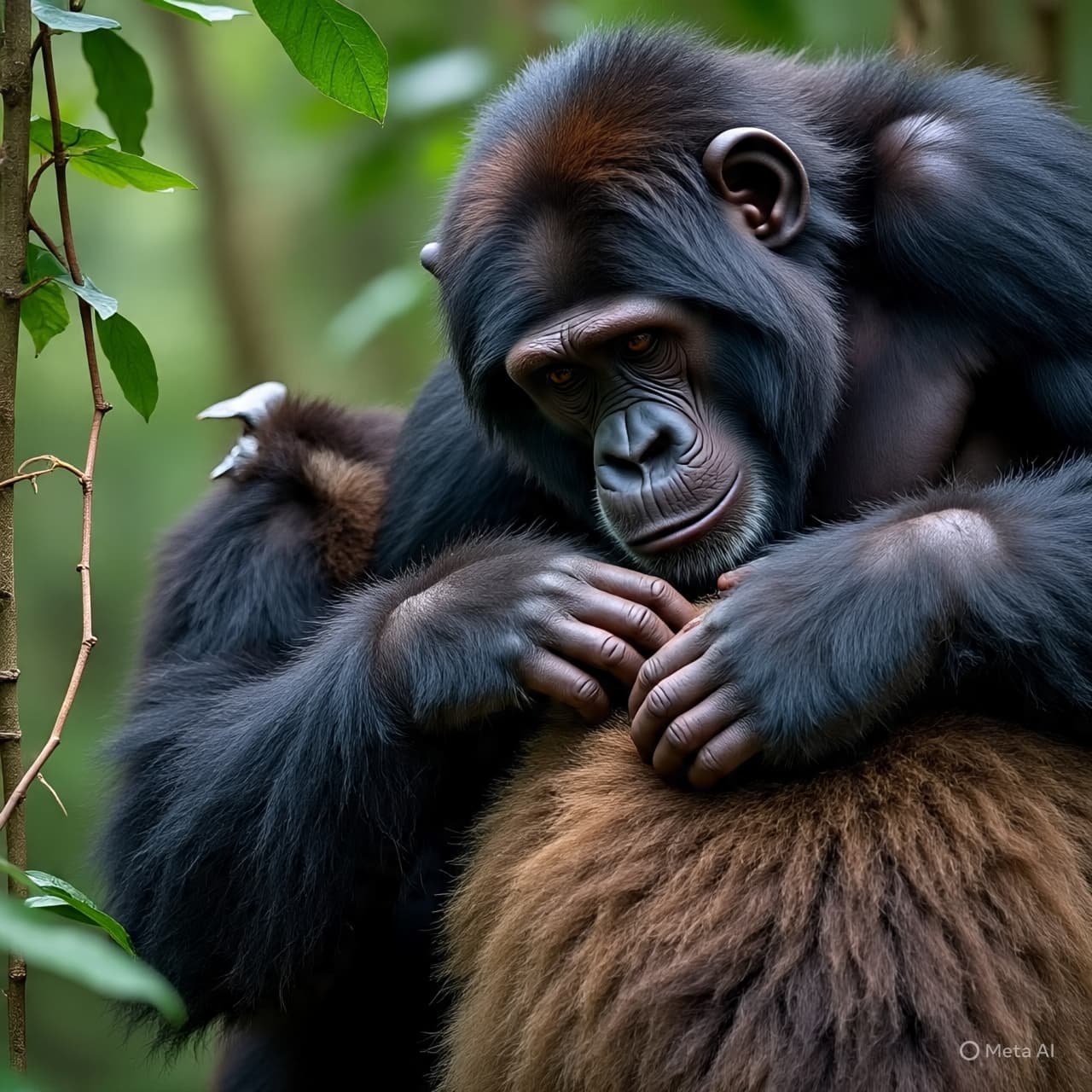
In dense canopies where sunlight filters through leaves, primates navigate lives of social negotiation, play, and survival. Within these intricate societies, scientists have observed a wide spectrum of behaviors, including sexual interactions that extend beyond reproductive necessity. Recent studies have illuminated some of the factors that appear to drive homosexual behavior in primates, offering insight into both evolutionary biology and social dynamics.
Researchers note that same-sex interactions among primates serve multiple functions. Beyond mating, these behaviors often reinforce social bonds, reduce tension, and establish hierarchies within groups. For instance, grooming and affiliative behaviors combined with sexual activity can strengthen alliances, mitigate aggression, and provide stability within communities. Such actions are observed across species, from macaques to bonobos, indicating that sexual behavior is intertwined with social structure as much as with reproduction.
Hormonal influences also play a role. Variations in testosterone, estrogen, and other neurochemicals can affect sexual motivation, responsiveness, and social expression, shaping when and with whom individuals engage in sexual behavior. Environmental and demographic factors — such as the availability of opposite-sex partners, group size, and social stress — can further influence the prevalence of same-sex interactions.
The findings challenge simplistic notions of sexuality as purely reproductive. In primate societies, sexual behavior functions as a flexible tool within a complex network of relationships. It demonstrates adaptability, communication, and cohesion, underscoring the nuanced interplay between biology and social context.
From a scientific perspective, these observations deepen understanding of animal behavior, social evolution, and the mechanisms by which diversity in sexual expression arises. They also provide comparative insights for studying behavior in humans, where biology, environment, and social systems similarly converge to shape sexual and affiliative expression.
In practical terms, recent research shows that homosexual behavior in primates is influenced by social bonding, hierarchical dynamics, hormonal regulation, and environmental context. These behaviors are integral to group cohesion and offer insights into the adaptive complexity of sexual expression across species.
AI Image Disclaimer Visuals are AI-generated and serve as conceptual representations.
Sources (names only) Nature Science Scientific American National Geographic PNAS
Published by Banx Network. This article is part of the Banx decentralized media programme, powered by the BXE token on the XRP Ledger.