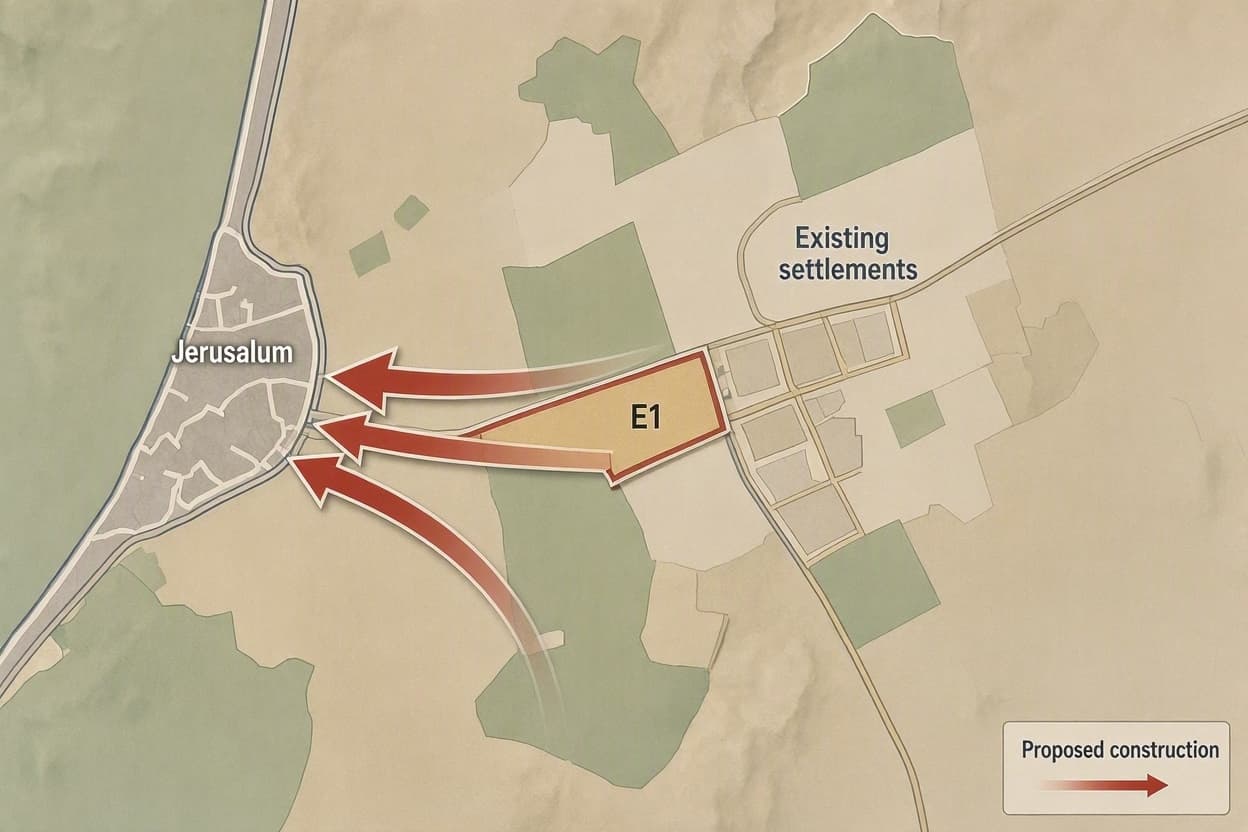
In the complex geopolitical landscape of the Middle East, few issues are as contentious as the expansion of Israeli settlements in the West Bank. The recent move by the Israeli government to advance construction plans in the E1 area, east of Jerusalem, has drawn sharp condemnation from the international community. Yet, for Prime Minister Benjamin Netanyahu and his right-wing coalition partners, this global outrage may be a calculated risk, one that aligns with their political objectives and domestic base.
The E1 plan involves the construction of approximately 1,200 housing units in a strategic corridor that connects East Jerusalem to the major settlement blocs in the West Bank. Critics argue that this development would effectively bisect the Palestinian territories, making the establishment of a contiguous and viable Palestinian state nearly impossible. For many nations, including key allies like France, Germany, and the United Kingdom, this represents a significant blow to the two-state solution, a cornerstone of long-standing peace efforts.
Despite the widespread criticism, Netanyahu’s government has proceeded with issuing tenders for the project. This decision reflects the influence of right-wing parties within the coalition, who view settlement expansion as a non-negotiable aspect of Israeli security and historical rights. For these leaders, international disapproval is often seen as inevitable and perhaps even beneficial, as it reinforces their narrative of standing firm against external pressure.
The timing of the announcement has also sparked debate. Coming amidst ongoing tensions in Gaza and broader regional instability, the move is perceived by some as a deliberate provocation. However, supporters argue that it is a necessary step to solidify Israeli control over key areas and ensure long-term security. The domestic political calculus suggests that appealing to the settler movement and nationalist voters outweighs the diplomatic costs.
European powers have responded with strong statements, urging Israel to halt the project. Some have hinted at potential economic or diplomatic consequences, though concrete actions remain limited. The United States, while expressing opposition to annexation, has avoided harsh condemnation, reflecting its complex relationship with Israel and its own domestic political considerations. This nuanced stance allows Netanyahu to navigate the international backlash with relative ease.
For Palestinians, the E1 plan is a direct threat to their aspirations for statehood. It reinforces fears of permanent displacement and fragmentation of their lands. Local leaders have called for renewed international intervention, but the lack of unified global action leaves them in a precarious position. The sense of urgency is palpable, as each new settlement unit brings the two-state solution closer to extinction.
Analysts suggest that Netanyahu’s willingness to face global outrage is rooted in a belief that the status quo is manageable. With no immediate peace process on the horizon, the government may calculate that the short-term diplomatic friction is worth the long-term strategic gain. This approach, however, risks further isolating Israel and undermining its relationships with traditional partners.
The advancement of the E1 settlement plan highlights the deep divisions in the Israeli-Palestinian conflict. While global outrage continues, the political dynamics within Israel suggest that such measures may persist, challenging the prospects for a negotiated peace.
AI Image Disclaimer: Any images used in conjunction with this article are AI-generated conceptualizations meant to illustrate the themes of media and justice.
Sources: Al Jazeera, CNN, Euronews, The Times of Israel
Published by Banx Network. This article is part of the Banx decentralized media programme, powered by the BXE token on the XRP Ledger.