There is a particular kind of argument that rises above the ordinary friction between drivers and cyclists, between one vision of a city and another. It becomes a question not of preference but of rights—specifically, whether the removal of a bike lane can be understood as a risk to the life and security of the people who use it. That is the question Toronto cyclists are now asking the highest court in the land to answer.
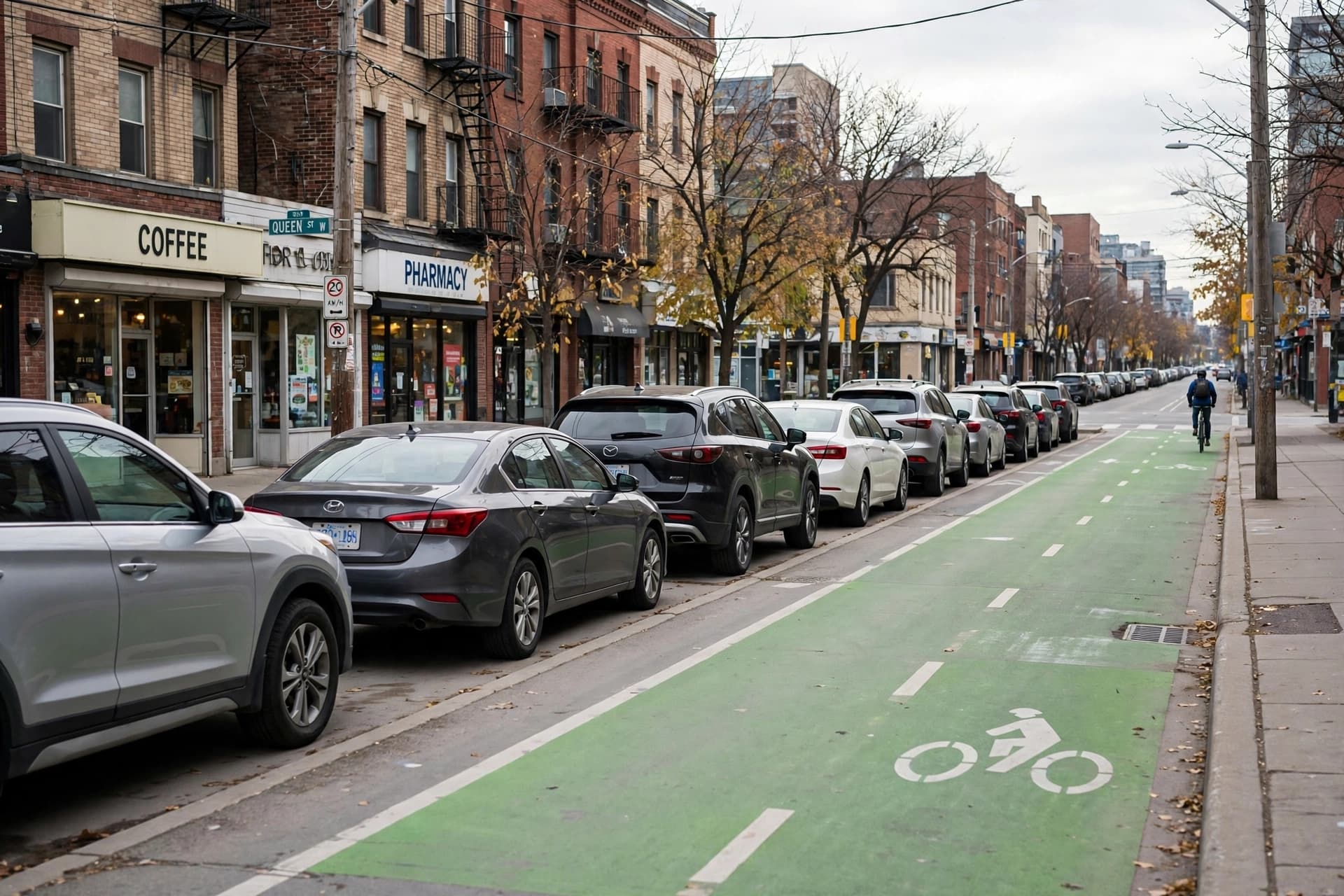
On Tuesday, Cycle Toronto and its co-applicants filed a motion seeking leave to appeal to the Supreme Court of Canada, challenging Ontario’s plan to remove 19 kilometers of bike lanes from three major Toronto arterial roads . The filing came the same day the province began removing bike lanes along a section of Bloor Street West in Etobicoke .
The legal journey to this point has been a study in divergent judicial interpretations. A lower court initially ruled that the province’s plan was an unconstitutional risk to cyclist safety under Section 7 of the Charter, which protects the right to life, liberty, and security of the person . But the Ontario Court of Appeal overturned that decision in August, finding that the trial judge had improperly “strayed into policy-making and political considerations” . The Court of Appeal’s ruling effectively returned the matter to the realm of political debate rather than constitutional protection.
Cycle Toronto executive director Michael Longfield framed the appeal in stark terms. “It’s very clear in terms of the facts of this case that they haven’t changed,” he said. “Bike lanes do not cause traffic congestion, and ripping them out will put people’s lives at risk” . Bronwyn Roe, a staff lawyer with Ecojustice, which is representing the cyclists alongside Paliare Roland Rosenberg Rothstein LLP, said the case raises “a matter of public and national importance” regarding the scope of Section 7 rights .
The Supreme Court accepts only a small fraction of the cases presented to it. To be heard, an appeal typically must involve a key constitutional question, conflicting lower court decisions, or a new issue of law . Whether the bike lane case meets that threshold is now for the court to decide.
For the cyclists who brought the challenge, the argument is not about whether the province has the authority to set transportation policy. It is about whether that authority extends to actions that, in their view, create a demonstrable risk to human safety. The Court of Appeal said the lower court should not have engaged in that assessment. Cycle Toronto is asking the Supreme Court to say whether that assessment was, in fact, the correct role for a court to play.
The province, for its part, has proceeded with the removals. The legal question and the physical work are now unfolding simultaneously—one in the quiet of a courtroom filing, the other on the asphalt of Bloor Street.
AI Image Disclaimer: The imagery in this article was generated using artificial intelligence for illustrative purposes only and does not depict the actual locations or individuals involved.
Sources: CBC News, The Canadian Press, Niagara Falls Review
Published by Banx Network. This article is part of the Banx decentralized media programme, powered by the BXE token on the XRP Ledger.