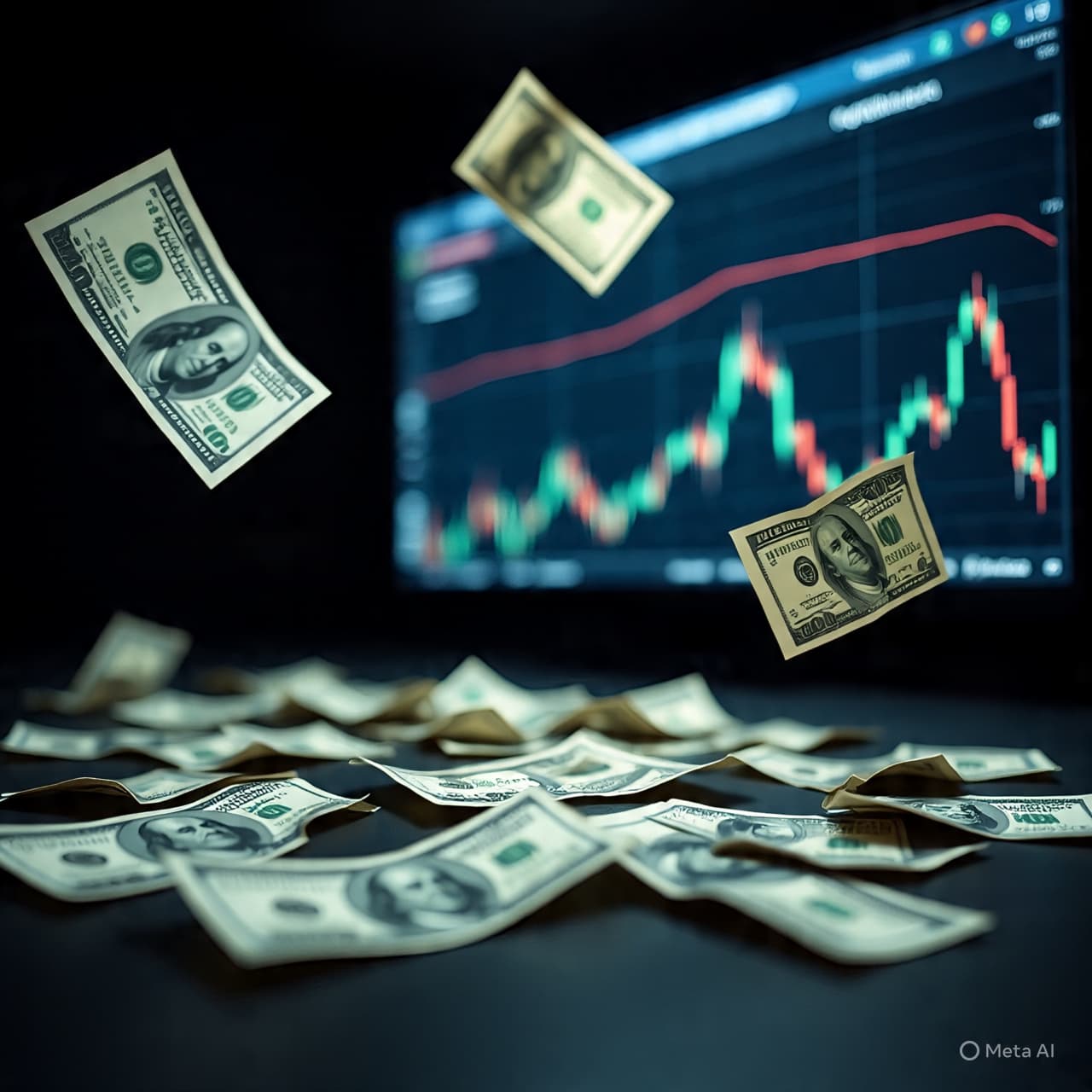
The U.S. dollar is heading for its most significant decline in nearly a decade, reflecting a confluence of monetary policy shifts, market sentiment, and international capital flows. After years of relative strength, the greenback has weakened across major currency pairs, prompting investors and policymakers to reassess its role in global finance and trade.
Several factors contribute to the decline. Federal Reserve rate cuts have eased the yield advantage that once drew capital into dollar-denominated assets, reducing demand. At the same time, relative economic performance abroad — particularly in Europe and Asia — has strengthened, making other currencies more attractive to investors. Coupled with persistent trade imbalances and geopolitical uncertainty, these dynamics have created a downward trajectory for the dollar.
The implications of a weaker dollar are broad. For U.S. exporters, the trend may be beneficial, making American goods more competitive overseas. Conversely, importers face higher costs, which could feed into inflationary pressures domestically. Financial markets also adjust: emerging markets that hold dollar-denominated debt may experience relief in repayment burdens, while multinational corporations recalibrate hedging strategies.
Currency strategists note that market psychology plays a role as well. After years of dollar dominance, shifts in expectations can accelerate movement, with traders reacting to both technical signals and macroeconomic data releases. This creates feedback loops that can amplify volatility in foreign exchange markets, affecting commodities, equities, and cross-border investment flows.
As 2025 comes to a close, the dollar’s decline serves as a reminder of the cyclical nature of currencies and the complex interplay of domestic policy, global capital, and investor confidence. While the magnitude of the fall is notable, analysts emphasize that the long-term trajectory will depend on economic fundamentals, interest rate policy, and geopolitical developments in 2026.
Published by Banx Network. This article is part of the Banx decentralized media programme, powered by the BXE token on the XRP Ledger.