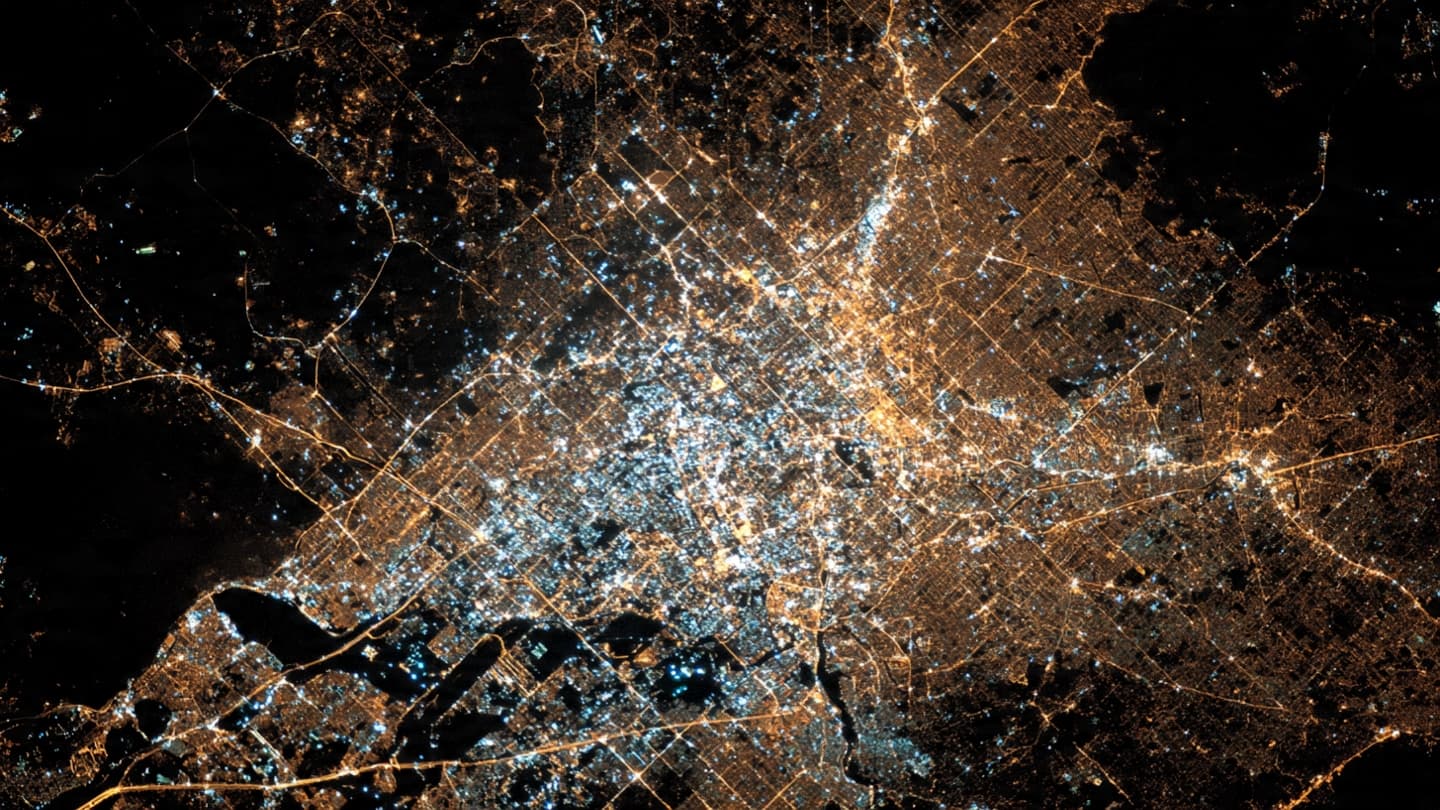
Cities are often described as living organisms. Streets function like arteries, transportation networks resemble circulatory systems, and millions of daily activities create rhythms that define urban life. Now, scientists have found a new way to observe those rhythms from space.
Researchers using satellite observations have identified what they describe as an "urban pulse" across six major cities worldwide. The phenomenon reflects recurring patterns of human activity detectable through advanced remote sensing technologies.
The study relied on satellite instruments capable of monitoring subtle changes associated with urban dynamics, including energy use, transportation activity, and heat emissions. By analyzing these signals, scientists were able to observe daily and seasonal fluctuations in city behavior.
Researchers reported that each city exhibited distinct patterns influenced by factors such as population density, infrastructure design, climate conditions, and economic activity. Together, these observations provide a more detailed understanding of how cities function over time.
Urban planners and policymakers may benefit from the findings. Improved knowledge of urban activity patterns could support transportation management, energy efficiency initiatives, and environmental planning.
Scientists also note that satellite-based monitoring can assist efforts to address challenges related to climate change. Cities contribute significantly to global greenhouse gas emissions while simultaneously facing increasing risks from heatwaves and extreme weather.
Remote sensing technologies have advanced considerably in recent decades, enabling researchers to collect high-resolution environmental and socio-economic data without direct ground measurements.
However, experts emphasize that satellite observations should complement, rather than replace, local knowledge and traditional urban planning approaches. Integrating multiple data sources remains essential for informed decision-making.
The research illustrates how space-based technologies are increasingly helping societies understand not only Earth's natural systems, but also the complex rhythms of modern urban life.
AI Image Disclaimer: Some visual representations accompanying this report were created using artificial intelligence for editorial illustration.
Sources Verification Check: Reuters, Nature Cities, European Space Agency, NASA Earth Observatory
Published by Banx Network. This article is part of the Banx decentralized media programme, powered by the BXE token on the XRP Ledger.