There are stars we learn to trust. Night after night, they hold their places in the sky, steady as old promises. And yet, every so often, one breaks that quiet contract — flaring unexpectedly, drawing the gaze of telescopes across continents, only to slip back into darkness as though a curtain has fallen mid-performance.
Astronomers now report that such a star, once faint and unassuming, suddenly brightened before fading from view. Its abrupt transformation has prompted a profound possibility: it may have collapsed directly into a black hole, leaving little more than silence where light once lived.
The event was first detected through wide-field sky surveys that monitor subtle changes in stellar brightness. Observatories scanning the heavens recorded a dramatic surge in luminosity — a flash that signaled internal upheaval. Yet unlike a typical supernova, which leaves behind a brilliant and lingering remnant, this outburst was followed by disappearance. Subsequent observations failed to find the star in visible wavelengths.
Scientists suggest the phenomenon could represent a “failed supernova.” In conventional stellar evolution, massive stars exhaust their nuclear fuel and explode outward in spectacular fashion, scattering heavy elements across space. But in some rare scenarios, models predict that a star’s core may collapse so completely and so quickly that the explosion is weak or nearly absent. Instead of casting off its outer layers in radiant display, the star implodes, forming a black hole while much of its material falls inward.
Such events are difficult to observe precisely because they are defined by absence. A star that vanishes without fireworks leaves astronomers searching for subtle clues — faint infrared signatures, gravitational interactions, or lingering gas clouds that might betray a hidden collapse. Space-based instruments and ground observatories continue to monitor the region, seeking confirmation.
If verified, the discovery would deepen understanding of how black holes form. While black holes are often associated with dramatic supernova explosions, theoretical work has long proposed quieter pathways. Direct-collapse black holes could help explain certain stellar populations and refine estimates of how many black holes populate our galaxy.
The implications extend beyond classification. Black holes influence galactic structure, regulate star formation, and anchor cosmic dynamics. Understanding their origins illuminates broader patterns in the universe’s evolution. Each confirmed case narrows uncertainty and strengthens astrophysical models.
For now, researchers emphasize caution. Additional data are required to confirm that the star truly collapsed into a black hole rather than dimming due to dust obscuration or another transient process. Follow-up observations across multiple wavelengths will determine whether something unseen — but gravitationally powerful — now occupies the space where the star once shone.
In clear terms, astronomers observed a star that brightened dramatically and then disappeared. Preliminary analysis suggests it may have collapsed directly into a black hole, though further study is underway to confirm the event and understand its significance.
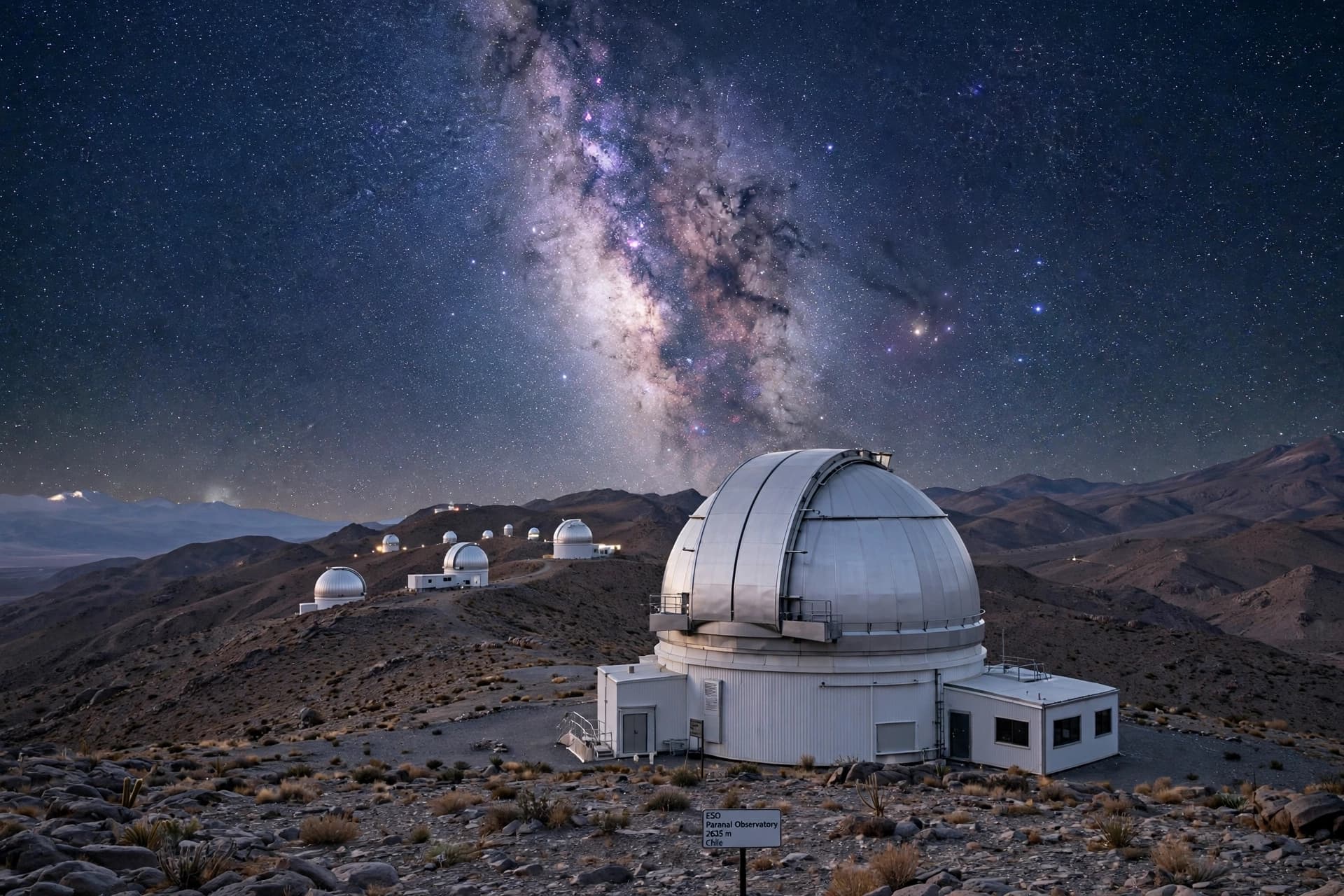
AI Image Disclaimer Illustrations were produced with AI and serve as conceptual depictions.
Sources NASA Space.com BBC News The Guardian Scientific American
Published by Banx Network. This article is part of the Banx decentralized media programme, powered by the BXE token on the XRP Ledger.