The Coordinating Ministry for Economic Affairs has emphasized digital transformation as an important part of Indonesia's strategy to strengthen productivity and competitiveness. The approach includes digital infrastructure, payment systems, innovation and broader adoption of technology across economic sectors.
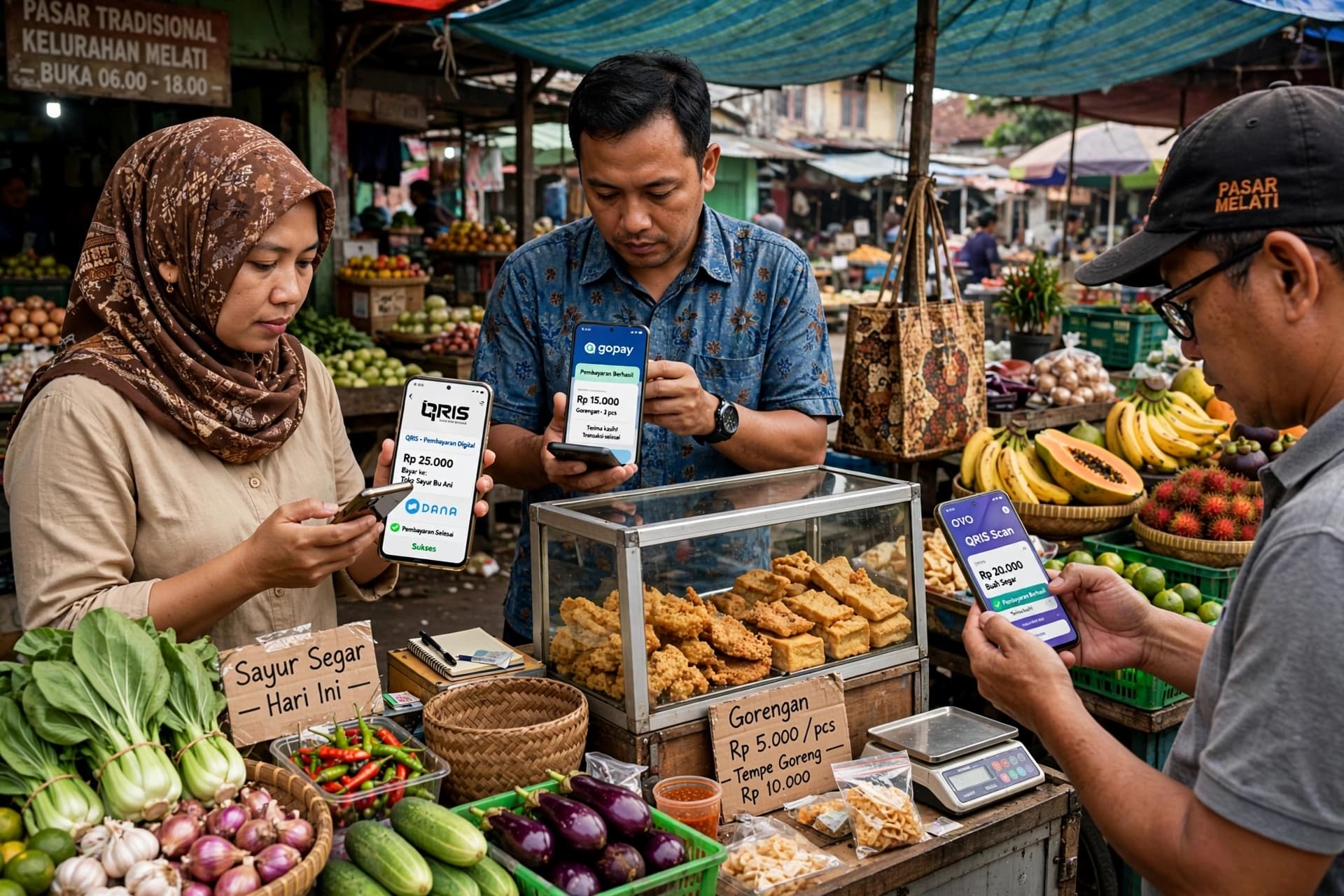
The country's progress can already be seen in the rapid growth of digital payments. QRIS has become one of the most visible examples, bringing digital transactions into millions of businesses, many of them small and micro enterprises.
But digital transformation reaches much further than payments. Businesses are increasingly using cloud services, data analytics, artificial intelligence and digital platforms to organize operations and reach customers. For larger companies, these technologies can reshape entire production and distribution systems.
The government has also been focusing on improving digital connectivity across regions. Indonesia's geography makes this particularly important. An archipelago spread across thousands of islands requires infrastructure capable of connecting economic activity across considerable distances.
For smaller businesses, the transition can be more gradual. A digital payment system may be the first step, followed later by online sales, digital bookkeeping or access to technology-based financial services. Each individual change can appear modest, but together they can gradually alter the way businesses operate.
There is also a productivity question at the heart of the transformation. Technology only creates economic value when it is adopted effectively. Better software or faster connectivity can make a difference, but businesses also need skills, reliable infrastructure and access to financing to turn those tools into measurable improvements.
Artificial intelligence is beginning to add another layer. Indonesian companies are exploring AI for customer service, logistics, content production, data analysis and other activities. The potential is significant, although adoption remains uneven across industries and regions.
The broader transformation therefore requires more than technology itself. It involves education, regulation, infrastructure and the ability of businesses to adapt. The digital economy becomes meaningful when technology moves from being something people use occasionally into something embedded in how economic activity takes place.
Indonesia's digital transition is still developing. The direction, however, is increasingly visible: payments, connectivity, data and artificial intelligence are becoming part of the country's economic infrastructure.
The challenge ahead is to make sure that transformation reaches beyond the largest companies and most connected cities. If digital tools can spread across Indonesia's diverse economic landscape, technology may become not merely a new sector of the economy, but a foundation for improving productivity across many of them.
AI Image Disclaimer
This AI-generated illustration is intended for editorial visualization and does not depict an actual government program, person or location.
Sources
Coordinating Ministry for Economic Affairs Bank Indonesia Ministry of Communication and Digital Affairs The Jakarta Post
Published by Banx Network. This article is part of the Banx decentralized media programme, powered by the BXE token on the XRP Ledger.