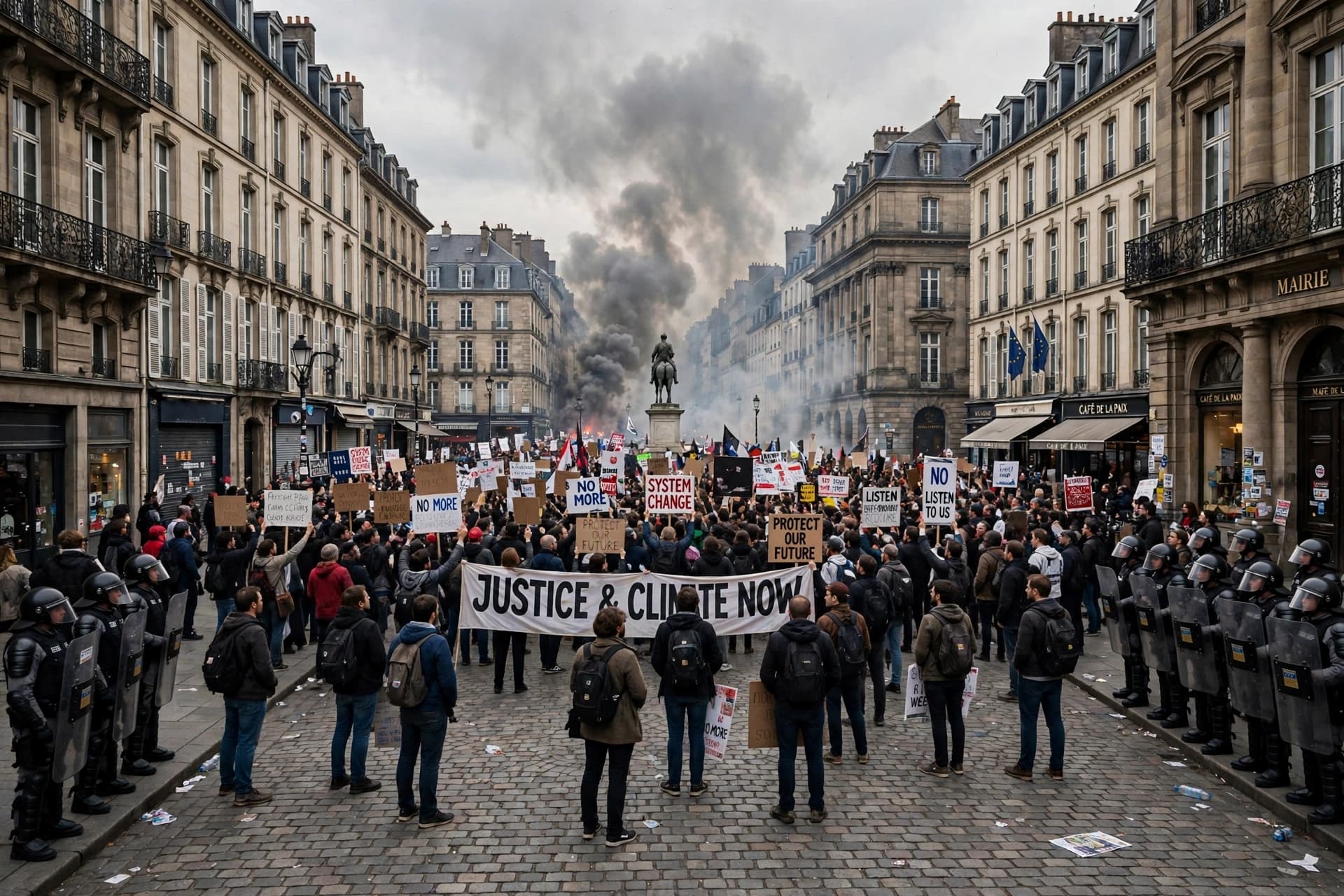
There is a particular electricity that travels across an ocean when young people recognize their own frustration in the chants of strangers. In France, high school students have spent weeks demanding better learning conditions—fewer overcrowded classrooms, buildings that do not crumble, teachers who are present. On Saturday, that energy arrived in Montreal, not as an import but as a mirror, reflecting concerns that Quebec students have carried for years.
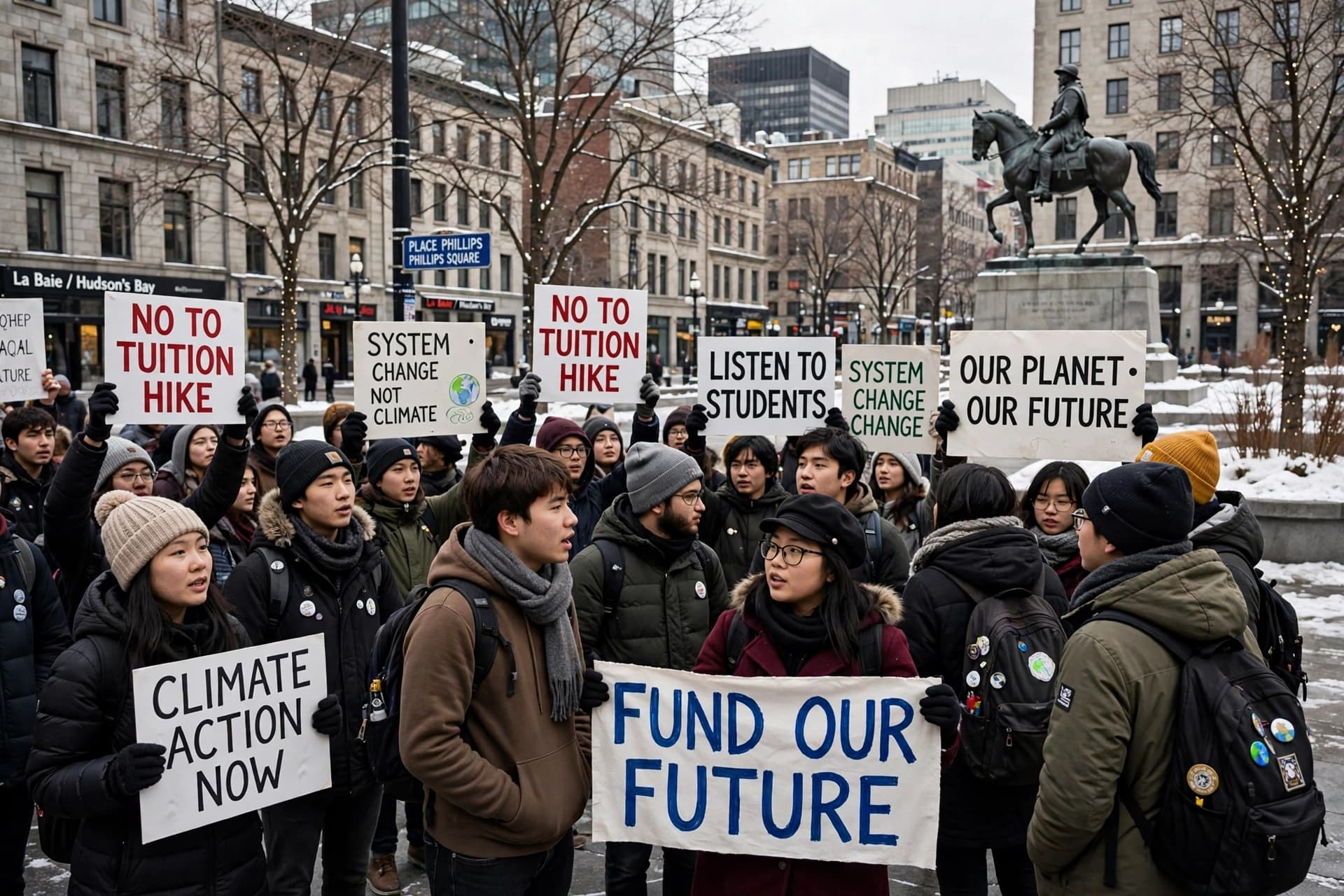
Hundreds gathered at Phillips Square in downtown Montreal on Saturday afternoon, chanting "Solidarity with the students of France" and marching through the city's core . The rally was organized by student unions and organizations, including the Fédération étudiante collégiale du Québec and the Union étudiante du Québec, and drew participants who saw their own struggles in the French movement .
The parallels are not exact, but they are close enough to resonate. French students have cited overcrowded classrooms, deteriorating buildings, and pest infestations . Quebec students spoke instead of rising rents, grocery prices that force impossible choices, unpaid internships, and a fear of austerity in higher education . Noah Seguin, head of the Cégep Saint-Jean-sur-Richelieu student union, described the arithmetic of daily life: "If I eat now, I'm going to have to skip this," or "I have to put gas in my car, so I'm just going to have to skip this meal" .
The demands articulated at the rally were concrete: increased student financial aid, paid internships for all students, and solutions to food and housing insecurity . Frédéric Beaudet of FAECUM, the University of Montreal student federation, framed the issue as one that extends beyond the student population: "It's bigger than just the student population, but it does affect students and their capacity to stay in higher education" .
What distinguishes the Montreal gathering from the French protests is the question of scale and consequence. In France, the movement has grown into nationwide demonstrations, with hundreds of thousands taking to the streets and reports of police clashes and injuries . In Quebec, Seguin predicted that students would be more passive, not from indifference but from fear: "It's hard, it's scary to demonstrate to the extent they do in France because it's like, 'If I do that, am I going to get my diploma, am I going to have to redo classes?'" .
The memory of 2012 lingers. That year, a proposed tuition increase sparked months of protests, a massive nighttime demonstration, and a social crisis that drew international attention . No one at Saturday's rally suggested a repeat was imminent, but the comparison was present in the air, a reminder that student movements in Quebec have a history of surprising those who underestimate them.
The march ended, the chants faded, and the participants dispersed into a city that will continue to charge rent and tuition and the price of groceries. But for an afternoon, the students of Montreal stood with the students of France, and in that standing, they asked a question that neither government has fully answered: what is a society willing to invest in the people it expects to build its future?
AI Image Disclaimer: The images accompanying this article were generated by artificial intelligence and are intended for illustrative purposes only.
Sources: CBC News, Le Devoir, Global News
Published by Banx Network. This article is part of the Banx decentralized media programme, powered by the BXE token on the XRP Ledger.