Sometimes, the great leaps in human imagination feel like soft ripples expanding across a calm sea, rather than towering waves breaking on a distant shore. When we think of rocket fuel, we instinctively picture fiery blasts and complex chemical cocktails distilled in high‑tech labs. Yet now, in an intriguing twist that feels almost poetic, an idea once relegated to hopeful science fiction is stirring anew: the notion that something as familiar and life‑giving as water could one day help power the machines that carry us toward the stars.
A veteran of SpaceX’s propulsion efforts, engineer Halen Mattison, has returned his gaze to that gentle element, seeking to transform it into propellant through clever engineering and a spirit of curiosity. At the heart of this endeavor is his startup, General Galactic, a company built on the belief that water might serve as more than just a metaphor for life — that it could become part of the energetic pulse propelling satellites and spacecraft in the not‑so‑distant future. This is not merely a tale of contrarian ambition but a continuation of a thread woven through decades of space exploration thought; for years, researchers have pondered whether the frozen troves of water on the Moon, Mars, or other celestial bodies might be harnessed for return journeys, giving explorers not only a source of life but also the means to leave again.
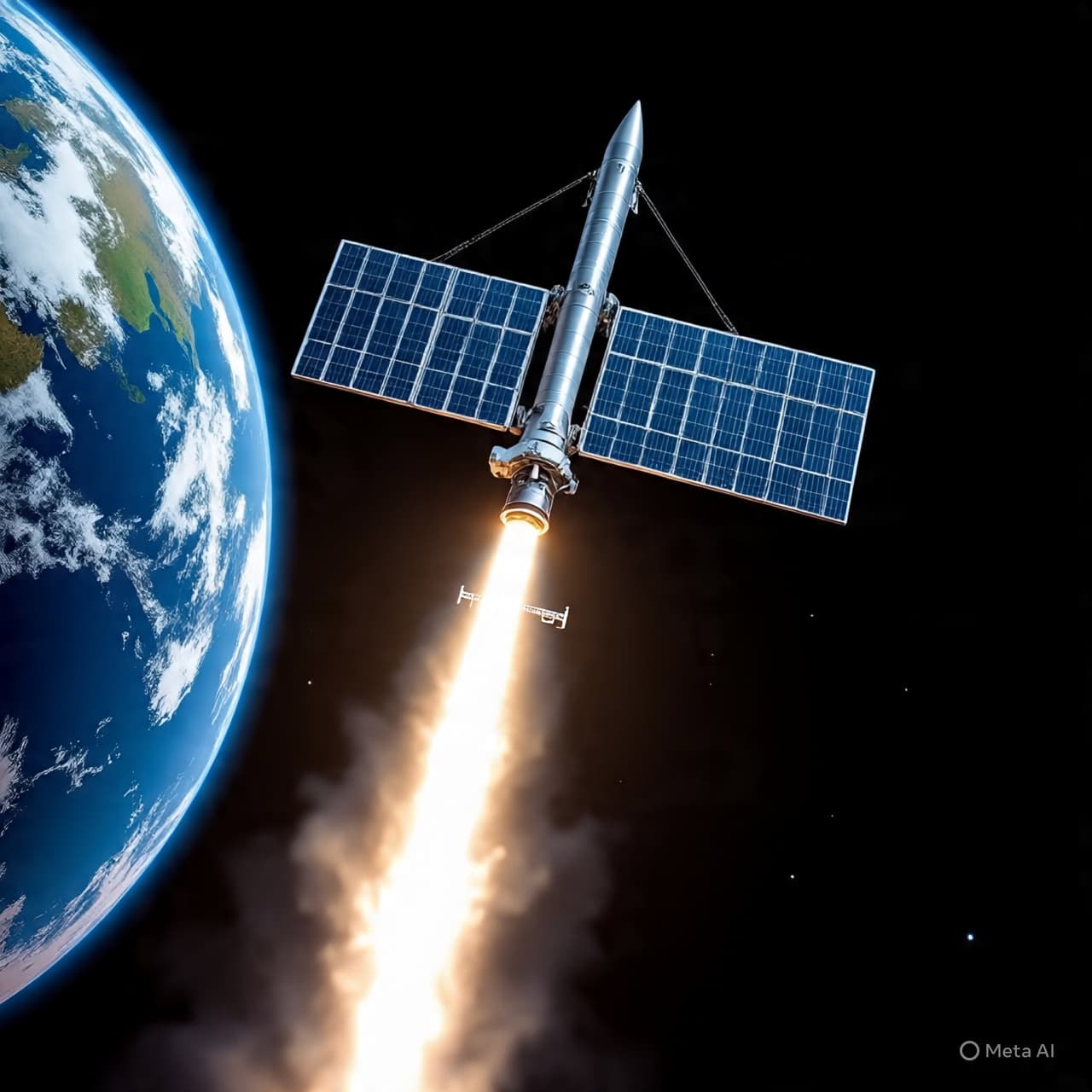
General Galactic’s plan is a gentle blend of old chemistry and new aspirations. In an upcoming mission scheduled for October, the company intends to launch a roughly 1,100‑pound satellite aboard a Falcon 9 rocket to test water as the sole propellant for both electrical and chemical propulsion systems. In simple terms, the idea is to pass water through a process called electrolysis — where an electric current splits the water molecules into their component hydrogen and oxygen — and then use those elements either to create bursts of thrust by burning the hydrogen, or to generate streams of ionized gas that can be manipulated with magnetic fields for steadier motion.
To reflect on this idea gently, we might picture the promise of water as something akin to discovering hidden music in a familiar song, rather than inventing an entirely new melody. There is a quiet beauty in seeking to transform a basic resource into a tool of exploration, especially when that resource is abundant and non‑toxic. Unlike conventional rocket fuels that demand careful handling and specialized storage, water is something every corner of Earth knows; harnessing it for propulsion would mark a profound shift in how we conceptualize space travel.
Of course, as with most dreams that reach beyond ordinary experience, there are earthly challenges. Experts have pointed out uncertainties in how ionized oxygen — a byproduct of breaking water into its constituent gases — might interact with sensitive spacecraft electronics, and whether the efficiency gained will truly outweigh the complexities added by the necessary machinery. Yet these are not discouragements, but invitations to learn more, to refine and to test.
In the quiet hum of laboratory benches and the soft glow of simulation screens, each question becomes part of a conversation between what is known and what might yet be discovered. The next launch, scheduled for later this year, will not simply be a test of technology; it will be a step into uncharted territory, where imagination and engineering converge. Should it succeed, the idea of “fuel” may be reframed in ways as surprising as a raindrop reflecting sunlight: not just as something to burn, but as something to translate into motion with grace and ingenuity.
AI Image Disclaimer Visuals are created with AI tools and are not real photographs.
Sources Futurism Wired News Minimalist
Published by Banx Network. This article is part of the Banx decentralized media programme, powered by the BXE token on the XRP Ledger.