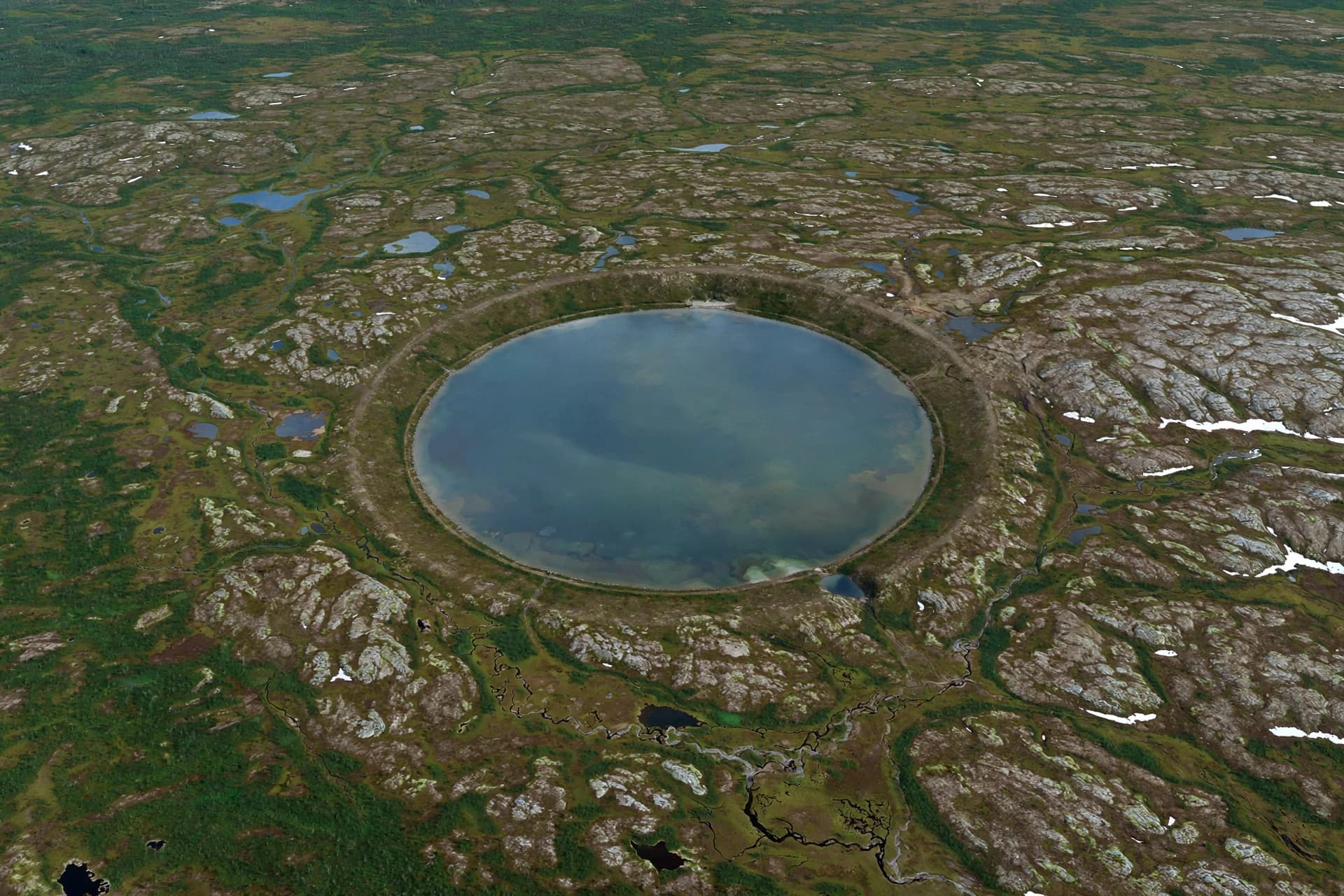
Sometimes, the most profound discoveries are made not by teams of funded researchers, but by curious individuals with a laptop and a passion for the stars. In 2024, an amateur astronomer in Quebec was searching for a secluded campsite using satellite imagery when he noticed something unusual: a perfect, 25-kilometer-wide ring surrounding Lake Marsal. What began as a quest for solitude turned into a scientific breakthrough, as further investigation revealed that this circular feature was not a geological oddity but the scar of an ancient cosmic collision. This story is a gentle reminder that wonder and discovery are accessible to anyone who looks closely enough.
The ring, barely visible to the naked eye on the ground, stood out clearly from space, a ghostly imprint of violence from 390 million years ago. When geologists arrived by floatplane the following year, they found definitive proof: shatter cones, distinctive rock formations created only by the extreme pressure of meteorite impacts. The site, now provisionally named Uhackatik, adds a new chapter to Earth’s history, illustrating how the past is often hidden in plain sight, waiting for the right perspective to reveal it.
The discovery highlights the power of citizen science and the accessibility of modern technology. Satellite imagery, once the exclusive domain of governments and large corporations, is now available to the public, allowing enthusiasts to explore the Earth’s surface in unprecedented detail. The amateur astronomer’s keen eye detected the subtle topographical anomaly that had eluded professional surveys for decades. His curiosity bridged the gap between casual observation and scientific inquiry, demonstrating that expertise is not always a prerequisite for contribution.
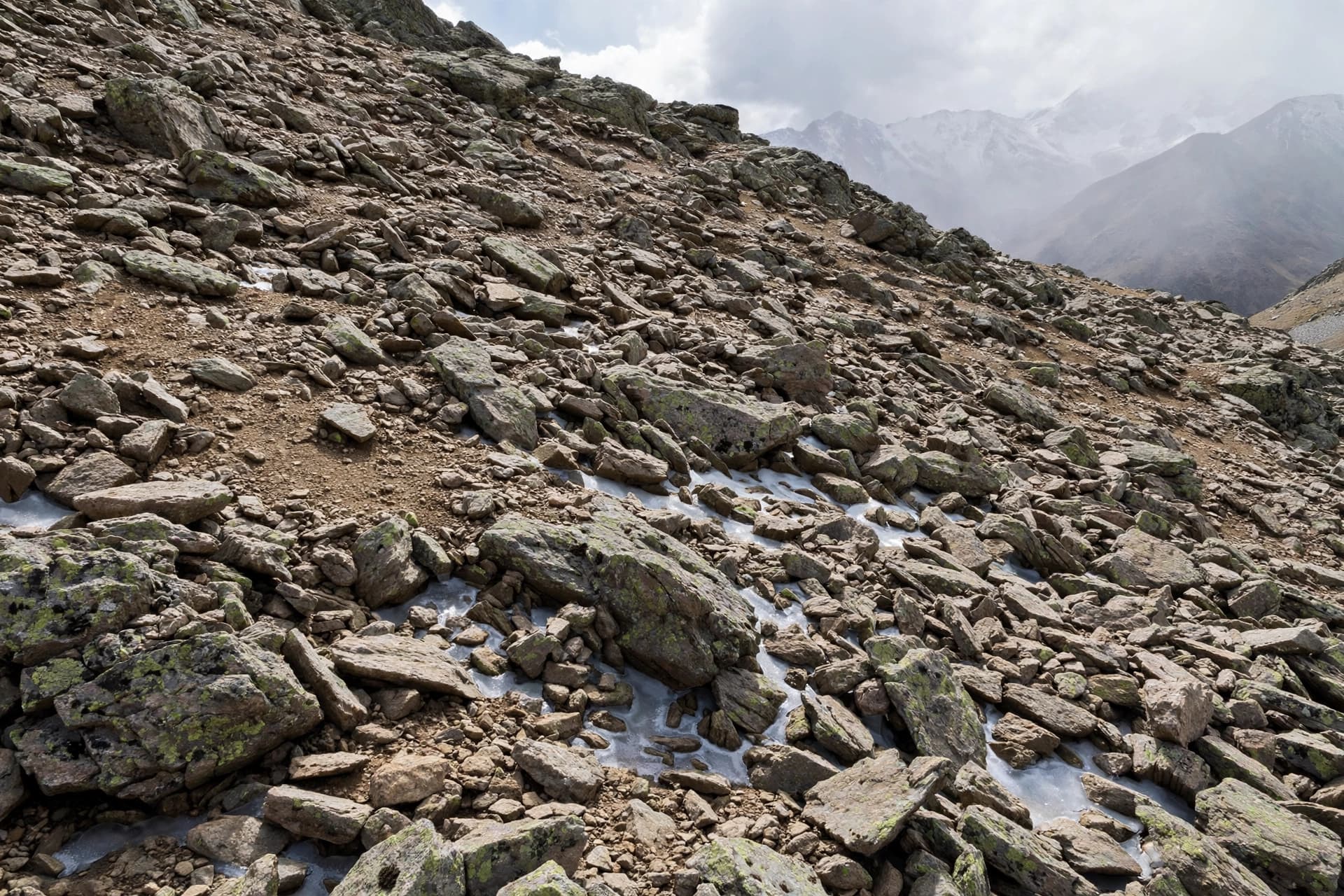
Shatter cones are the smoking gun of impact craters. These conical fractures in bedrock form when shock waves from a hypervelocity impact pass through stone, creating a unique pattern that cannot be replicated by volcanic or tectonic activity. Finding these structures at Lake Marsal confirmed that the ring was indeed an impact crater, formed when a meteorite struck the Earth during the Devonian period. This era, known as the "Age of Fishes," was a time of significant biological evolution, and the impact would have been a catastrophic event for local life.
The size of the crater, 25 kilometers in diameter, suggests that the impacting body was substantial, likely several kilometers wide. Such an impact would have released energy equivalent to millions of nuclear bombs, causing widespread devastation in the immediate area and potentially affecting global climate. However, because the impact occurred in a remote region and was buried under sediment and water, its effects were localized and largely forgotten by time. The preservation of the structure is a testament to the geological stability of the Canadian Shield.
The naming of the crater as Uhackatik reflects a respect for Indigenous heritage and the land on which it sits. Collaborative efforts between scientists and local communities ensure that the discovery is handled with cultural sensitivity and awareness. This approach fosters a deeper connection between scientific exploration and the people who have inhabited these lands for millennia. It is a model for how modern science can honor traditional knowledge and stewardship.
For the geological community, Uhackatik provides a new data point for understanding impact frequency and distribution in North America. Each confirmed crater helps refine models of Earth’s bombardment history, offering insights into the risks posed by near-Earth objects today. While the likelihood of a similar impact in our lifetime is low, studying past events helps us prepare for future possibilities. It is a practical application of historical curiosity.
The story of the lake’s discovery also inspires a sense of adventure and exploration. It reminds us that the Earth is still full of mysteries, even in well-mapped regions. Whether through satellite screens or floatplane windows, there are always new things to see and learn. The amateur astronomer’s find encourages others to look at their surroundings with fresh eyes, knowing that significance can be hidden in the mundane.
As research continues, scientists will study the crater’s structure in more detail, analyzing rock samples and mapping the subsurface. These efforts will deepen our understanding of the impact process and its geological aftermath. But for now, the legacy of Uhackatik is one of serendipity and collaboration, a testament to the power of looking up, even when you are looking down at a map.
The discovery of the Uhackatik impact structure is a celebration of curiosity and the unexpected paths of science. From a camper’s search for peace to a geologist’s confirmation of ancient violence, this story connects us to the deep history of our planet. Let it inspire us to keep looking, keep questioning, and keep discovering the wonders hidden in our world.
AI Image Disclaimer: The images accompanying this article are AI-generated illustrations designed to represent the concept of impact craters and satellite discovery without depicting the specific real-world location.
Sources: CBC News The Globe and Mail Royal Astronomical Society of Canada Geological Association of Canada
Published by Banx Network. This article is part of the Banx decentralized media programme, powered by the BXE token on the XRP Ledger.