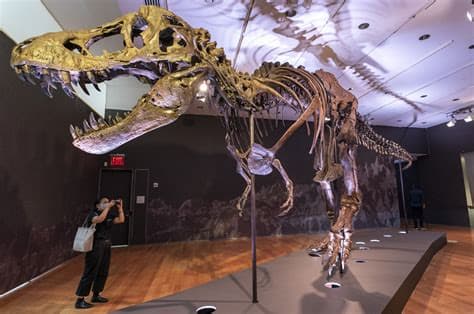
Fossils are often read as structures—bones, imprints, traces of form. Yet increasingly, they are also read as signals of something less visible: behavior, perception, even the outlines of thought. A new line of research suggests that the skulls of modern birds may offer a bridge into that hidden dimension, illuminating the inner lives of long-extinct dinosaurs.
At the heart of the study is a simple but powerful connection. Birds are the closest living descendants of many theropod dinosaurs, including species such as . Because of this lineage, their anatomy—particularly the structure of the skull and braincase—can serve as a reference point for interpreting fossilized remains.
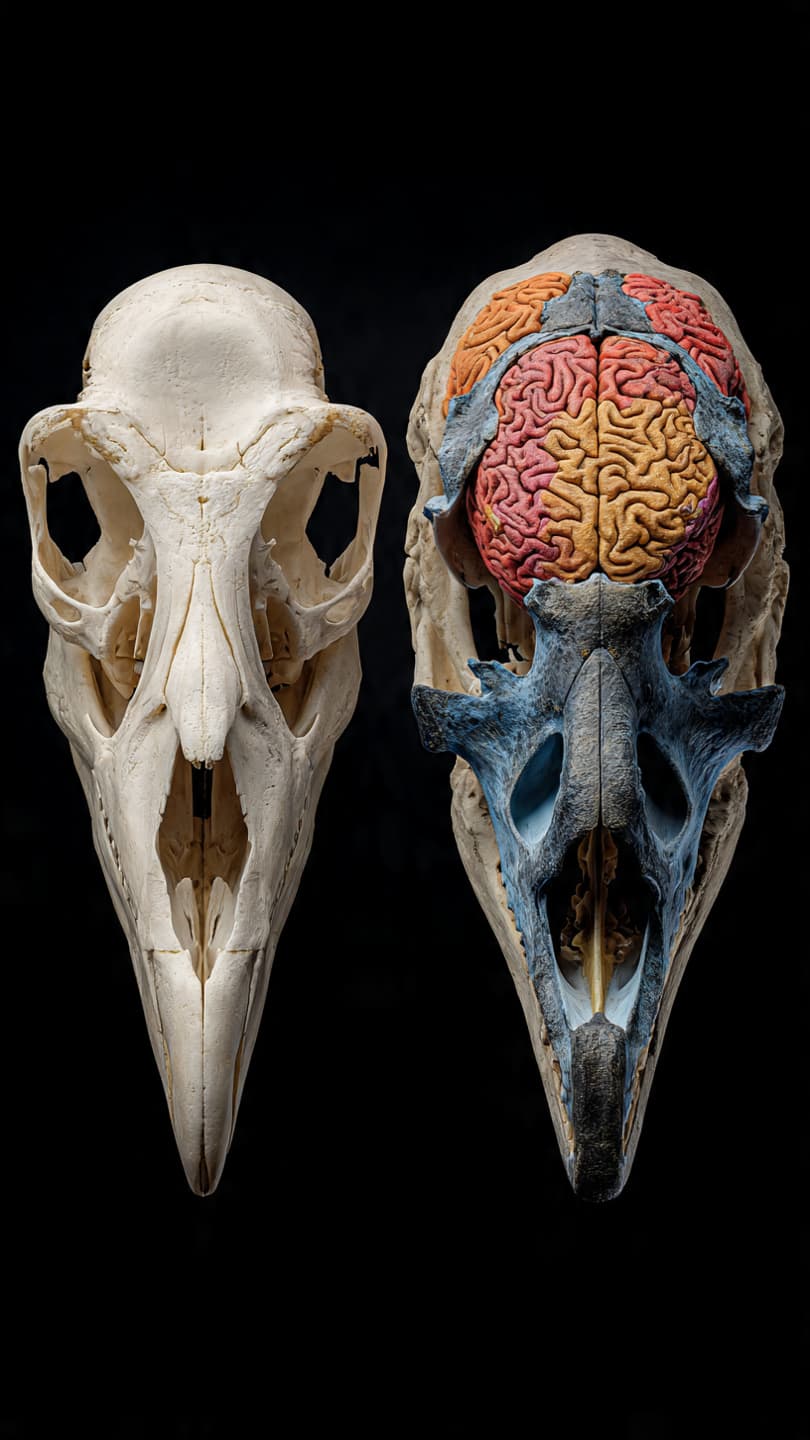
Reading the Shape of Thought Scientists have focused on the internal geometry of bird skulls, examining how the brain fits within the bone and how different regions are proportioned. These features relate to sensory processing, coordination, and behavior. By comparing them with fossilized skulls of dinosaurs, researchers can infer how those ancient animals may have perceived their environment.
This approach draws on advances in imaging technology, allowing detailed reconstructions of cranial cavities. From these, scientists can estimate the relative size of brain regions associated with vision, smell, and balance—clues that point toward how dinosaurs may have hunted, navigated, or interacted with one another.
Beyond Size, Toward Function The findings challenge older assumptions that equated intelligence simply with brain size. Instead, they emphasize structure and specialization. A dinosaur with a relatively small brain might still have possessed highly developed sensory systems, tailored to its ecological role.
Birds provide a living model for this complexity. Despite their small size, many species exhibit sophisticated behaviors—navigation over vast distances, problem-solving, and social interaction. These traits suggest that their dinosaur ancestors may also have been more behaviorally complex than once believed.
A Continuity Across Time The research highlights continuity rather than separation. The boundary between “dinosaur” and “bird” becomes less distinct, revealing an evolutionary thread that extends from prehistoric ecosystems into the present.
By studying modern species, scientists are not simply drawing analogies—they are uncovering inherited patterns. The skull, in this sense, becomes a record not only of form, but of function carried forward across millions of years.
From the curvature of bone to the space it encloses, the skull offers more than a silhouette. It holds traces of perception—of how an animal sensed and responded to its world. In birds, those traces remain visible. And through them, the distant past begins to speak, not just of how dinosaurs looked, but of how they may have lived. AI Image Disclaimer Illustrations are AI-generated and intended for conceptual representation only.
Source Check — Credible Media Presence Nature · Scientific American · BBC · National Geographic · Smithsonian Magazine
Published by Banx Network. This article is part of the Banx decentralized media programme, powered by the BXE token on the XRP Ledger.