There are moments in Earth’s history when life seems to falter, when oceans empty and forests fall silent. The greatest of these moments came around 252 million years ago, at the end of the Permian Period — a catastrophe so sweeping it erased nearly 90 percent of marine species. The seas, once teeming with trilobites, corals, and armored fish, became strangely barren. It is tempting to imagine the planet holding its breath.
And yet, from that silence, something immense began to stir.
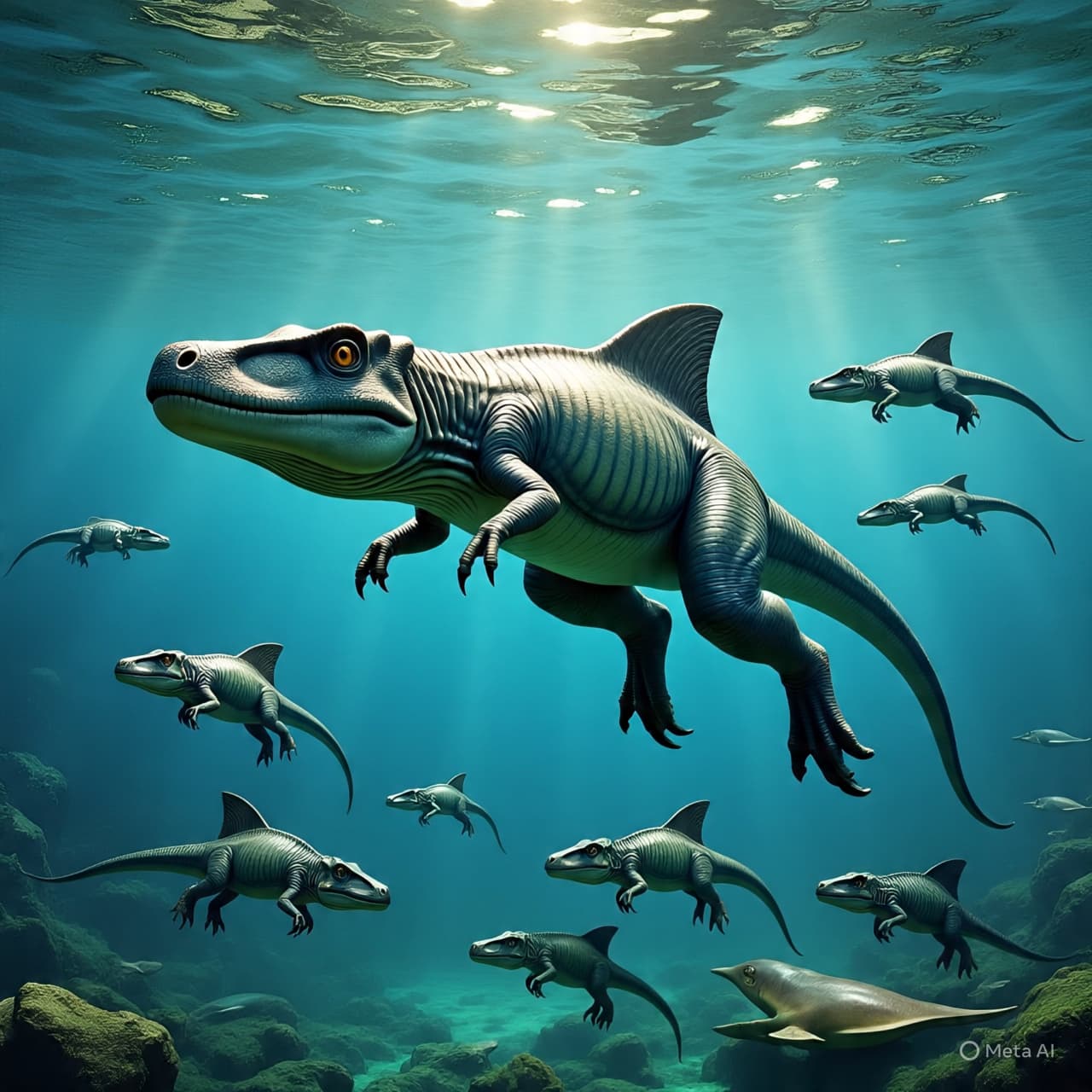
In the Triassic Period that followed, new marine reptiles rose to prominence, filling ecological voids left behind by extinction. Fossils described in journals such as Nature and reported by outlets including National Geographic reveal that within a few million years of the mass extinction, the oceans were once again home to formidable predators. Among them were ichthyosaurs — streamlined reptiles whose bodies resembled modern dolphins — and later, long-necked plesiosaurs and massive pliosaurs.
The speed of this recovery has intrigued paleontologists. The Permian-Triassic extinction event, often called “The Great Dying,” is believed to have been triggered by massive volcanic eruptions in what is now Siberia, leading to climate warming, ocean acidification, and oxygen depletion. Marine ecosystems collapsed. For a time, life persisted only in scattered refuges.
Yet evolutionary opportunity often follows ecological vacancy. Early ichthyosaurs appear in the fossil record surprisingly soon after the extinction. Some of the earliest forms were modest in size, but later species grew to extraordinary proportions. Fossil evidence suggests that certain ichthyosaurs reached lengths exceeding 20 meters, rivaling modern whales. Their conical teeth and powerful tails made them efficient hunters in open seas.
Plesiosaurs, with their elongated necks and paddle-like limbs, evolved different strategies. Some species likely ambushed prey in shallow waters; others ventured into deeper marine realms. Pliosaurs, relatives with shorter necks and massive skulls, became apex predators, equipped with jaws capable of crushing bone. The oceans, once emptied, were again layered with complex food webs.
This rapid diversification challenges older assumptions that ecosystems require tens of millions of years to recover from catastrophic collapse. Research suggests that evolutionary innovation can accelerate under the right conditions. With fewer competitors and predators, surviving lineages may radiate quickly, experimenting with new forms and niches.
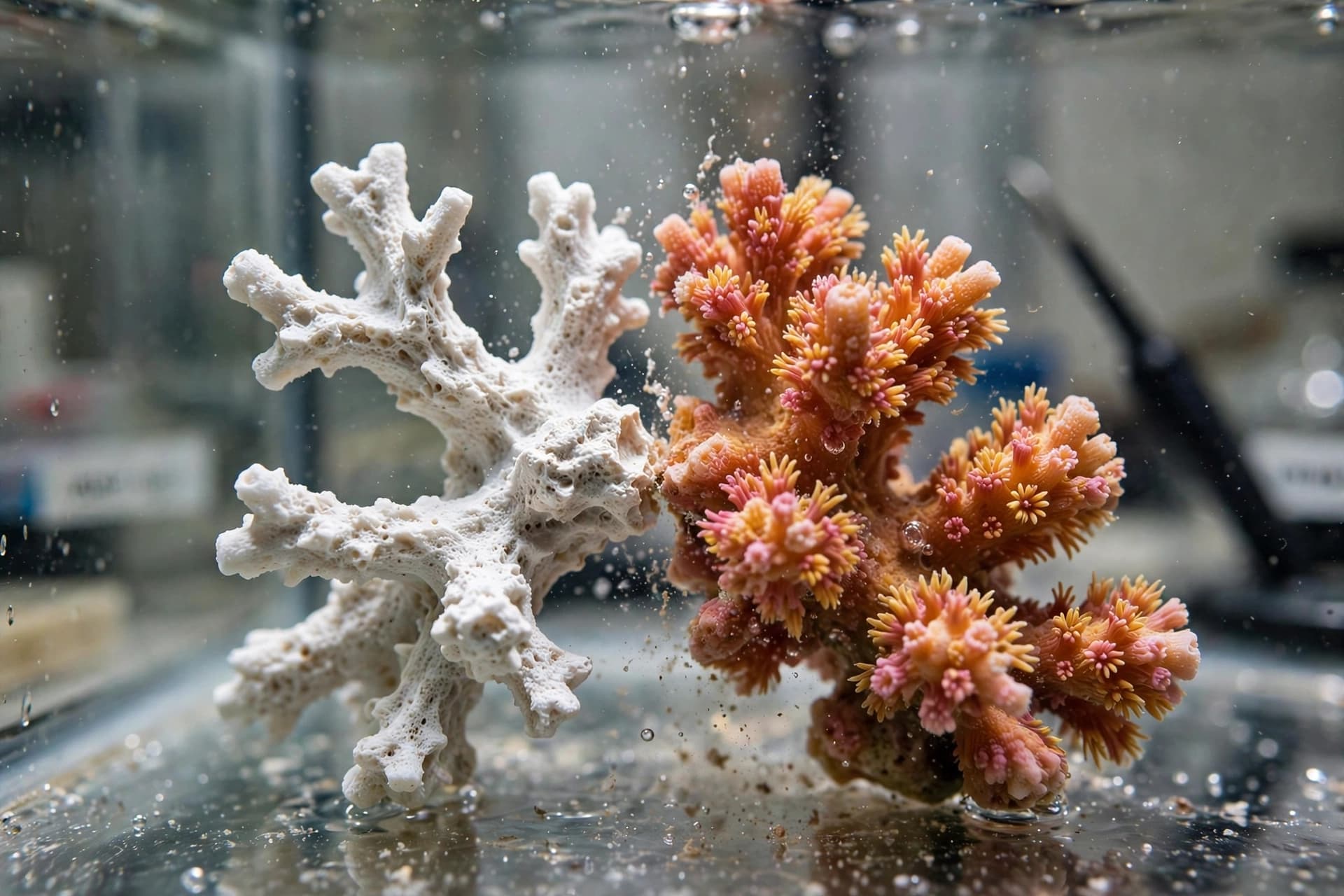
Still, recovery did not mean restoration. The Triassic seas were not a mirror of the Permian oceans. Entire groups vanished permanently. Coral reefs, for example, took millions of years to reestablish in recognizable forms. The new marine reptiles were not descendants of earlier dominant species but representatives of distinct evolutionary paths.
The rise of these “sea monsters” also underscores how adaptable vertebrates can be. Marine reptiles were originally land-dwelling ancestors that returned to the water. Over time, they developed streamlined bodies, modified limbs into flippers, and evolved live birth — an adaptation crucial for fully aquatic life. Their conquest of the oceans reflects both resilience and transformation.
Fossils from Europe, China, and North America continue to refine this picture. Each new discovery adds detail to a chapter that once seemed defined solely by loss. Paleontologists now see the aftermath of the Permian extinction not only as a story of devastation, but as a turning point that reshaped marine ecosystems for over 100 million years.
The narrative is neither triumphant nor tragic alone. It is cyclical. Life contracts and expands, stumbles and adapts. The sea monsters of the Triassic were not inevitable; they were contingent on survival, mutation, and chance. Their dominance eventually ended as well, giving way to other marine lineages long before the age of dinosaurs closed.
Today, the fossil record offers a measured reminder. After Earth’s greatest extinction, the oceans did not remain empty. They transformed. Within a geologically brief interval, new giants patrolled the waters, redefining what it meant to rule the sea.
Researchers continue to analyze Triassic fossils, using advanced imaging and dating techniques to better understand the tempo of recovery. The story remains under refinement. But the broad outline is clear: from the deepest collapse in Earth’s history emerged a new generation of ocean predators — creatures that turned a devastated marine world into a domain of immense, powerful life once more.
AI Image Disclaimer
Graphics are AI-generated and intended for representation, not reality.
---
Sources
National Geographic BBC News The Guardian Nature Smithsonian Magazine
Published by Banx Network. This article is part of the Banx decentralized media programme, powered by the BXE token on the XRP Ledger.