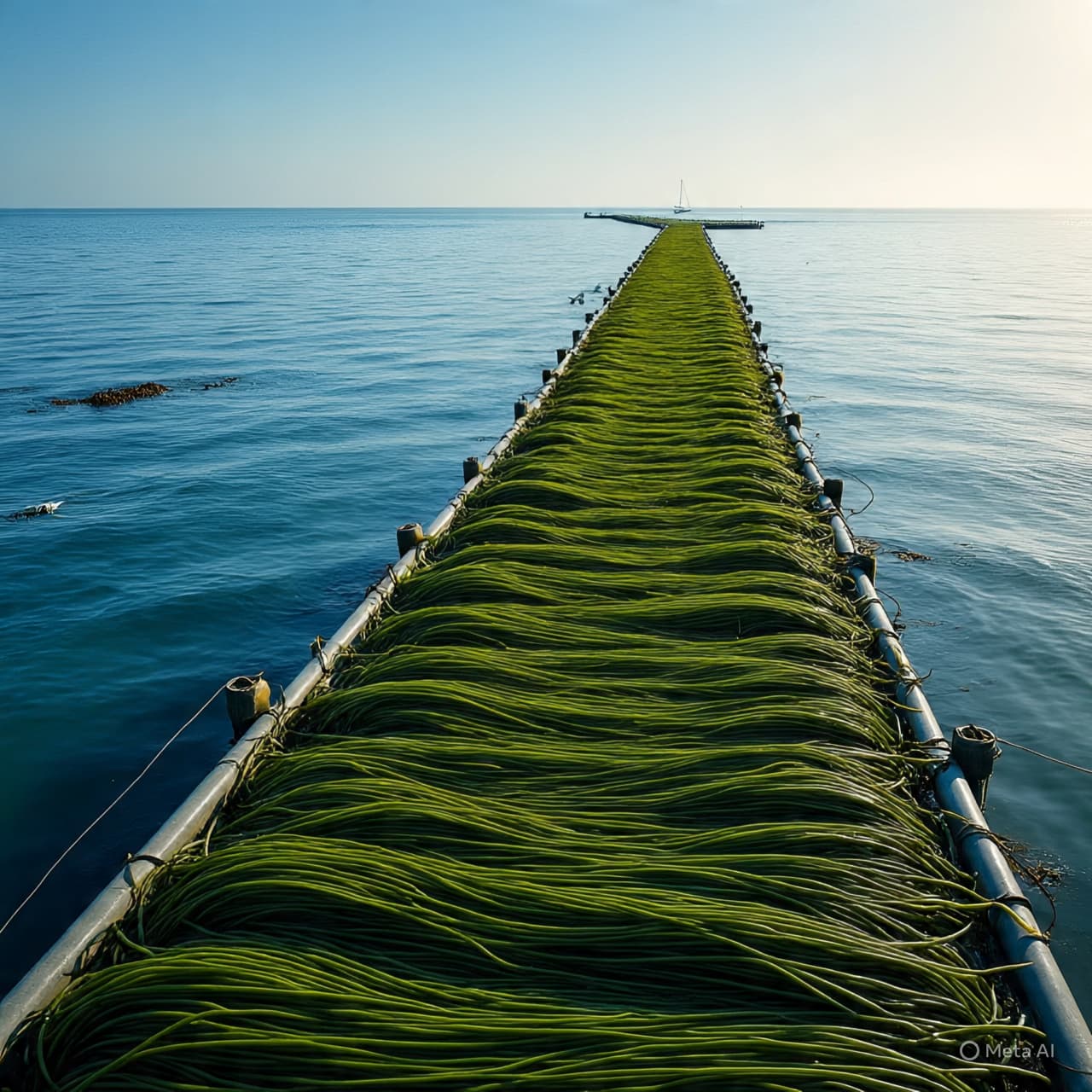
Coastlines have a way of revealing change slowly. Tides repeat, seasons pass, and yet beneath the surface, quiet shifts take hold. Along parts of the UK’s shoreline, such a shift has been unfolding through the steady rise of seaweed farming, an industry that has moved from novelty to presence within a few short years.
In 2016, commercial seaweed farming in the UK barely registered, with just a single operation recorded. By 2022, that number had grown to at least ten active farms, marking a notable expansion in a sector shaped by patience rather than speed. The growth has been incremental, but persistent, reflecting a wider reassessment of how marine resources might be used.
Seaweed has attracted attention for its versatility. It sits at the intersection of food production, agriculture, and environmental management. Advocates point to its potential role in sustainable diets, animal feed additives, biodegradable materials, and even carbon reduction strategies. This breadth has helped support gradual investment and experimentation.
The expansion has also been shaped by geography and regulation. Farming at sea requires careful navigation of environmental protections, licensing frameworks, and local community concerns. Progress has therefore depended less on rapid scale and more on proving that cultivation can coexist with existing marine activity.
For coastal economies, seaweed farming offers a modest but meaningful opportunity. It does not promise transformation overnight, yet it introduces diversification at a time when traditional fishing communities face mounting pressure. New farms bring employment, research partnerships, and a reason to view marine space through a longer-term lens.
Challenges remain evident. Infrastructure is limited, supply chains are still developing, and demand, while growing, remains uneven. Scaling production without undermining environmental credibility continues to test producers and policymakers alike.
Still, the shift from one farm to ten within six years suggests momentum. It reflects curiosity turning into commitment, and experimentation giving way to cautious confidence. Seaweed farming in the UK may still be young, but its presence along the coast now feels less tentative.
As the industry continues to mature, its future will likely be defined not by rapid expansion, but by careful integration. In that measured pace, seaweed farming mirrors the rhythms of the waters it depends on, steady, adaptive, and shaped by time.
Published by Banx Network. This article is part of the Banx decentralized media programme, powered by the BXE token on the XRP Ledger.