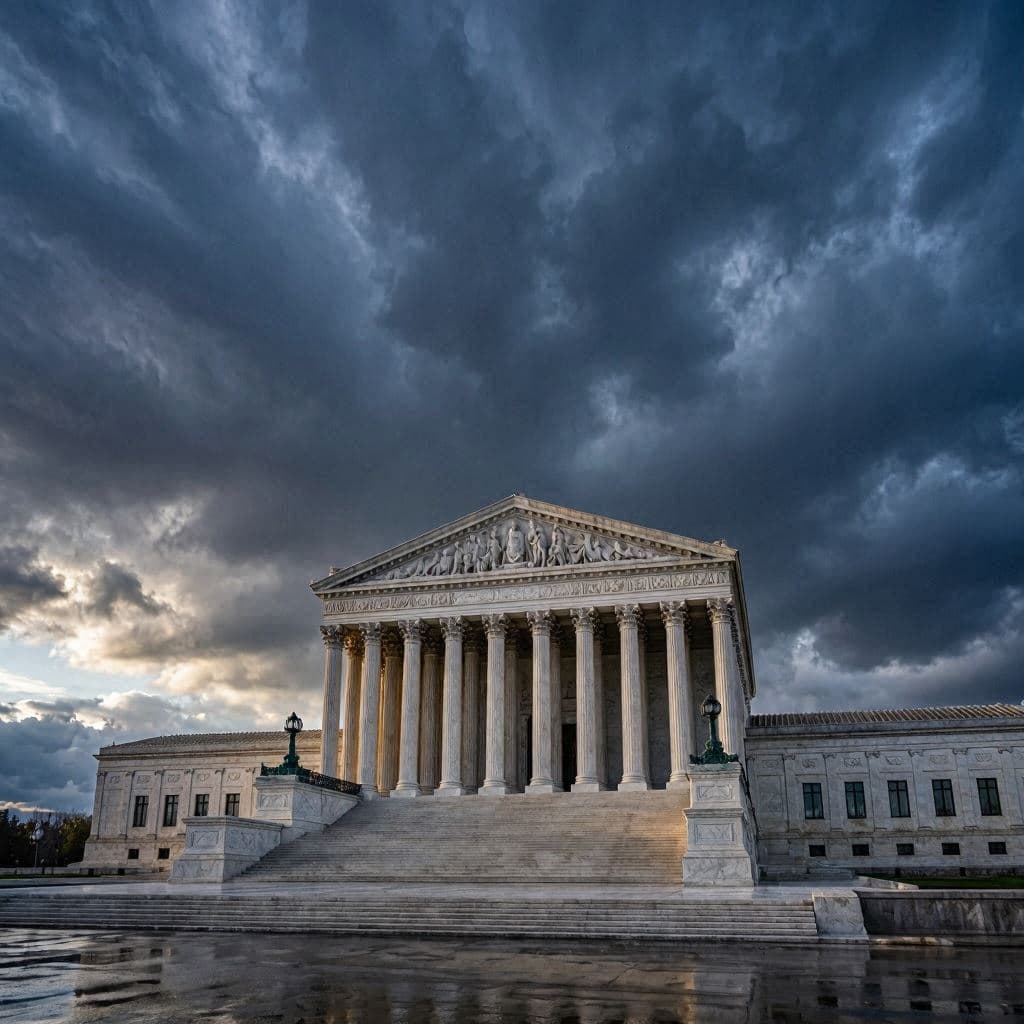
The Supreme Court is often imagined as a temple of quiet deliberation, where disagreements are resolved through reasoned opinions and judicial restraint. Yet, recent events have pulled back the curtain to reveal a more fractured institution, with justices engaging in public disputes that challenge the court’s image of unity. These visible squabbles are not just internal matters; they reflect deeper ideological divides and raise questions about the court’s role in a polarized society. It invites reflection on the human element of justice and the challenges of maintaining institutional integrity in an era of intense scrutiny.
Body: The tensions have manifested in unusual ways, including pointed concurrences and dissents that directly critique colleagues’ reasoning or conduct. Unlike traditional legal disagreements, which focus on statutory interpretation, some recent exchanges have touched on personal integrity and ethical standards. This shift from legal to personal critique blurs the line between judicial opinion and public commentary, drawing the court into the broader political fray.
For the public, these disputes can be unsettling. The Supreme Court relies on legitimacy and trust to enforce its decisions. When justices appear divided not just on law but on character, it erodes confidence in the institution’s impartiality. Citizens may begin to view rulings as products of political maneuvering rather than legal principle. This perception threatens the court’s authority and its ability to serve as a stabilizing force in democracy.
The underlying causes are complex, stemming from longstanding ideological differences that have intensified in recent years. Appointments have become more partisan, and the stakes of each decision feel higher to all sides. This environment fosters a combative atmosphere, where compromise is seen as weakness. The result is a court that is less willing to seek consensus and more inclined to assert individual viewpoints forcefully.
Ethical controversies have also played a role in fueling these tensions. Questions about justices’ financial disclosures and external relationships have sparked debates about accountability. Some justices have defended their actions vigorously, while others have called for stricter rules. This lack of uniform standards contributes to the friction, as differing views on propriety clash in the public sphere.
Media coverage amplifies these conflicts, turning legal nuances into headline-grabbing drama. Soundbites and simplified narratives often miss the subtleties of judicial reasoning, focusing instead on conflict and personality. This sensationalism can distort public understanding, making it harder to appreciate the complexity of the issues at hand. It places additional pressure on the justices to manage their public images.
Despite the discord, the court continues to function, issuing rulings on critical issues ranging from civil rights to regulatory power. The work goes on, driven by a sense of duty and constitutional obligation. However, the quality of discourse and the tone of opinions matter. They shape the legacy of the court and its relationship with the American people.
Reform proposals, such as term limits or ethics codes, are frequently discussed as potential solutions. While implementation is politically challenging, the conversation highlights a desire for greater transparency and accountability. Engaging in this dialogue is essential for preserving the court’s relevance and respect. It is a collective effort to strengthen the judiciary.
Closing: In the end, the public squabbles at the Supreme Court are a symptom of broader societal divisions. They remind us that the judiciary is composed of individuals navigating complex pressures. As the court moves forward, the hope is that it can restore a sense of unity and purpose, reinforcing its role as a guardian of the rule of law.
AI Image Disclaimer: Visuals accompanying this text are AI-generated conceptualizations intended to depict the themes of judicial debate and institutional tension.
Sources: SCOTUSblog NPR The Washington Post
Published by Banx Network. This article is part of the Banx decentralized media programme, powered by the BXE token on the XRP Ledger.