For fifty-five years, in the snow-buried passes and timbered valleys of the Canadian Rockies, a particular kind of quiet competence has been at work. It is not the kind that gives speeches or seeks credit. It is the kind that rides in the back of a helicopter, nose to the wind, and finds what the human eye cannot. Now, that work has been formally ended, and the silence it leaves behind is being felt in ways both practical and profound.
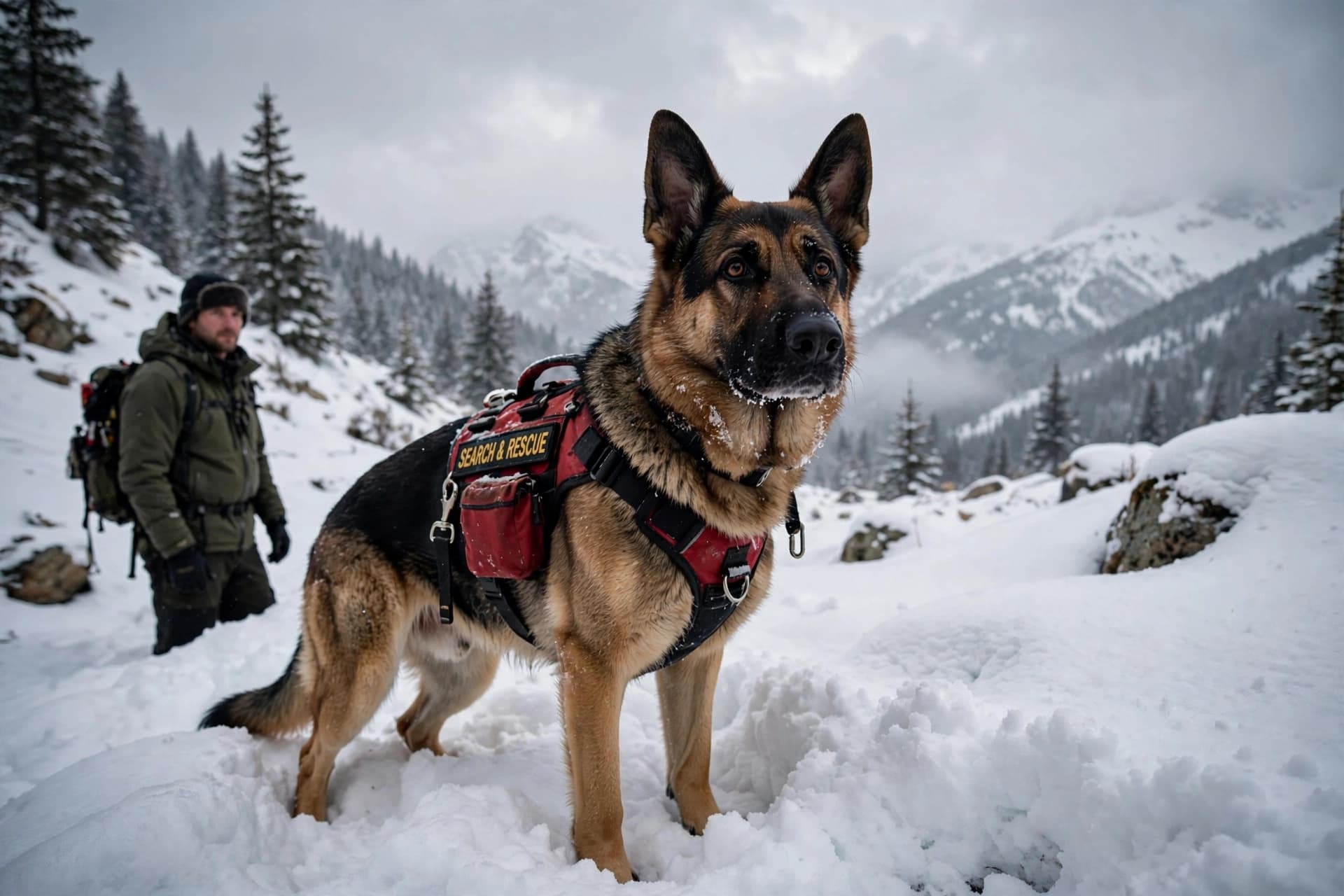
Parks Canada confirmed last week that it has eliminated its sole remaining search-and-rescue dog handler position based in Banff National Park. The decision comes as part of broader federal budget reductions—C$145 million in cuts to the agency over three years—and follows the retirement of Leroy, a German Shepherd who spent seven years tracking 156 people, finding 57 lost in the wilderness, and assisting in two murder investigations. A new dog had completed training and was ready for duty when the notice arrived.
The public response has been swift and, in some quarters, furious. A petition launched by William Stevenson, the Conservative Member of Parliament for the Banff area, gathered more than five thousand signatures within days. Stevenson told the BBC that while he supports fiscal discipline, “How could they possibly make such a bad choice in where to cut?”. In Parliament, Liberal MP Ryan Turnbull defended the government’s focus on deficit reduction and the well-being of Canadians, while Parks Canada described the decision as a “difficult” one made in the interest of modernizing its law enforcement branch.
For those who spent careers alongside these animals, the loss is measured in something other than dollars. Scott Ward, now seventy-three, spent seventeen years as a dog handler in the Rockies. He remembers parents’ faces when his dog found their lost children in Banff’s dense woods. He remembers a two-hour hike up a steep mountainside to reach a man with a broken leg, close to dying from hypothermia. The dogs, he said, were trained to trace everything from a paper clip to a human body, and after avalanches they saved searchers hours of probing snow while exposing themselves to the risk of secondary slides.
There is also the matter of what the dogs did beyond rescue. Mike Henderson, who handled dogs in Banff from 2001 to 2019, described a daily grind that included checking illegal campsites, responding to mental health calls, deterring poachers, and managing wildlife attractants. “You roll in, ask nicely and light the dog up,” he said of rowdy campers, “and everyone says, ‘OK, we’re going to bed.’”. The program’s supporters argue that such versatility is not easily replaced by other means, however modern.
Parks Canada has said search and rescue operations will continue through other methods. That may be true. But the old warden’s saying that Ward recalled—that you can make an armpit smell like a lilac bush and put a man on the moon, but nothing can replace the nose of the avalanche dog—lingers now as something between an elegy and a warning. The mountains have not changed. The visitors have not stopped coming. Only the quiet competence at the end of the leash has gone.
Image Disclaimer: The image with this story was created using AI generation tools and does not depict a real photograph.
Sources: BBC, CBC News, Rocky Mountain Outlook, The News International
Published by Banx Network. This article is part of the Banx decentralized media programme, powered by the BXE token on the XRP Ledger.