Space exploration has always been a dance of international cooperation, a symphony where nations contribute their unique instruments to create a harmonious whole. Yet, sometimes, a key player must step back, leaving the remaining musicians to adapt and continue the melody. In the case of Europe’s upcoming mission to Venus, the withdrawal of a crucial radar instrument by NASA has forced a shift in strategy, turning a joint venture into a solitary European endeavor.
The EnVision mission, led by the European Space Agency (ESA), was designed to peer through the thick, toxic clouds of Venus to map its surface and understand its geological history. The radar instrument provided by NASA was intended to be a cornerstone of this effort, offering high-resolution data that would complement ESA’s other sensors. Its removal leaves a gap, but not necessarily a void, as European engineers and scientists rally to fill it with indigenous technology.
This decision by NASA, driven by budgetary constraints and shifting priorities, highlights the fragility of international partnerships in space science. While disappointing, it is not uncommon. History shows that setbacks often spur innovation, forcing teams to find creative solutions and rely on their own capabilities. For ESA, this is an opportunity to demonstrate technological independence and resilience.
The mission itself remains ambitious. Venus, often called Earth’s twin due to its similar size and composition, is a world of extremes. Its surface temperature can melt lead, and its atmospheric pressure is crushing. Understanding why Venus evolved so differently from Earth is crucial for understanding planetary habitability and the potential fate of our own planet. EnVision aims to answer these questions by studying the planet’s atmosphere, surface, and interior.
European scientists are now accelerating the development of their own radar system, the Venus Synthetic Aperture Radar (VenSAR). While it may differ in some specifications from the original NASA contribution, it is designed to meet the core scientific objectives of the mission. The challenge is significant, requiring rapid prototyping and rigorous testing to ensure it can withstand the harsh environment of Venus.
The geopolitical implications are subtle but present. As space becomes increasingly competitive, the ability to execute complex missions independently is a marker of technological prowess. ESA’s decision to proceed without NASA’s instrument signals confidence in European aerospace capabilities and a commitment to maintaining its position as a leader in planetary science.
As the launch date approaches, the focus shifts from diplomacy to engineering. The teams working on EnVision are united by a shared goal: to unlock the secrets of our nearest planetary neighbor. Their success will not only advance scientific knowledge but also serve as a testament to the power of adaptation and determination in the face of change.
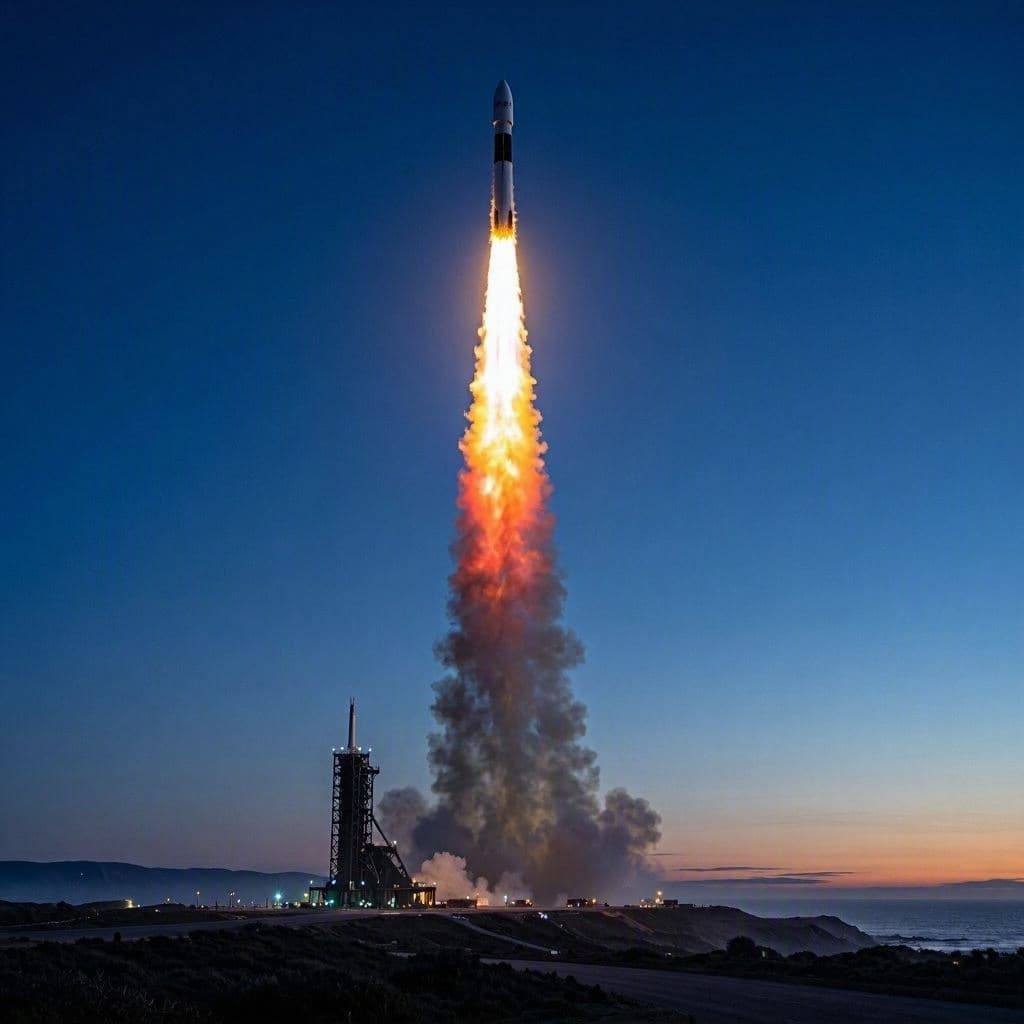
The visuals included here are AI-generated interpretations meant to support the article’s thematic elements.
Sources: SpaceNews, BBC News, ESA Official Website, Nature Astronomy, Scientific American
Published by Banx Network. This article is part of the Banx decentralized media programme, powered by the BXE token on the XRP Ledger.