Key Highlights
- Euclid Telescope:Released data cataloging over 900 million galaxies.
- Strong Lenses:Identified more gravitational lens candidates than all previous catalogs combined.
- Open Access:Data available to the public for further research and exploration.
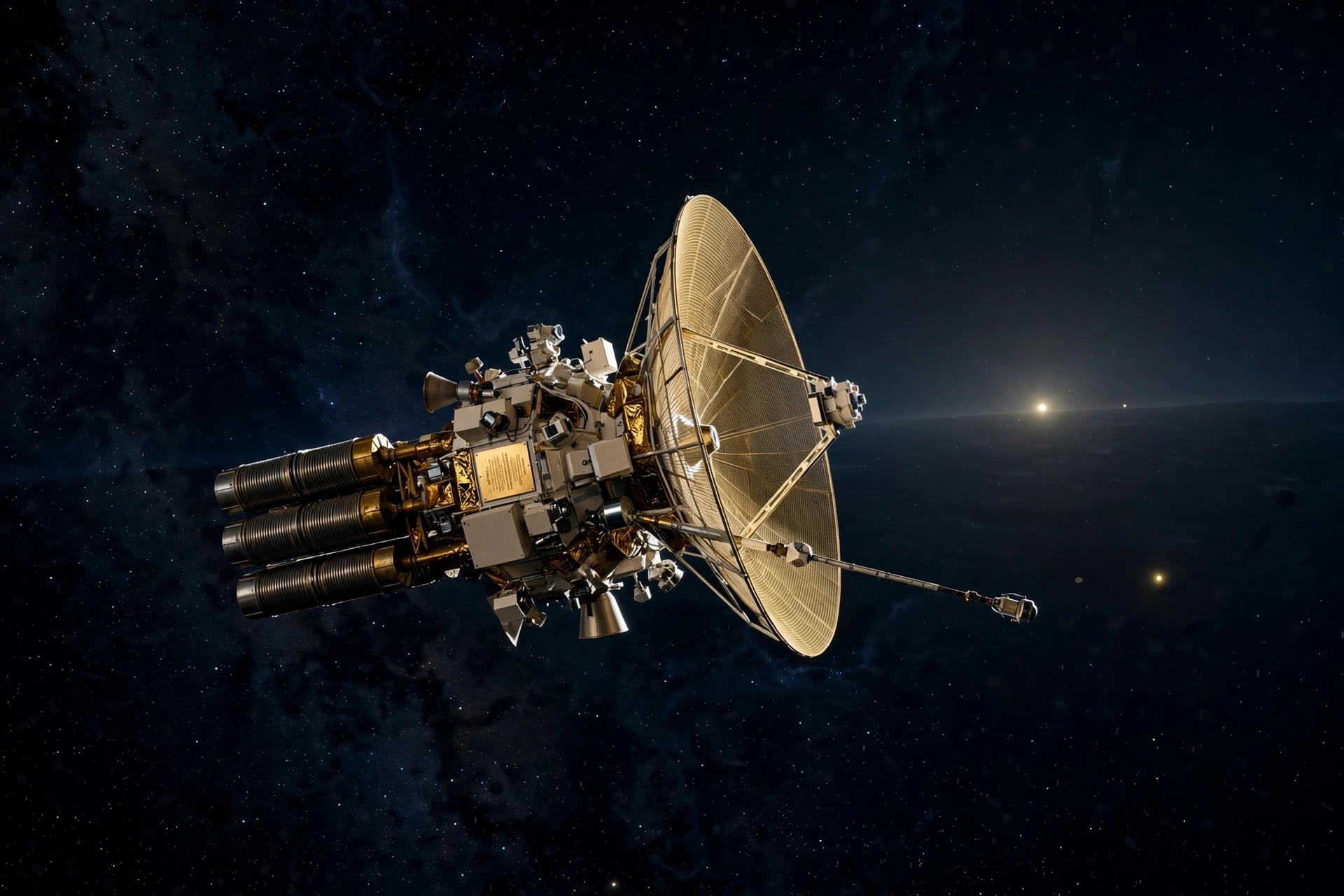
The Euclid telescope, a project of the European Space Agency (ESA), has made significant strides in mapping the universe's hidden structures. After thirteen months of meticulous observation, it has released its first major data set, known as DR1-Foundation. This release is a monumental step for cosmology, providing insights into the arrangement of galaxies and the elusive dark matter that shapes them.
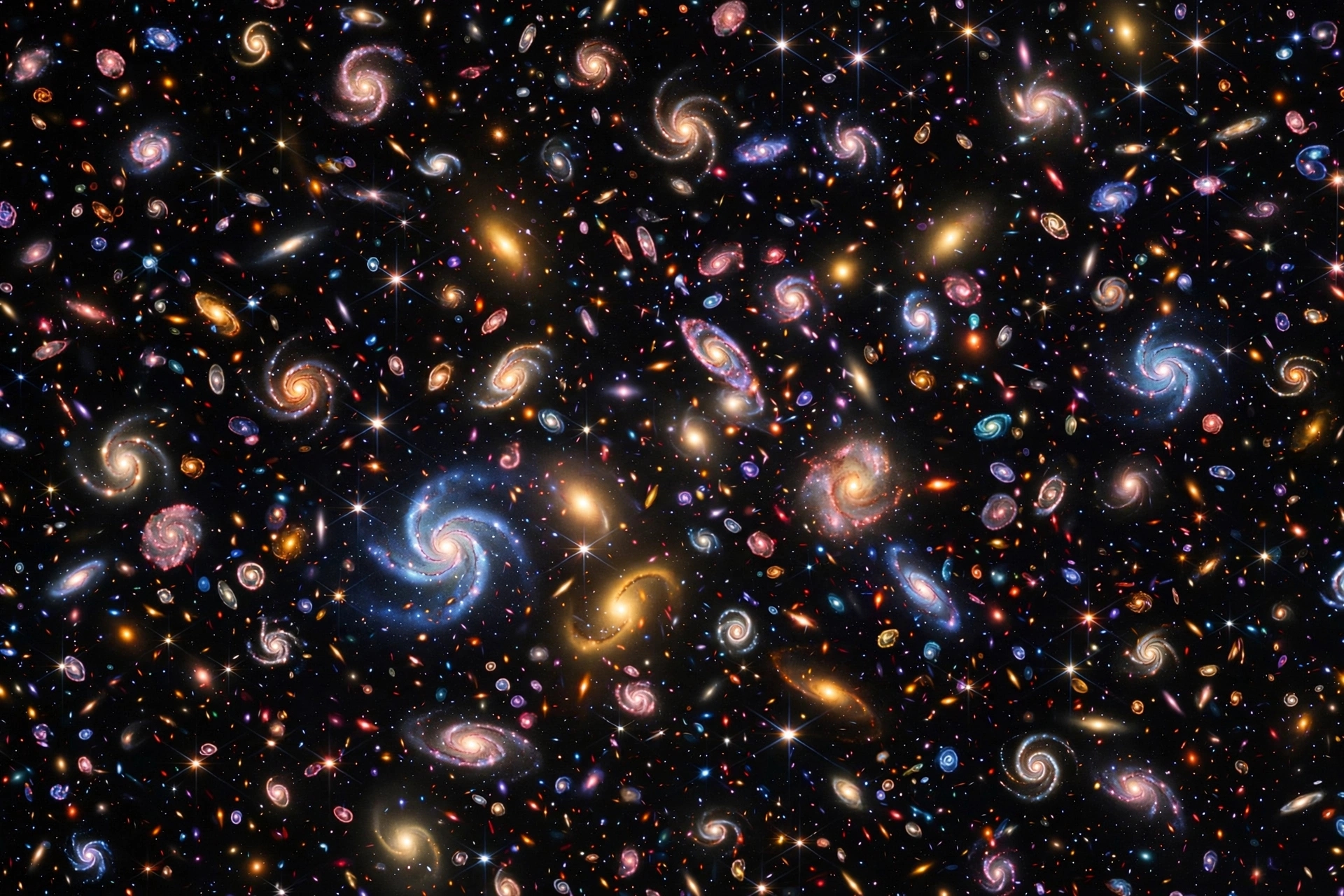
The data set includes an astonishing catalog of over 900 million galaxies, approximately 15,000 strong gravitational lens candidates, and more than 60 million quasar candidates. Covering an area of sky equivalent to 9,500 full moons, this release represents about 14 percent of the total area that Euclid will survey during its six-year mission. This scale is unprecedented, dwarfing previous releases that covered significantly smaller areas.
One of the most transformative aspects of this release is the identification of strong gravitational lenses. These rare cosmic phenomena occur when a foreground galaxy bends and magnifies the light from a galaxy behind it. Historically, such lenses have been difficult to find, with only one in several thousand galaxies exhibiting this effect. However, Euclid's data has now surpassed all previous catalogs combined, allowing researchers to shift their focus from studying isolated instances to analyzing entire populations of these systems. Miguel Zumalacárregui from the Max Planck Institute for Gravitational Physics emphasized this shift, stating, "We're moving from studying a handful of remarkable objects to exploring entire populations of these systems."
The spectra data provided by Euclid is equally crucial. By analyzing the light from these galaxies, scientists can measure their distances and place them within a three-dimensional framework, linking them to the cosmic web—the intricate structure formed by dark matter. This capability transforms a simple catalog of galaxies into a detailed map of the universe's architecture, revealing the invisible forces that have shaped it since its inception.
Despite the groundbreaking nature of this release, scientists caution that it is just the beginning. The full Data Release 1, anticipated in mid-2027, will include additional observations and refined distance calculations, which are essential for accurately positioning galaxies within the cosmic web. ESA's Director of Science, Carole Mundell, remarked, "This is much more than pretty pictures. Today we mark a scientific milestone in our study of the cosmos."
The implications of Euclid's findings extend beyond mere numbers. The telescope was designed to tackle questions that traditional observational methods cannot answer, particularly regarding dark energy and dark matter—two components that together account for approximately 95 percent of the universe. These elements do not emit light and can only be inferred through their gravitational effects. The data from Euclid serves as a vital resource for scientists seeking to reconstruct the universe's structure based on these invisible forces.
Importantly, the data is publicly accessible, allowing anyone with an internet connection to explore and analyze the findings. This commitment to openness sets a new standard for scientific research, emphasizing not only the scale of the survey but also the importance of collaborative exploration. While the map of the universe is still incomplete, the foundational work laid by Euclid marks a significant advancement in our understanding of the cosmos.
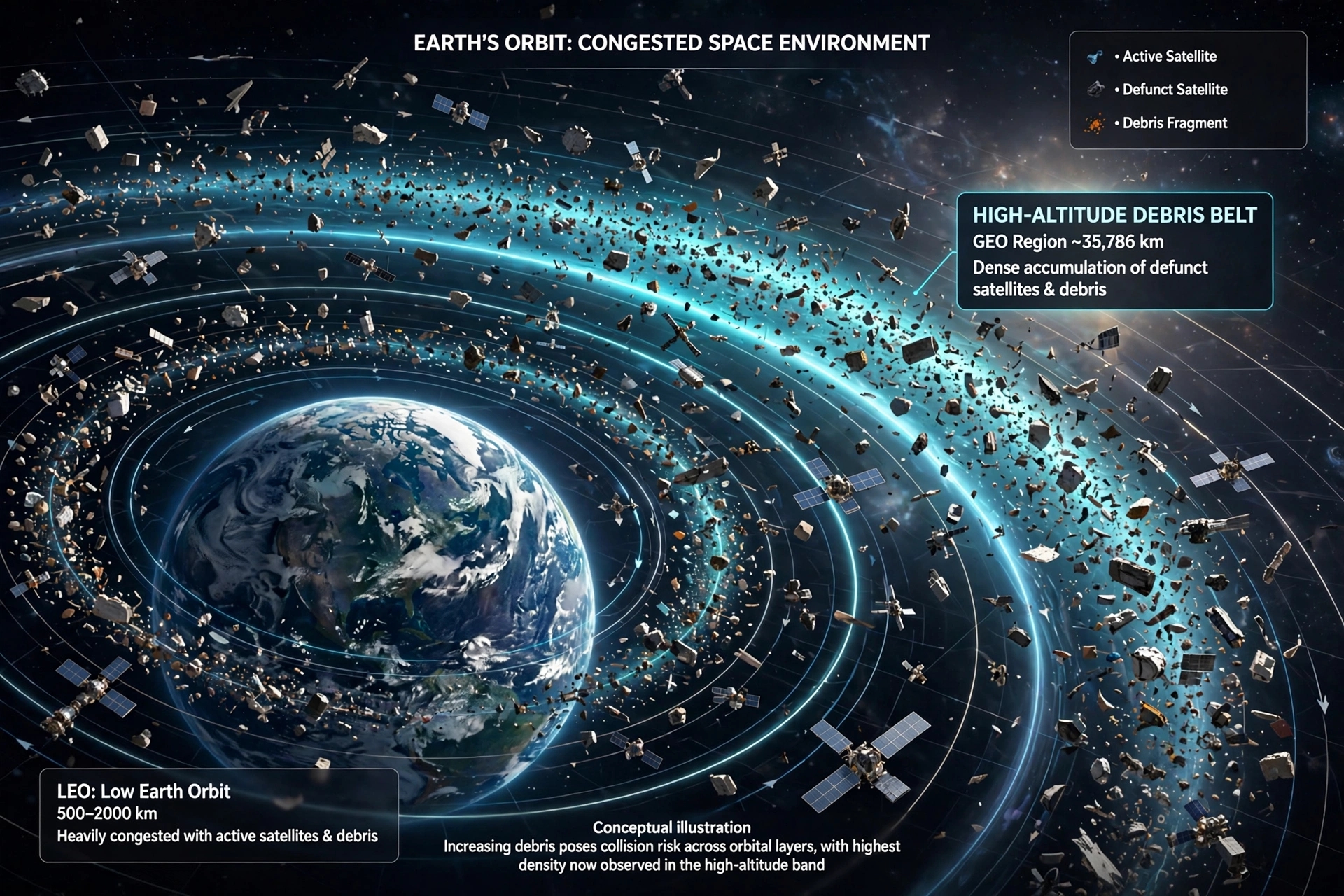
The images accompanying this article are AI-generated illustrations and do not represent actual data from the Euclid telescope.
Published by Banx Network. This article is part of the Banx decentralized media programme, powered by the BXE token on the XRP Ledger.