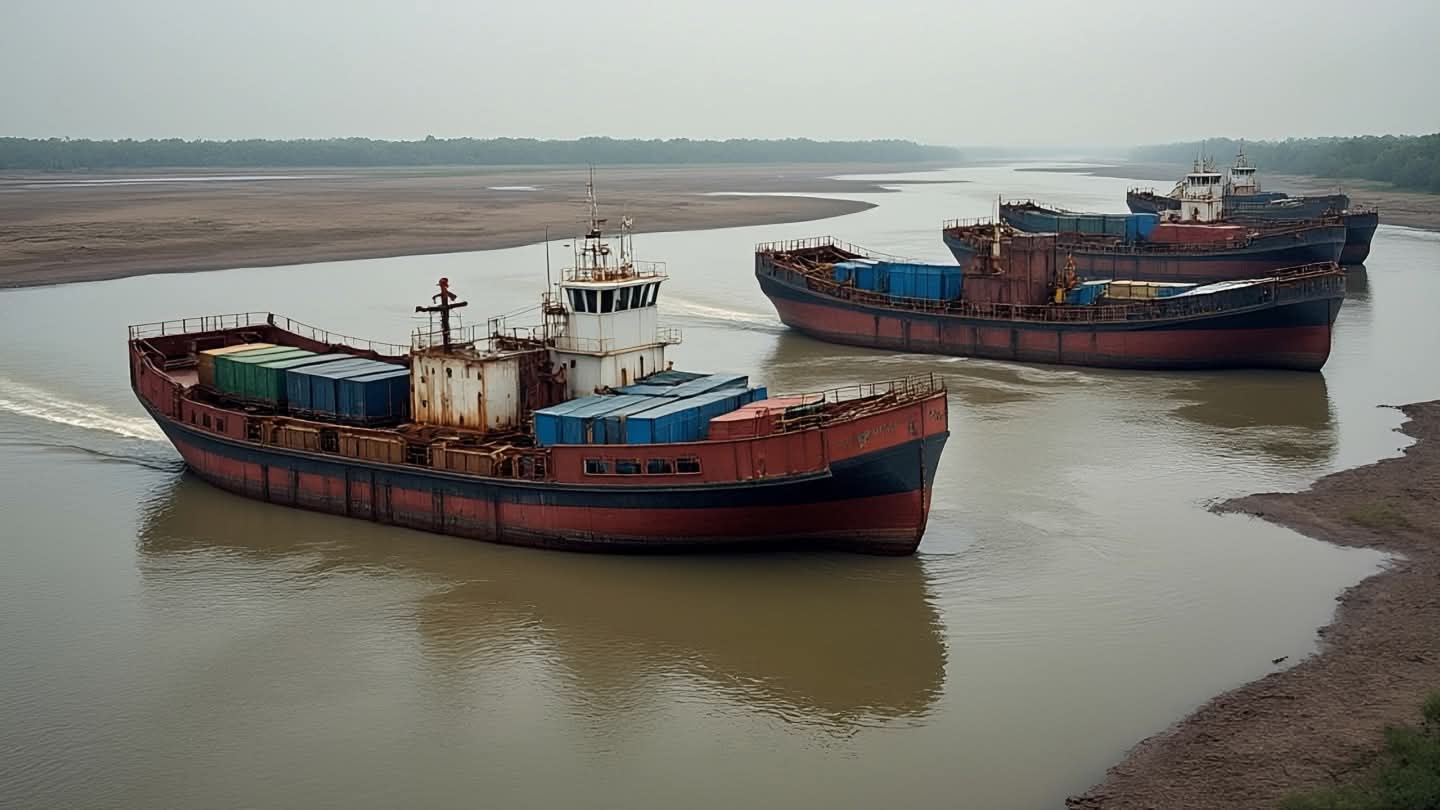
Rivers are the arteries of commerce, carrying the lifeblood of industry from inland factories to global markets. In Germany, the Rhine River has long been a vital transport route, but record-low water levels are now threatening to clog this essential channel. Companies across the chemical, energy, and manufacturing sectors are warning of growing disruptions as ships struggle to navigate the shallow waters. This situation invites reflection on the vulnerability of supply chains to climate variability and the economic cost of environmental change. It is a moment where nature’s rhythm dictates industrial pace.
The Rhine’s water levels have dropped to historic lows due to prolonged drought and high temperatures, reducing the cargo capacity of barges. To avoid running aground, vessels must carry lighter loads, requiring more trips and increasing costs. Shallow waters slow progress. Efficiency declines with depth.
Chemical producers, who rely heavily on the Rhine for raw materials and finished goods, are particularly affected. Delays in shipments can halt production lines, leading to shortages and price increases for consumers. Interconnection means shared risk. Supply chains are fragile.
Energy utilities are also facing challenges, as lower water levels reduce the cooling efficiency of power plants and limit hydroelectric generation. The dual pressure on transport and energy creates a compound effect on the economy. Power needs water. Industry needs flow.
Government officials are monitoring the situation closely, considering emergency measures such as dredging or temporary subsidies for affected businesses. However, long-term solutions require addressing the root causes of climate change. Policy follows crisis. Adaptation is necessary.
For workers and businesses along the river, the uncertainty is stressful. The hope is for rainfall to replenish the river, but the trend of hotter, d summers suggests this may become a recurring challenge. Resilience is built through preparation. Change is constant.
German companies are reporting significant disruptions due to record-low water levels in the Rhine River, affecting shipping, chemical production, and energy generation. The crisis highlights the economic impact of climate-related drought. The hope is for increased rainfall and long-term adaptive strategies.
AI Image Disclaimer: The images provided are AI-generated to visually represent the economic and environmental aspects of the story.
Sources: Reuters CNBC C&EN Global Enterprise
Published by Banx Network. This article is part of the Banx decentralized media programme, powered by the BXE token on the XRP Ledger.