When sunlight filters through cracks in a rocky limestone wall, dust motes seem to dance like echoes from another age. Deep within Grotta del Romito in southern Italy, a quieter dance has been unfolding beneath the surface—one of genes, bones, and the long‑buried whispers of human history. This ancient cave, long known for its remarkable Upper Paleolithic burials, has offered up a scientific surprise that connects the distant past with modern genetic inquiry.
For decades, archaeologists have puzzled over a double burial discovered here in 1963: two diminutive skeletons laid to rest side by side, one embraced in the arms of the other. Their unusual proportions and the nature of the burial raised questions about who they were and what circumstances led to their shared physical traits. Now, with the advent of paleogenomics—the study of ancient DNA—researchers have brought clarity to this mystery.
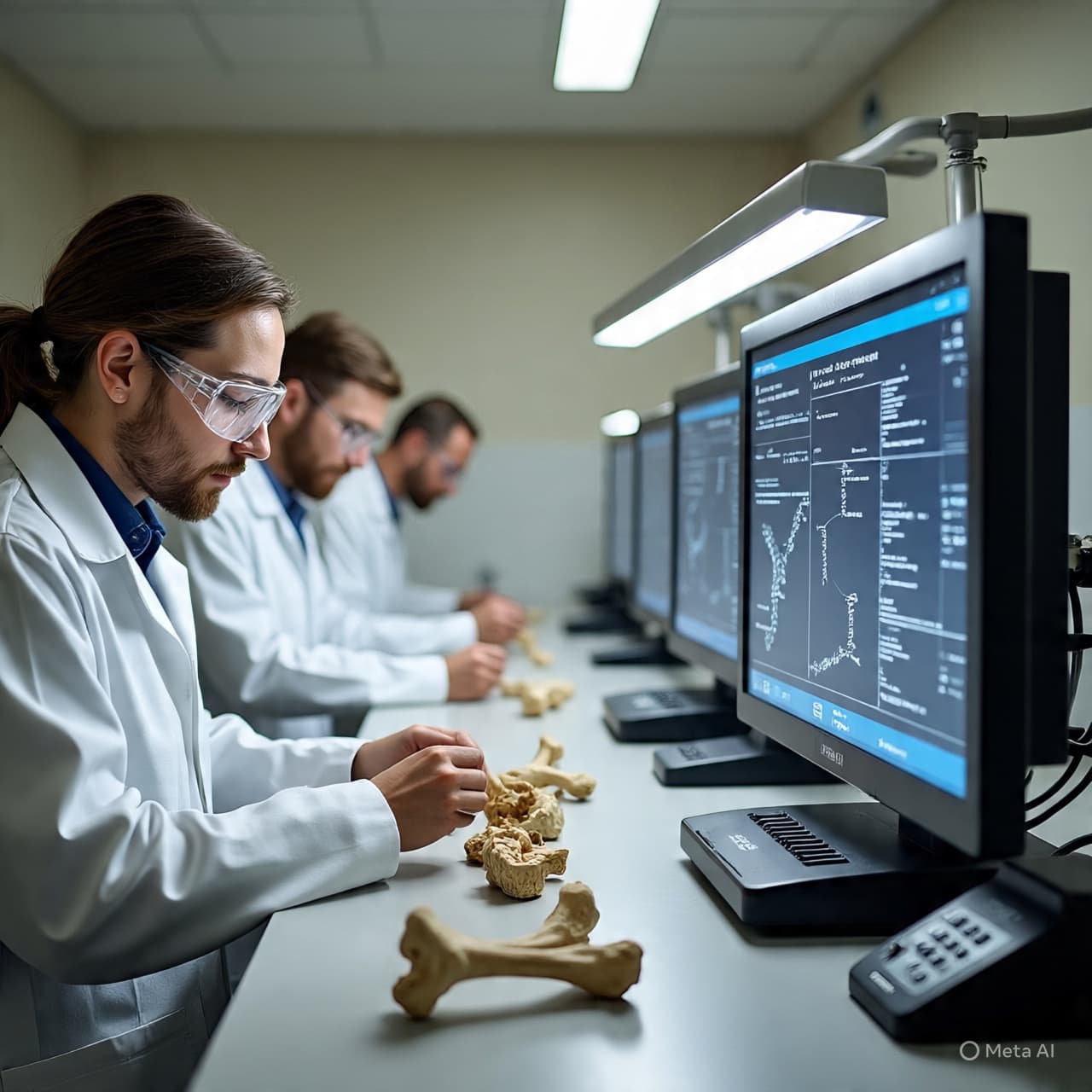
An international team led by scientists from the University of Vienna and Liège University Hospital Centre has analyzed genetic material extracted from the dense inner ear bone of both individuals. Their findings, published in the New England Journal of Medicine, show that the two were most likely a mother and daughter and that both carried genetic variants linked to a rare inherited growth disorder called acromesomelic dysplasia. The younger of the two carried two copies of a mutated NPR2 gene, responsible for more pronounced limb shortening, while the older had one altered copy and more moderate stature. This represents, as researchers suggest, one of the earliest genetic diagnoses of a specific disease in prehistoric humans.
The nuances of this discovery extend beyond a clinical curiosity. Seeing how closely related individuals from over 12,000 years ago shared a genetic condition invites reflections on continuity in human biology and experience. Rare conditions like acromesomelic dysplasia are not artifacts of the modern era alone but are part of an ancient human story—written into our genomes long before formal records began.
What makes this case especially poignant is not merely the identification of a genetic mutation, but the hint it offers of care and connection. That the younger individual survived into adolescence despite physical limitations speaks to community support within that Paleolithic group. In an era often imagined as stark and unforgiving, this family bond suggests a depth of human compassion and social complexity that resonates across the millennia.
In the quiet interplay between stone and gene, paleogenomics is reshaping our understanding of human history. Each new genetic fragment recovered from ancient remains connects the distant past to the present, showing that some aspects of the human condition—family, illness, care, and survival—span far greater stretches of time than we once imagined.
AI Image Disclaimer (Rotated Wording) “Visuals are created with AI tools and are intended for representation and concept purposes, not actual photographs.”
Sources: SciTechDaily; Phys.org; University of Vienna press release; Newswise; Wikipedia – Romito Cave.
Published by Banx Network. This article is part of the Banx decentralized media programme, powered by the BXE token on the XRP Ledger.