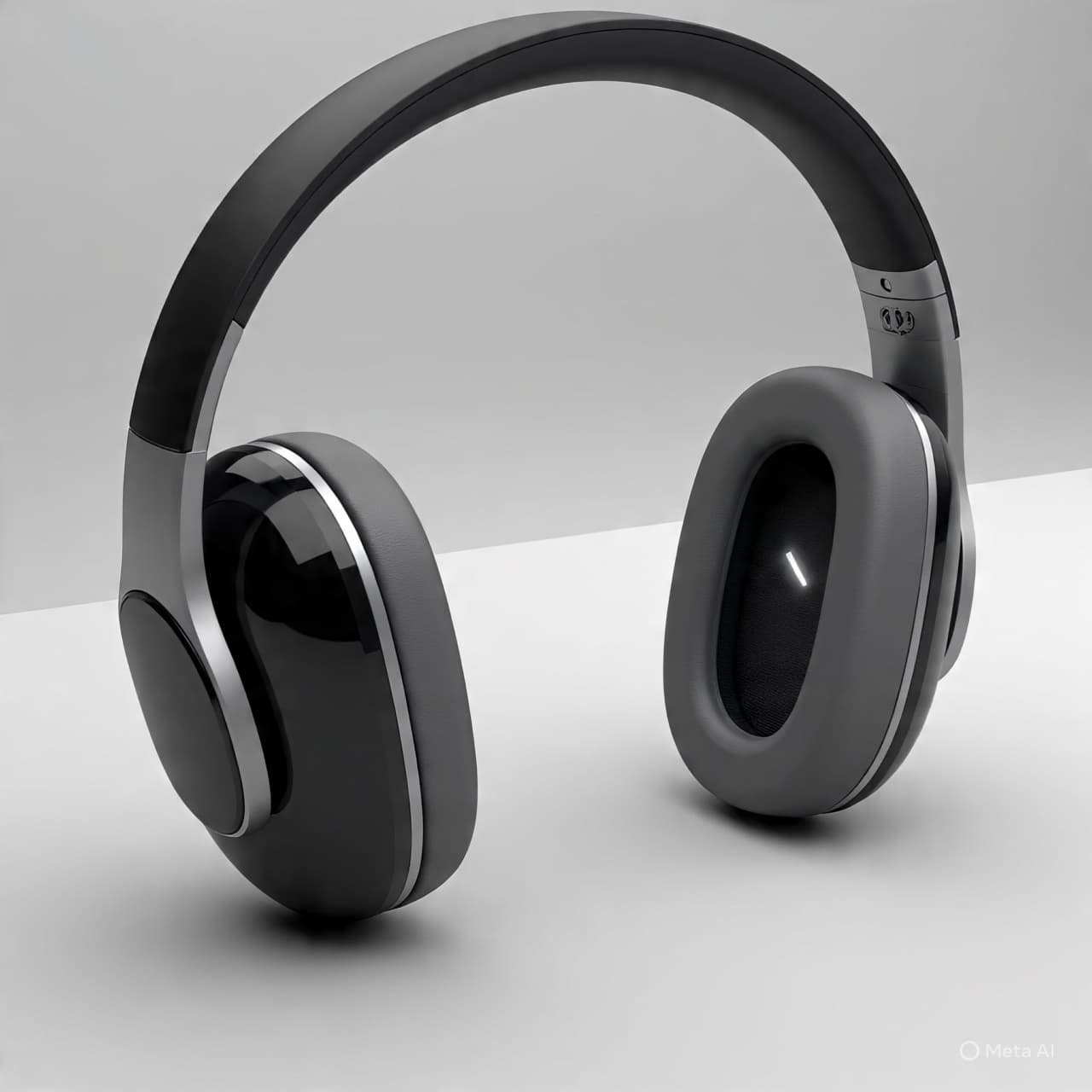
There’s a gentle hush that comes just before dawn — when night’s last echo meets the first glimmer of light, and the world feels both familiar and new. In technology, that moment is where wearables like Razer’s Project Motoko sit: not fully here, not quite there, but hinting at a future that looks back at us as we look forward.
Unveiled at CES 2026, Project Motoko isn’t another sleek pair of glasses or a silent promise in a patent filing. It’s a headset with vision, where cameras rest near the earcups, quietly watching the world while AI listens, interprets, and — in theory — assists. The idea could be read like poetry: machines gaining context not just from sound but from sight, like a companion that knows not only the words you say, but the world you walk through.
Razer’s interpretation of wearable AI blends ambitious engineering and everyday curiosity. Powered by Snapdragon silicon and designed to connect to major AI platforms — from ChatGPT to Gemini and others — the Motoko headset listens to what you say, hears what you see, and transforms that into responses in real time. In a demo described by TechRadar, this might mean on-the-fly translations of signs, a helping hand in navigating daily tasks, or even contextual tips while gaming.
Yet even as the concept hints at possibility, it raises questions that are not easily resolved by technical whiteboards. Cameras embedded in a wearable form factor have always walked a tightrope between innovation and privacy. GadgetGuy noted concerns about how such passive visual capture could feel intrusive if precautions aren’t clear and visible to those around the user. These cameras might empower assistance and convenience — but they also ask us to consider what it means to be seen by a machine in every moment of ordinary life.
There’s another gentle current running through the Motoko concept: its status as a concept itself. Razer has presented it as a vision into what might be possible, rather than a product with a firm release date. This leaves space for conversation — about design, about data, and about where human agency fits in a world that could soon be surrounded by listening, seeing AI companions.
Projects like Motoko remind us that innovation isn’t just about whether something can exist. It’s about whether we, as a community, imagine its place in our lives, and whether that imagined future feels welcoming — or uneasy — when we step into it.
In the days after the reveal, company representatives emphasized that Motoko is still exploratory, a glimpse at what may unfold in wearable AI. The tale of these “seeing” headphones — and what they might ask of our trust — remains open, inviting users, creators, and critics alike to think gently about where the horizon truly lies.
AI Image Disclaimer
Visuals are created with AI tools and are not real photographs.
Sources (credible):
• GameSpot
• The Verge
• TechRadar
• GadgetGuy
• Android Authority
Published by Banx Network. This article is part of the Banx decentralized media programme, powered by the BXE token on the XRP Ledger.