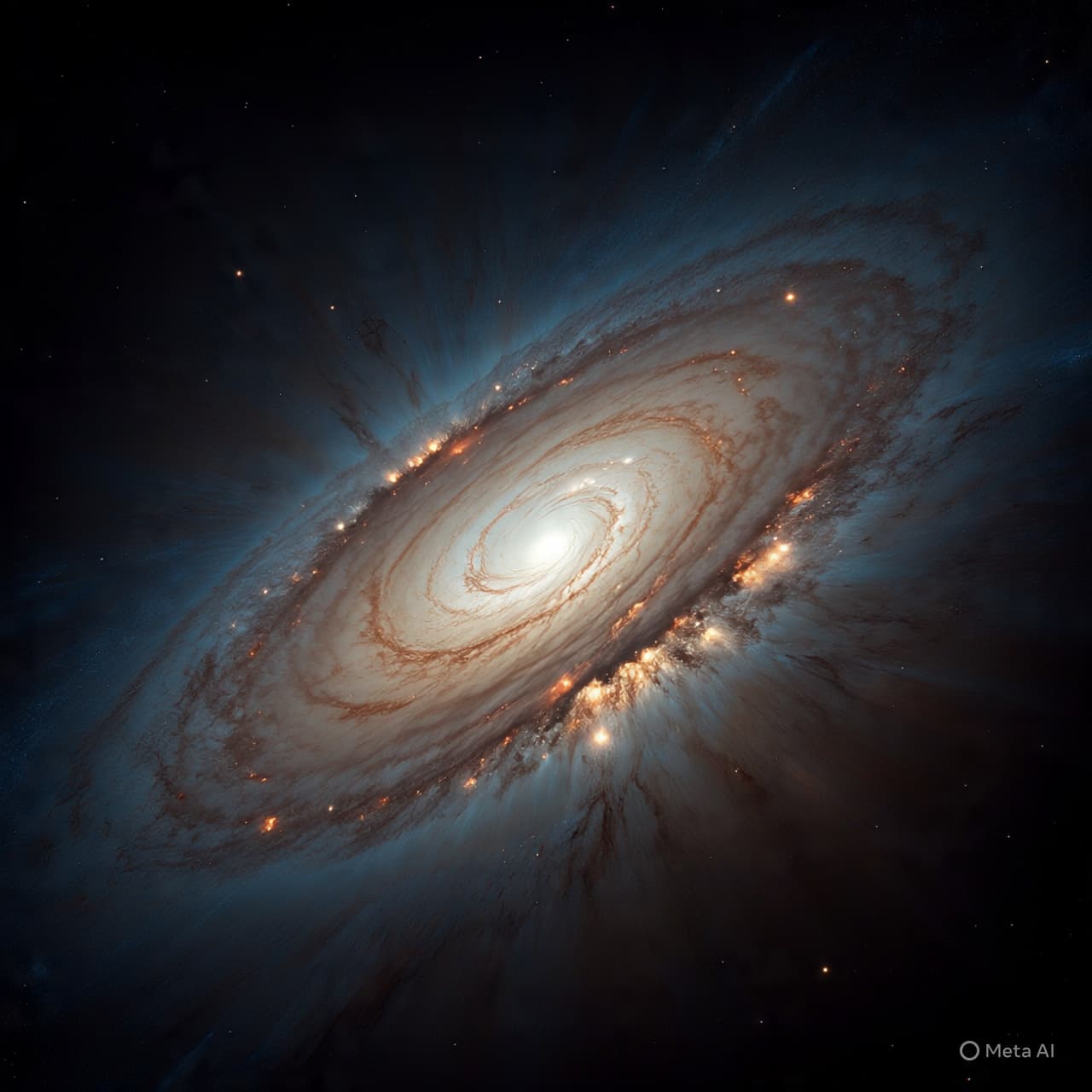
Opening In the vast velvet darkness between distant suns and unseen worlds, the cosmic dust of far-flung solar systems drifts like the last whispers of a forgotten tide. These ethereal rings, known to astronomers as debris discs, are not mere cosmic clutter; they are the lingering footprints of creation and destruction. When observed with keen eyes and careful instruments, these dusty halos around distant stars can become a quiet guide — a map written in light and shadow — leading us to planets that otherwise remain hidden from sight. Like a breeze rippling through tall grass that hints at something moving beyond, irregularities in these discs may tell us more than we once thought possible.
Body Debris discs are the cosmic remnants of youth: the dust, gas, and small rocky bodies left behind after stars and planets first come into being. In our own neighborhood, they are the distant cousins of the Kuiper Belt and asteroid belts — faded echoes of an earlier time. Around other stars, they can stretch for vast distances, glowing faintly in thermal or reflected light. With powerful observatories such as the Atacama Large Millimeter/submillimeter Array (ALMA) and instruments like SPHERE on the Very Large Telescope, astronomers have begun to capture these discs in unprecedented detail, seeing rings, clumps, waves and asymmetries that were once invisible.
In many young to middle-aged systems, discs show curious distortions: one side brighter than the other, gaps where dust seems scarce, or unusual patterns of density. Though they seem “weird” at first glance, these irregularities may be the footprints of unseen worlds. Like leaves stirred by an animal hidden in the bushes, the dust can be dragged into spirals, clumped by resonances, or shepherded by the gentle tug of gravity. These subtle clues can betray the presence of planets too distant, too faint, or too shrouded in star-glare to be spotted directly by current instruments.
Scientific analyses suggest that symmetrical discs — those that form perfect rings of even brightness — are more likely to lack large companions nearby, whereas strange shapes and uneven luminosity often point to gravitational sculpting by a friend unseen. In some cases, the mere presence of a disc in a system where planets are suspected but not yet detected can help astronomers target their searches more effectively, guiding more powerful telescopes to promising systems and saving time in the search for long-orbited planets rarely caught by traditional transit or radial-velocity methods.
Over time, surveys like those carried out with SPHERE have revealed dozens of debris discs displaying a wealth of structure: belts and rings much like the asteroid and Kuiper belts of our own solar system, and sometimes even subtle warps or empty lanes that hint at the gravitational influence of bodies hidden just beyond the edges of our view. These surveys offer not just snapshots of dusty rings, but a broader pattern — like pages from a cosmic photo album that show how planets and disks evolve in concert, whispering secrets about worlds yet to be seen.
By combining high-resolution images with models of how dust behaves under gravity, light, and stellar winds, researchers are closing the gap between what we can observe and what we can infer. Debris discs thus become not only relics of planetary formation but tools — quiet, reflective, and rich with information — offering signposts toward ice giants and distant planets that might otherwise remain forever in the shadows.
Closing As telescopes refine their vision and data from the next generation of observatories arrives, these dusty trails in space could guide astronomers to an ever fuller understanding of planetary systems beyond our own. In the gentle glow of infrared and submillimeter light, we may soon map more hidden worlds by the patterns they impress upon their dusty surroundings — a subtle whisper of gravity in the cosmic dark.
AI Image Disclaimer (Rotated) “Visuals are created with AI tools and are not real photographs.”
Source Check (5 mainstream / reputable sources)
Johns Hopkins Hub (science news site) — article about how irregular debris discs can reveal hidden exoplanets. ScienceDaily/ESA & SPHERE survey coverage — detailed reporting on debris disks and what they reveal about planetary systems. NASA science article about debris disks and exoplanet hunting — context on debris disks as signposts for planets. Space.com/SPHERE images of debris structures — visuals and structural findings in debris disks. ESA Science & Technology archive on debris discs and planets — foundational research linking planets with debris disks.
Published by Banx Network. This article is part of the Banx decentralized media programme, powered by the BXE token on the XRP Ledger.