The Pacific Ocean holds its secrets in the deep, patient way of all great waters. Every few years, something stirs beneath its equatorial surface—a warming that begins quietly, thousands of miles from any coastline, yet carries consequences that ripple across continents. This year, scientists have observed that warmth growing with unusual intensity, a phenomenon they have named a “Super El Niño.” For North Carolina, it means the weather may become less a familiar rhythm and more a shifting pattern, with extremes at either end.
An El Niño occurs when sea surface temperatures in the central and eastern equatorial Pacific rise above normal, shifting atmospheric circulation patterns worldwide . When that warming exceeds two degrees Celsius above average, it earns the “Super” designation—a rare event, with only a handful recorded in modern history . NOAA confirmed the arrival of El Niño in June 2026, and forecasters have watched with cautious attention as Pacific waters warmed more rapidly than expected .
The mechanics are deceptively simple but globally consequential. Normally, trade winds push warm surface water westward toward Australia, allowing cold, nutrient-rich water to rise off South America. During El Niño, those winds weaken, and the warm water spreads eastward . This shifts where rain falls and where drought settles, altering the jet stream—the river of air that guides storms across the planet . For the southeastern United States, including North Carolina, the result is often a winter that tilts wetter than average, with the subtropical jet stream carrying moisture from the Gulf of Mexico .
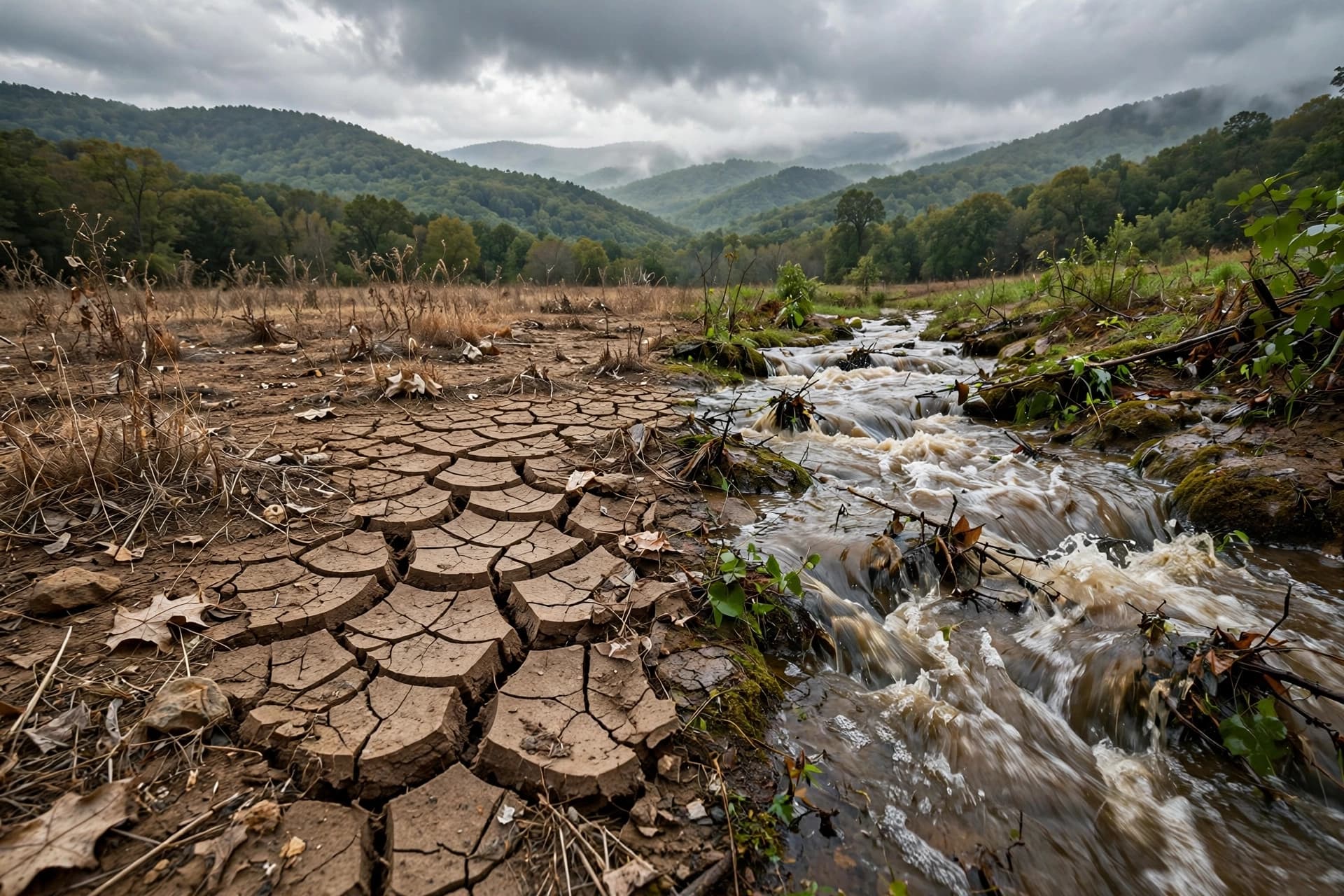
But El Niño’s gifts are rarely uncomplicated. North Carolina may see relief from drought conditions through increased winter precipitation, yet that same moisture can arrive in intense bursts, overwhelming dry soil that cannot absorb it quickly . The state has already experienced heat indices exceeding 100°F and strained water reservoirs, with mandatory restrictions enacted in some areas . The prospect of a wetter winter brings hope for recharge but also the risk of flash flooding, ice storms, and heavy snow events .
Globally, the implications stretch further. El Niño patterns can bring drought to Indonesia, the Philippines, and parts of southern Africa, while causing flooding in Peru and Ecuador . Fisheries off the Peruvian coast suffer as warm water blocks the upwelling of nutrients, disrupting food chains that sustain both marine life and human communities . For regions already facing food insecurity, the compounding effects of drought and crop failure can be devastating.
Professor Risper Nyairo of Davidson College, who grew up in Kenya during the 1997-1998 Super El Niño, recalls the flooding and loss of life that accompanied that event . She emphasizes that while El Niño itself is a natural cycle, climate change amplifies its extremes—making dry periods drier and wet spells more intense . The ocean’s thermal inertia means these patterns persist for months, and long-range forecasts remain inherently uncertain .
For North Carolinians, the practical guidance is neither alarm nor complacency. The state has weathered strong El Niño years before, and preparation—rather than prediction—remains the most reliable response. Water conservation, attention to local advisories, and awareness of flood risks can soften the edges of what may come. The Pacific’s warmth, after all, does not dictate a single outcome; it simply tilts the odds toward a season of contrasts.
This article includes AI-generated imagery.
Sources: Durham County Sustainability Blog, WPDE, WXII12, News of Davidson, ACWD Agenda Notes
Published by Banx Network. This article is part of the Banx decentralized media programme, powered by the BXE token on the XRP Ledger.