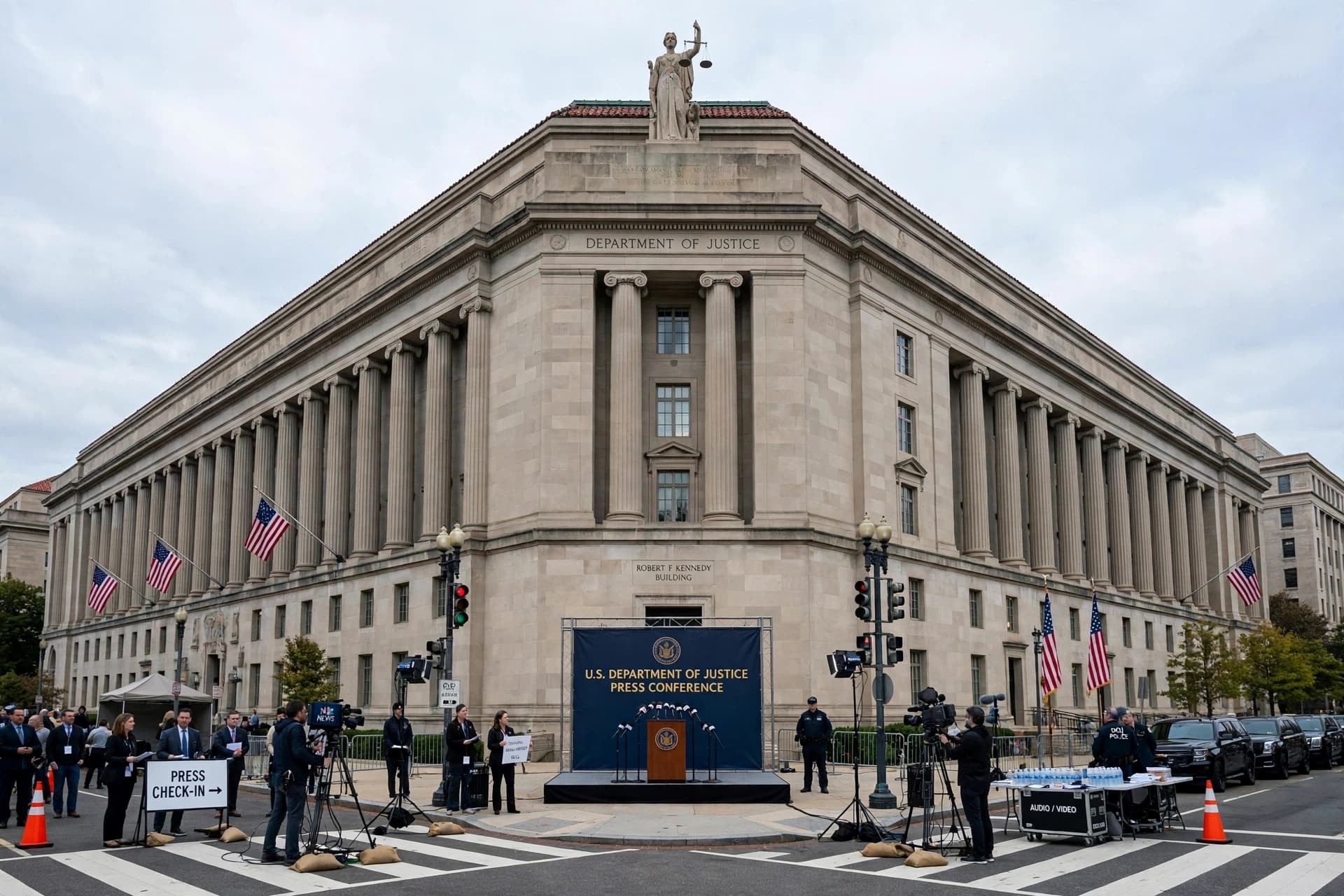
There is a particular tension that arises when the Justice Department seeks to prosecute a witness who provided testimony against a president—a tension that raises questions about retribution, about the independence of law enforcement, and about whether the machinery of justice is being used to punish those who cooperated with investigations into the powerful. In Washington, that tension has now become concrete. The Department of Justice has signaled that it intends to seek charges against a former Trump aide who gave key testimony to the House committee investigating the January 6 attack on the Capitol.
The aide, whose name has not been publicly confirmed but who is described as a former White House staffer who cooperated extensively with the committee, provided testimony that was cited in the committee's final report. That testimony described President Trump's actions and state of mind during the attack, and it was considered among the most damaging evidence presented. The Justice Department's reported decision to seek charges against the aide has alarmed critics who see it as a politically motivated act of retribution.
The specific charges have not been disclosed, but they are reportedly related to the aide's handling of classified information or to statements made during the investigation. The aide's attorneys have said their client cooperated fully with the committee and that the charges are unfounded. They have suggested that the prosecution is intended to send a message to other potential witnesses that cooperation with investigations into the president carries consequences.
The context of the case is a broader pattern of the Trump administration's approach to the Justice Department. Since returning to office, Trump has repeatedly called for the prosecution of his political enemies, and he has installed loyalists at the department who have pursued those calls. The January 6 committee's work has been a particular target, with the president and his allies arguing that it was a partisan exercise that violated the rights of those involved.
For the aide, the prospect of prosecution is a personal and professional crisis. For the Justice Department, the decision to seek charges raises questions about its independence and its willingness to resist political pressure. For the country, the case is a test of whether the rule of law applies equally to those who cooperate with investigations and those who do not. The charges have not been filed. The investigation continues. And the question of whether justice is being pursued or weaponized remains unanswered.
AI Image Disclaimer: All images in this article are AI-generated and are intended for illustrative purposes only.
Sources: The New York Times, The Washington Post, Reuters, CNN
Published by Banx Network. This article is part of the Banx decentralized media programme, powered by the BXE token on the XRP Ledger.