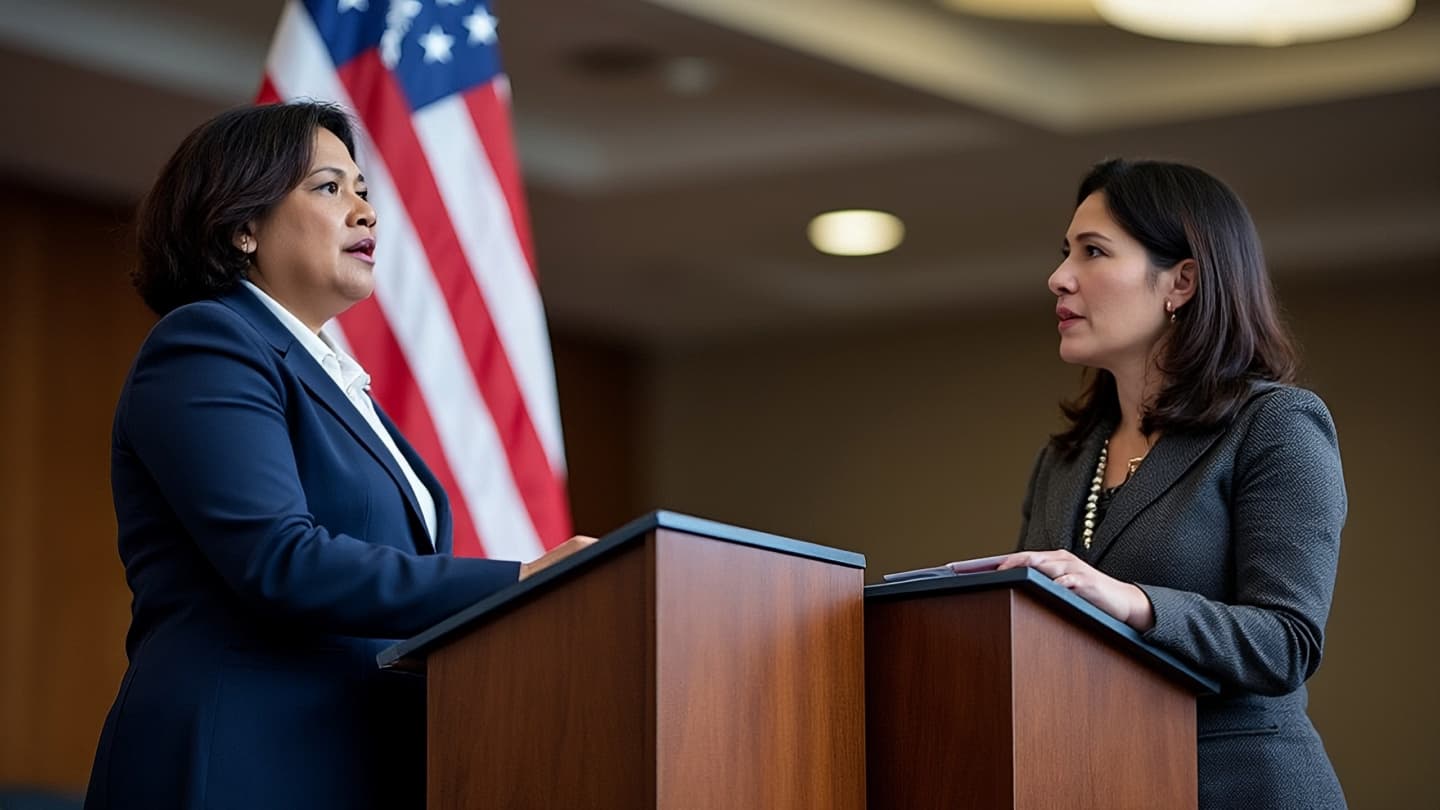
In the charged atmosphere of Minnesota’s political arena, where local values often intersect with national imperatives, a recent Senate debate highlighted the deepening divides within the Democratic party. Congresswoman Angie Craig and Lieutenant Governor Peggy Flanagan engaged in a spirited exchange regarding voter integrity and immigration policy, reflecting broader tensions about how best to address security and inclusivity in a changing America. This confrontation was not merely a clash of personalities but a manifestation of competing visions for the state’s future.
The debate, held as part of the primary season preparations, offered voters a glimpse into the ideological spectrum of the party. While both candidates share a commitment to progressive ideals, their approaches to governance and law enforcement reveal distinct priorities that resonate differently with various segments of the electorate.
Body: Angie Craig, known for her pragmatic approach and focus on economic stability, emphasized the importance of securing the electoral process. She argued that maintaining public trust in democracy requires rigorous safeguards against potential fraud, a stance that has drawn support from moderate voters concerned about institutional integrity. Her rhetoric focused on the need for balance, ensuring that security measures do not disenfranchise legitimate voters while protecting the system from abuse.
Peggy Flanagan, conversely, championed a more expansive view of civic participation. She criticized efforts to tighten voting laws as potentially exclusionary, arguing that they disproportionately affect marginalized communities. For Flanagan, the priority is removing barriers to the ballot box, ensuring that every voice is heard regardless of background or status. Her perspective aligns with a broader movement within the party that views access as a fundamental right.
On the issue of immigration, the divergence continued. Craig advocated for a comprehensive approach that includes border security alongside pathways to citizenship, emphasizing the rule of law. She suggested that effective management of immigration flows is essential for national security and economic order. This position seeks to bridge the gap between enforcement and humanitarian concerns.
Flanagan, however, focused on the humanitarian aspects of immigration policy. She highlighted the contributions of immigrant communities to Minnesota’s culture and economy, calling for more compassionate policies that protect families and provide support. Her argument centered on the moral imperative to welcome those seeking safety and opportunity, framing immigration as a strength rather than a challenge.
The exchange revealed the complexity of governing in a diverse society. Both candidates acknowledged the difficulties of balancing competing interests, but their proposed solutions reflect different philosophical underpinnings. Craig’s approach is rooted in structural stability, while Flanagan’s is driven by social equity.
For voters, the debate provided clarity on what each candidate would bring to the Senate. It underscored that even within the same party, there are significant differences in strategy and emphasis. These distinctions will likely play a crucial role in shaping the outcome of the primary election.
Political analysts suggest that this internal dialogue is healthy for democracy, forcing candidates to refine their messages and engage with critical issues. The sparring serves as a microcosm of the national conversation, where questions of identity, security, and justice are constantly being renegotiated.
As the campaign moves forward, both women will need to unite their base while appealing to independents. The ability to translate these debates into coherent policy platforms will determine their success in the general election.
Closing: The debate between Angie Craig and Peggy Flanagan highlights the dynamic nature of contemporary politics. It reminds us that progress is often achieved through vigorous discussion and the careful weighing of diverse perspectives.
AI Image Disclaimer: The visuals accompanying this article are AI-generated illustrations designed to reflect the themes of political discourse and democratic engagement.
Sources: Star Tribune Minnesota Public Radio Politico The Hill
Published by Banx Network. This article is part of the Banx decentralized media programme, powered by the BXE token on the XRP Ledger.