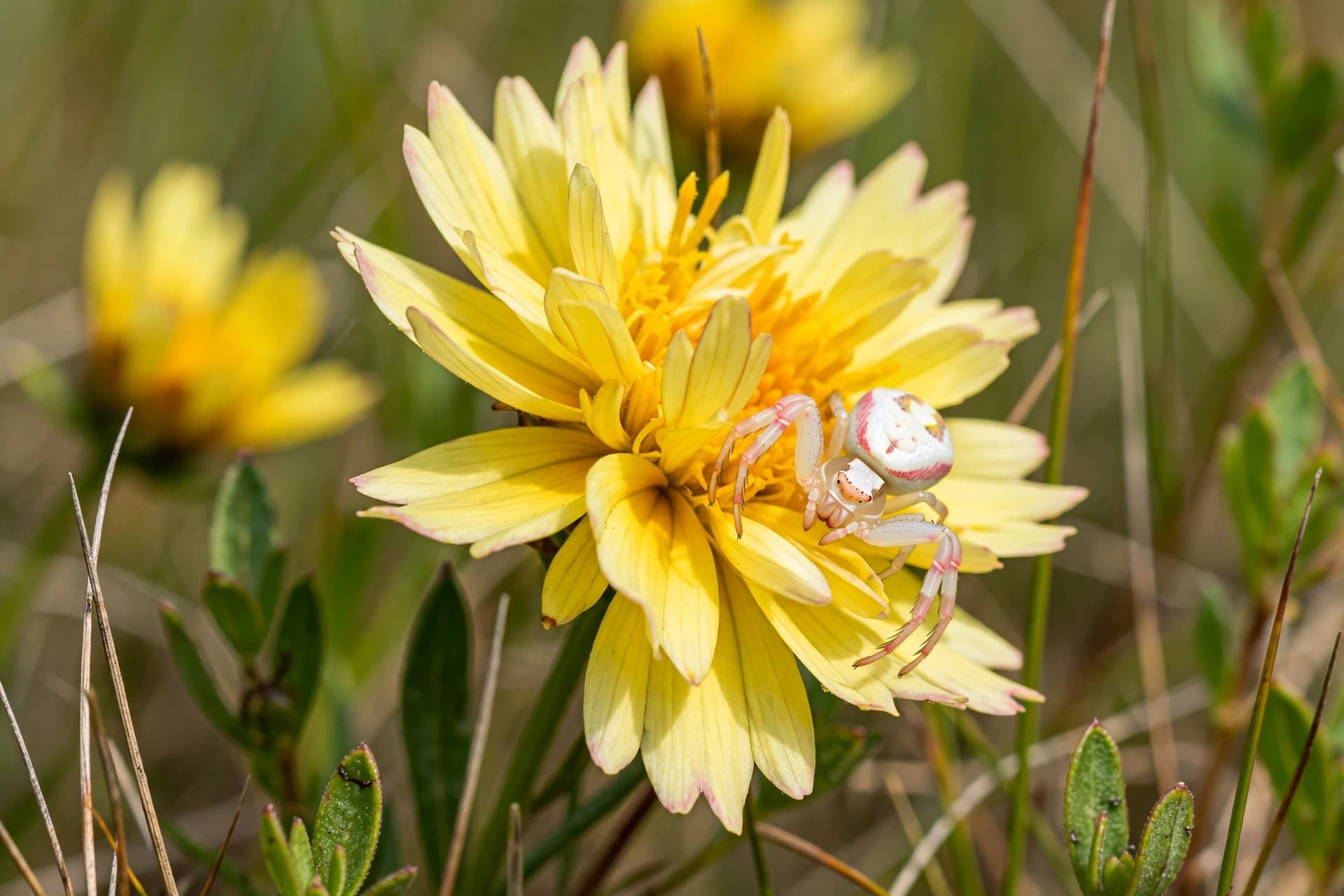
There is a particular delight in discovering that the small, unassuming creatures sharing our gardens have lives as intricate as any drama—lives of disguise, patience, and sudden violence. In the Okanagan Valley this week, two such creatures were spotted by sharp-eyed residents: a goldenrod crab spider, white with pink markings, perched in a flower garden, and an ant-mimic spider, red and black, lingering at the edge of a birdbath. Neither is a bug, strictly speaking. Both are arachnids. And both, according to the experts, are worth knowing.
The goldenrod crab spider, Misumena vatia, is a master of disguise. It does not spin a web to catch its prey. Instead, it waits—on goldenrod, on sunflowers, on daisies—and changes its color to match the flower it has chosen as its hunting ground . The change is not instantaneous. It takes time for the spider to diffuse yellow pigment through its body, and changing back to white is easier, achieved by simply excreting the pigment . What emerges is a creature that can shift from white with reddish stripes to a pale yellow, becoming nearly invisible against the petals where it waits. When an unsuspecting insect—a grasshopper, an ant, a leafcutter bee—comes to the flower, the spider lunges. It has venom, but only enough to subdue its prey, not to harm humans . For gardeners, its presence is a quiet benefit: it keeps predators away from the plants it inhabits.
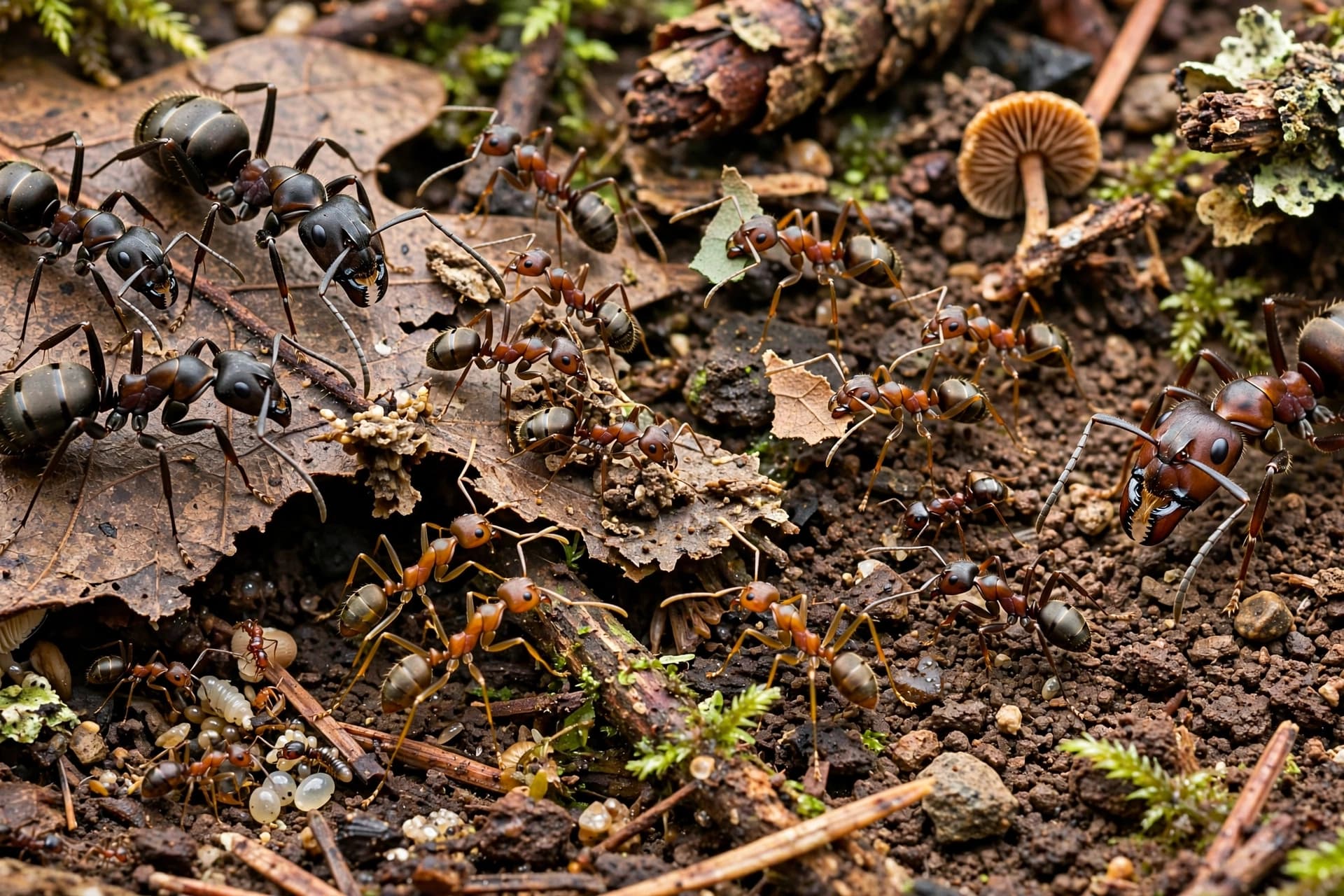
The ant-mimic spider, spotted by another Okanagan resident, is a different kind of illusionist. Its body is elongated, giving the impression of a three-part structure like an ant's. It will sometimes hold its front legs up to mimic antennae . The resemblance is not accidental; these spiders are often found near ant nests, and their disguise allows them to move among creatures that might otherwise treat them as prey . They are fast ground dwellers, active during the day, and seldom interact with humans. They are, in their way, a reminder that survival in the natural world often depends not on strength but on the ability to be mistaken for something else.
Both spiders were identified with the help of Steve Ball Sr. of Bug Masters in Kelowna, who noted that the goldenrod spider's color change is "necessary to disguise the spider depending on the flower/plant it has chosen to call home" . The ant-mimic, he said, is "one of the smaller spiders in the realm, not being bigger than the ant they mimic" . These are not creatures that demand attention. They are quiet neighbors, living out their lives in gardens and at the edges of birdbaths, and they are worth a second look.
AI Image Disclaimer: The images accompanying this article were generated by artificial intelligence and are for illustrative purposes only.
Sources: Castanet Kamloops, Bug Masters, OFNC
Published by Banx Network. This article is part of the Banx decentralized media programme, powered by the BXE token on the XRP Ledger.