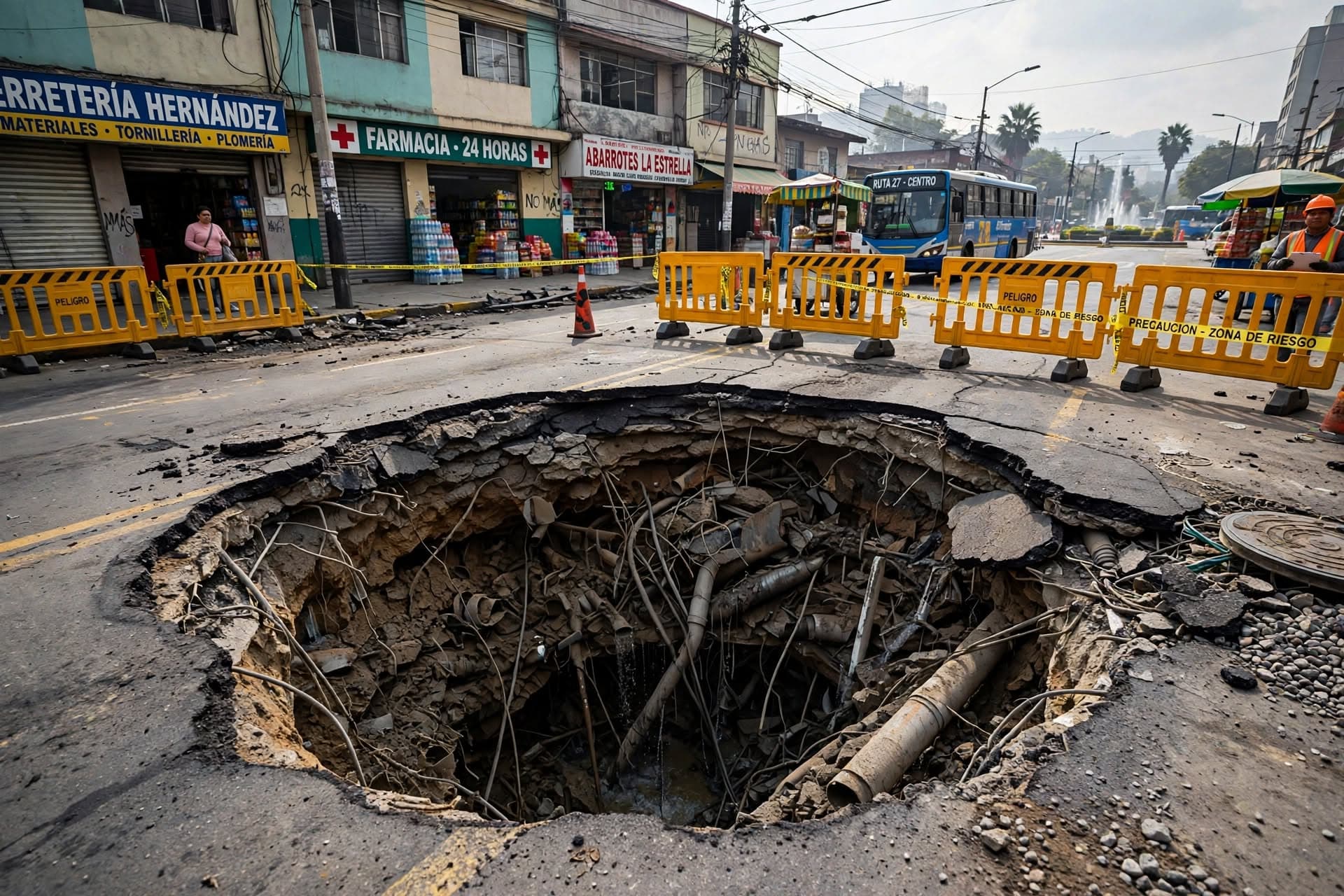
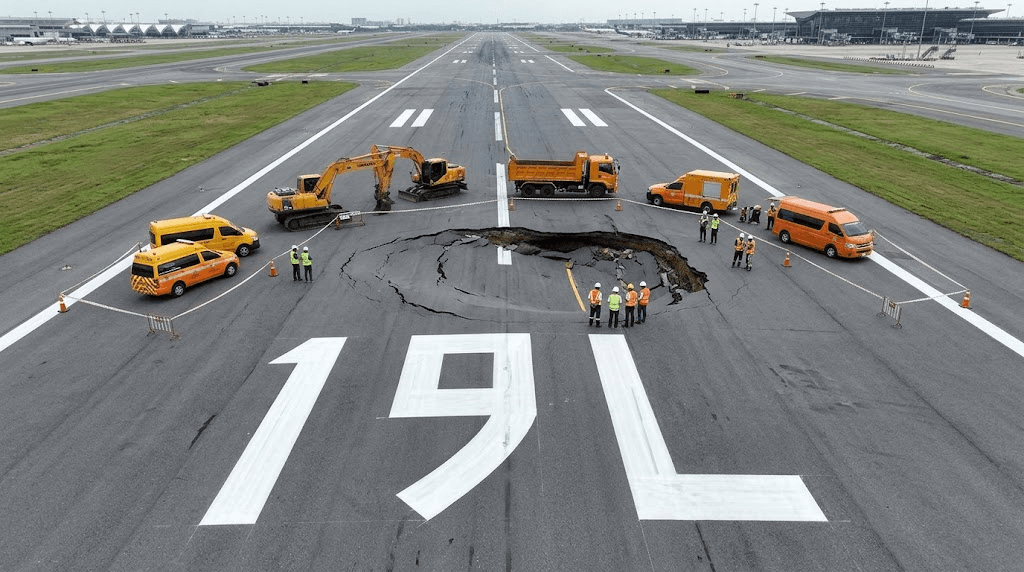
BANGKOK — Operations at Suvarnabhumi Airport were thrown into temporary turmoil on Thursday morning, October 29, 2026 after a significant structural section of a main runway collapsed, creating a deep asphalt sinkhole and forcing air traffic controllers to halt incoming and outgoing flights.
Emergency ground crews and engineering units responded around 8:15 a.m. local time following an urgent notification from taxiing flight crews who spotted deep structural cracking and asphalt subsidence along Runway 19L.
Air traffic control immediately suspended operations on the affected runway, diverting dozens of international and domestic flights to nearby Don Mueang International Airport and U-Tapao Airport.
Ground personnel quickly cordoned off the damaged zone as emergency engineering teams evaluated the structural breach. Initial assessments revealed that heavy rainfall over recent days, combined with underlying soil erosion, caused the sub-base layer to give way directly beneath the runway surface.
Airport authorities confirmed that no aircraft were on the affected stretch during the collapse, successfully preventing what could have been a major disaster.
The sudden runway closure triggered severe schedule disruptions at one of Southeast Asia's busiest aviation hubs. Thousands of passengers faced extended delays inside the terminal, while airport staff scrambled to arrange revised departure times and coordinate diverted arrivals.
Airports of Thailand (AOT) deployed heavy construction equipment and engineering crews to initiate rapid repair work on the damaged section. Officials stated that emergency repairs and soil stabilization efforts are expected to continue around the clock to restore full operational capacity as safely and quickly as possible.
In light of the incident, aviation safety regulators have ordered a comprehensive audit of all remaining runway surfaces and subterranean drainage networks across the airport complex. Industry experts emphasized that while weather-induced erosion poses ongoing challenges for major hubs, thorough geo-technical surveys will be essential to ensure long-term structural integrity before the runway fully reopens to heavy commercial traffic.
Published by Banx Network. This article is part of the Banx decentralized media programme, powered by the BXE token on the XRP Ledger.